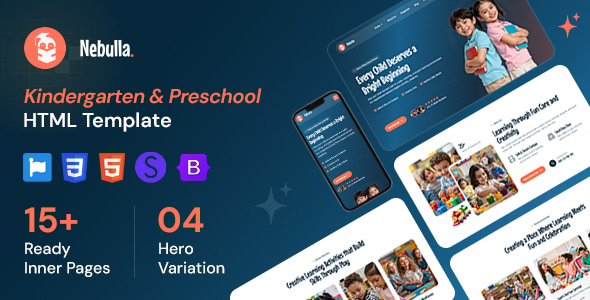
Nebulla – Preschool & Daycare HTML Template is a modern, attractive, and child-friendly website template designed for preschools, daycare centers, kindergartens, early childhood education providers, and childcare businesses. With a welcoming visual style and a family-focused presentation, Nebulla provides a foundation for creating a professional online presence that communicates trust, care, creativity, and educational excellence. It is suitable for childcare organizations that want to introduce their services, showcase learning activities, share important announcements, and help parents discover the right educational environment for their children.
A preschool or daycare website needs to do more than look attractive. Parents want to understand the institution’s educational approach, daily activities, facilities, staff, admission process, and childcare services before making a decision. Nebulla offers a starting point for organizing this information into a visually engaging website that is easy for families to explore. Its HTML-based structure also provides developers with flexibility to customize the layout, colors, typography, images, and content according to the institution’s branding and communication needs.
Whether you are developing a website for a neighborhood daycare, a private preschool, a kindergarten, a Montessori-inspired learning center, or an early education organization, Nebulla can serve as a practical foundation for building a friendly and informative digital experience.
The design of an early education website should create a positive first impression while reassuring parents that their children will be cared for in a supportive environment. Nebulla is intended for this type of audience, combining a child-oriented visual direction with a professional presentation suitable for educational businesses.
A thoughtfully customized design can incorporate playful illustrations, colorful visual accents, engaging photography, friendly typography, and clearly organized content sections. These elements can help communicate the institution’s personality without making the website feel confusing or overcrowded.
The overall presentation can be adapted to different educational approaches and brand identities. For example, a Montessori preschool might prefer a calm, natural visual style, while a creative daycare center could use brighter colors and more expressive imagery. Developers can customize the template to reflect the organization’s educational philosophy and appeal to its target audience.
Nebulla is suitable for a variety of businesses and organizations working in early childhood education and childcare.
Potential applications include:
With suitable content and design adjustments, the template can be adapted to the specific needs of different childcare and educational organizations.
Parents often compare several institutions before selecting a preschool or daycare center. Providing clear information about available programs helps them understand which services are appropriate for their children’s ages and developmental needs.
A website built with Nebulla can organize program information into dedicated sections or pages. Depending on the final implementation, these sections may describe toddler care, preschool education, kindergarten preparation, creative activities, supervised play, and other early learning services.
Each program description can explain the intended age group, educational objectives, typical activities, and enrollment requirements. Relevant photographs and concise descriptions can make the information easier to understand.
For example, a preschool might organize its offerings into early learning, language development, arts and crafts, outdoor activities, and school readiness. A daycare center could emphasize daily care routines, supervised play, meal arrangements, and age-appropriate activities.
The actual page layouts available in the template should be checked before purchase or implementation. Additional program pages can be created by adapting the supplied HTML components when necessary.
Visual storytelling is particularly valuable for childcare websites because parents want to understand what their children may experience throughout the day.
Nebulla can provide a foundation for presenting activity-related content through images, descriptions, and organized website sections. Depending on the available layouts, developers may be able to create dedicated pages for classroom learning, storytelling, music, art, outdoor play, group activities, and special events.
A well-planned activities section can communicate how children participate in structured learning and recreational experiences. It can also help the institution demonstrate its commitment to creativity, social interaction, and age-appropriate development.
Authentic photographs, descriptive captions, and consistent visual presentation can make these sections more informative and engaging. Child privacy should remain a priority when publishing photographs, videos, or other identifiable information.
Parents frequently want to learn about the people responsible for their children’s education and care. Introducing teachers and staff members can make a website feel more personal and transparent.
A customized Nebulla website could include staff profiles featuring professional photographs, names, roles, relevant qualifications, teaching experience, and short biographies. This information can help families understand the experience and approach of the people working at the institution.
For example, a preschool might introduce its principal, lead teachers, assistant teachers, activity coordinators, and childcare professionals. Each profile can highlight the individual’s responsibilities and approach to supporting young learners.
If the supplied template does not include a dedicated team layout, developers can create one using its existing HTML and CSS structure.
A successful childcare website should make essential information easy to find. Parents may need to review admission requirements, school schedules, holiday announcements, tuition information, policies, and contact details before contacting the institution.
Nebulla can be customized to present this information through organized content sections and dedicated pages.
Useful content may include:
Clear headings, concise explanations, and intuitive navigation can help parents locate the information they need without unnecessary effort.
Any interactive admission process, downloadable document system, announcement management interface, or parent portal would need to be confirmed in the supplied files or implemented separately if it is not included.
Parents may visit a preschool website from a desktop computer, tablet, or smartphone. A responsive layout is therefore important for delivering a consistent browsing experience across different screen sizes.
Nebulla can serve as a foundation for a website that adapts its content and layout to the available display area, provided its supplied code includes appropriate responsive styling.
A carefully implemented responsive website should keep navigation accessible, make text comfortable to read, display images proportionately, and ensure buttons and links are easy to use on touchscreens.
Mobile usability is especially relevant for parents who want to check admission details, locate a daycare center, or find contact information while away from their computers.
Before deployment, developers should test the actual template across common screen sizes and browsers. Responsive behavior, navigation menus, image scaling, and form usability should be verified rather than assumed from the product name alone.
Nebulla is an HTML template rather than a complete content management system. Its source files provide a front-end foundation that developers can customize to meet a preschool or daycare center’s requirements.
Depending on the supplied package, the template may include HTML pages, stylesheets, JavaScript files, images, fonts, and other front-end assets. The exact file structure, frameworks, and dependencies should be verified in the official product documentation.
Developers familiar with HTML, CSS, and JavaScript can modify the website’s appearance and content, adjust page layouts, update navigation, and create additional sections as needed.
Potential customization tasks include:
Because it is an HTML template, Nebulla does not automatically provide a database, administrative dashboard, or content management system unless these are explicitly included in the package. Developers may need a backend or CMS if the institution wants to manage content without editing source files.
Every educational institution has its own identity, teaching philosophy, and communication style. A customizable website makes it easier to align the online experience with those characteristics.
Nebulla’s source code can be adapted to incorporate an institution’s branding and preferred content structure.
Visual customization: Update the color palette, typography, logo, illustrations, backgrounds, and image treatments to match the organization’s identity.
Content customization: Replace placeholder text with accurate descriptions of programs, facilities, staff, schedules, policies, and admission procedures.
Page customization: Modify existing layouts or create additional pages for educational programs, events, facilities, parent information, and enrollment.
Navigation customization: Organize links according to the information parents need most frequently.
Functional customization: Add suitable contact forms, newsletter integrations, appointment requests, or admission inquiries using compatible services or custom development.
The extent of customization depends on the quality and organization of the supplied source code, as well as the developer’s experience.
For many childcare organizations, one of the main purposes of a website is to generate inquiries from parents who are interested in enrollment.
A customized Nebulla website can place contact information and admission calls to action in prominent locations. These might direct visitors to an inquiry page, telephone number, email address, map, or messaging service.
A contact form could request basic details such as a parent’s name, email address, telephone number, the child’s relevant age group, and the program of interest. The information collected should be limited to what the institution genuinely needs.
Important: A working contact or admission form requires more than an HTML layout. Form submission, validation, spam protection, secure data handling, and email delivery may require JavaScript, a backend service, a server-side script, or a third-party form provider. These functions should be tested after implementation.
Because the website serves families and children, any collected personal information should be handled responsibly and in accordance with applicable privacy requirements.
Search engine optimization can help parents discover a preschool or daycare center when searching for childcare and early education services in their local area.
Nebulla can be customized with relevant page titles, meta descriptions, descriptive headings, meaningful image alternative text, and informative content. A logical navigation structure can also help search engines and visitors understand the relationship between different pages.
For local visibility, the website’s content could include the institution’s service area, address, programs, operating hours, and contact information. Location-specific landing pages may be useful for organizations operating in multiple neighborhoods, provided each page offers genuinely relevant information.
Additional SEO considerations include:
An HTML template does not guarantee search engine rankings. Results depend on content quality, technical implementation, website performance, competition, and ongoing optimization.
A fast and reliable website helps parents access important information without unnecessary delays. It also contributes to a more professional impression of the educational institution.
When implementing Nebulla, developers should optimize images, remove unused assets where appropriate, minimize unnecessary scripts, and configure caching and compression on the hosting server.
Large classroom photographs and decorative graphics should be prepared at suitable dimensions and compressed without excessive quality loss. JavaScript functionality should be tested to ensure it does not interfere with navigation or prevent important content from appearing.
Performance should be measured using appropriate testing tools after the website has been customized and deployed. Actual results will depend on the template’s implementation, hosting environment, third-party integrations, and the amount of content on each page.
A preschool website should be approachable for visitors with different needs, devices, and levels of technical experience.
When customizing Nebulla, developers should pay attention to readable font sizes, sufficient color contrast, descriptive link text, keyboard navigation, and meaningful alternative text for informative images.
Forms should have clearly associated labels, understandable error messages, and instructions that do not rely exclusively on color. Navigation should remain predictable, and important information should not be hidden behind unnecessarily complicated interactions.
Accessibility improvements help create a more inclusive experience for parents, guardians, and other visitors.
The degree of accessibility supported by the original template should be assessed separately. Additional adjustments may be required to meet relevant accessibility guidelines.
The final page structure will depend on the layouts included in the Nebulla package and the institution’s requirements. A customized website could include the following pages:
These are suggested implementation possibilities, not a guarantee that every page is included in the original template.
Nebulla may be a suitable starting point for several types of users.
Preschool owners can use it as a foundation for presenting their educational services and introducing their institution to local families.
Daycare operators can organize information about childcare options, daily routines, facilities, and operating schedules.
Web designers and developers can customize the HTML source to build tailored websites for clients in the early education sector.
Digital agencies can adapt the design for childcare businesses that need a dedicated website with a friendly, professional appearance.
Freelancers can use the template as a starting point for client projects, subject to the applicable license and permitted usage.
The template is most appropriate for projects where a customizable front-end website is needed and the developer can implement any additional backend functionality required.
Before using Nebulla for a live website, review the product’s official documentation and included files to confirm its technical specifications.
Check the available page designs, responsive behavior, browser compatibility, included fonts and images, JavaScript dependencies, CSS framework, and any third-party libraries. Confirm whether the package includes working forms or only their visual layouts.
Also verify the license, permitted commercial use, update availability, and requirements for using bundled assets.
If you require online admissions, payment processing, a parent login system, class scheduling, or a content management dashboard, determine whether those functions are included or need separate development. An HTML template generally provides the front-end design rather than a complete operational childcare management platform.
Nebulla – Preschool & Daycare HTML Template offers a foundation for creating a welcoming and informative website for early childhood education and childcare services. Its intended application makes it relevant to preschools, kindergartens, daycare centers, playgroups, and other organizations that want to communicate their programs and build trust with parents.
With appropriate customization, the website can present educational activities, introduce teachers, explain admission procedures, highlight facilities, and provide convenient access to essential contact information. Its HTML-based approach also gives developers the flexibility to adapt the source code to specific branding and project requirements.
For businesses seeking a dedicated online presence in the childcare and early education sector, Nebulla can be considered as a starting point for a professional website. The final result will depend on the supplied template features, the quality of customization, and any additional functionality implemented during development.
Product Information:
1. All digital products are the most recent version, with no possibility of free updates. After payment, you can request an update to the most recent version for 5 days if a new version is released. We free support within 5 days.
2. If a license is required (Excludes WHMCS license , we provide only method not license), please contact us via email or ticket for assistance with activation. Our license is only valid for activation and does not include support.
3. We provide Mobile, PHP script installation services for $19.90 / ₹1700. Please create a backup after installation as we do not support re-installation. For mobile app source code, we do not offer installation services.
4. If you have any questions, please contact us by email [email protected] or create a ticket on this page
5. Please note that any digital products presented on the website do not contain malicious code, viruses or advertising. You will receive the original files from the developers. We do not sell any products that have been downloaded from other websites.
6. The response time can last up to 6 hours.
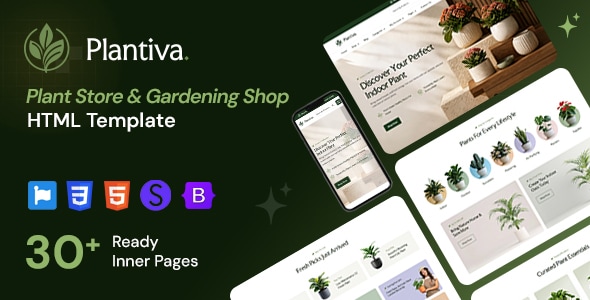
Plantiva - Plant Store & Gardening Shop HTML Template Plantiva - Plant Store & Gardening Shop HTML Template is a professionally oriented...
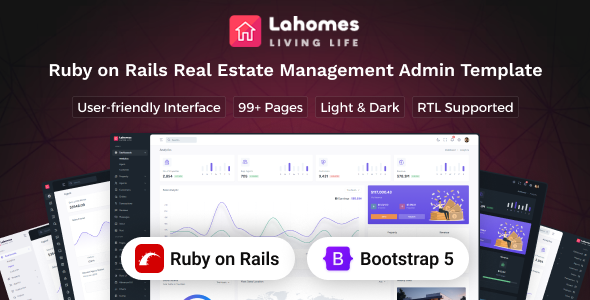
Lahomes - Ruby on Rails Real Estate Management Admin & Dashboard Template Lahomes - Ruby on Rails Real Estate Management Admin &...
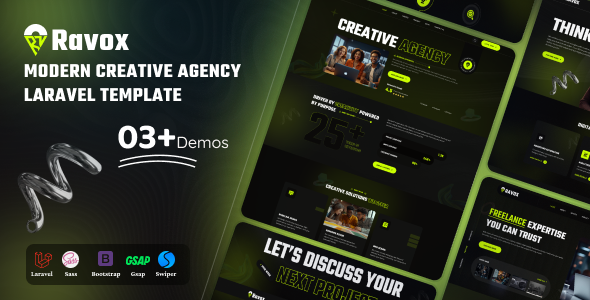
Ravox – Modern Creative Agency Laravel Template Ravox – Modern Creative Agency Laravel Template is a stylish and professional website template designed...
CyberDome - Cyber Security Services HTML Template CyberDome - Cyber Security Services HTML Template is a modern and professional website template designed...
