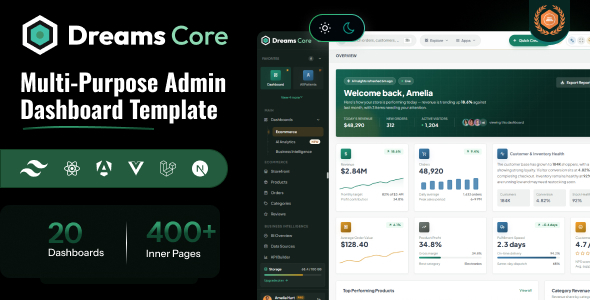
Dreams Core – Multi Purpose Tailwind CSS Admin HTML Template is a dashboard and administration interface template designed for developers, businesses, startups, and development teams that need a customizable foundation for building modern web applications. Built around a Tailwind CSS-based frontend approach, Dreams Core provides a starting point for creating administrative dashboards, management interfaces, reporting panels, and business application layouts.
Whether you are developing a customer relationship management system, an inventory management application, a project tracking platform, a business analytics dashboard, or an internal administration panel, Dreams Core can help simplify the initial interface development process. Its reusable frontend structure allows developers to adapt the visual design, navigation, content sections, and interface components according to the requirements of their projects.
Administrative interfaces often need to present information clearly while allowing users to navigate between different sections efficiently. A well-organized dashboard can help users access important data, review reports, manage records, and interact with application features through a consistent interface.
Dreams Core offers a starting point for developing these experiences without designing every frontend element from scratch. The exact dashboard layouts, components, dependencies, and included assets should be verified in the original product documentation before purchase.
Dreams Core – Multi Purpose Tailwind CSS Admin HTML Template is intended for projects that require an administrative interface or dashboard-style frontend.
An admin dashboard commonly serves as the central workspace for a web application. Depending on the application’s purpose, it may display summary information, navigation menus, data tables, charts, forms, notifications, and links to management features.
Dreams Core can provide a foundation for organizing these interface elements into a structured layout. For example, a business management application might use a dashboard to present operational summaries, while a project management system could adapt the interface to display project information, task records, and activity updates.
The HTML-based structure gives developers direct access to the frontend files, while Tailwind CSS provides a utility-oriented approach to styling and layout customization.
However, an admin HTML template is primarily a frontend resource. Authentication, database connectivity, user permissions, data processing, and other backend capabilities require additional implementation unless explicitly included in the original package.
A well-designed administration panel should make complex information easier to understand and routine tasks easier to complete. Dreams Core provides a starting point for building an organized interface that can be adapted to different application requirements.
Developers can customize the dashboard’s visual hierarchy, spacing, typography, colors, and navigation structure to suit the intended users and business workflow.
For example, an analytics application may prioritize summary metrics and reporting sections, while an inventory management interface may require more space for tables, product records, and operational information.
A consistent visual system helps users recognize common interface patterns across different pages. Reusing similar button styles, form layouts, headings, and navigation elements can also make the application easier to maintain.
The exact visual style and available interface components depend on the supplied template files. Developers should review the original package to determine which layouts and design elements are included.
Tailwind CSS is a utility-first CSS framework that allows developers to style interfaces by applying utility classes directly within markup.
Dreams Core uses a Tailwind CSS-based approach, providing a familiar foundation for developers who prefer utility-driven frontend customization.
Depending on the included source files and build configuration, developers may be able to adjust spacing, colors, typography, borders, sizing, responsive behavior, and other visual properties using Tailwind utilities.
This approach can make it easier to adapt the interface to an application’s branding and layout requirements. For example, a development team could modify the sidebar width, change the color palette, adjust card spacing, or refine form layouts to suit its design system.
Developers should verify the Tailwind CSS version, configuration files, build process, and availability of editable source assets in the package.
If the template uses a compiled stylesheet, changing its appearance may require access to the original source files and an appropriate build workflow. The exact process depends on the supplied implementation.
An administration interface often contains multiple application sections, so clear navigation is important for usability.
Dreams Core can serve as a starting point for organizing dashboard content and navigation according to the structure supported by the template.
Potential navigation areas for a customized application include:
These are examples of possible application sections, not a verified list of pages included in Dreams Core.
Developers can adapt the navigation structure to reflect the actual modules in their applications. Unnecessary menu items can be removed, while additional sections can be added where the existing code supports the required changes.
A clear hierarchy, meaningful labels, and consistent navigation patterns help users locate features without needing to understand the underlying implementation.
Administrative applications frequently require interfaces for displaying and reviewing structured information.
Depending on the components supplied with Dreams Core, developers may be able to use or adapt table-oriented layouts for presenting records such as customers, products, transactions, employees, projects, or support requests.
Useful table design considerations include readable column headings, consistent spacing, clear status indicators, and layouts that remain usable on smaller screens.
A customized interface might display a list of customer records with relevant contact information or present inventory entries with product names and stock details.
However, a visually complete table does not automatically provide working search, sorting, filtering, pagination, bulk actions, or record editing. These behaviors may require JavaScript functionality, API connections, or backend implementation unless explicitly included.
Developers should verify the available components and implement data-handling behavior according to the requirements of the application.
Forms are essential in many administrative applications because users need to create records, update information, configure settings, and submit requests.
Dreams Core can provide a starting point for form-based interfaces using the layouts and components available in the original package.
Potential form applications include customer details, product information, project records, employee profiles, account settings, and general configuration options.
Developers can customize labels, input spacing, button styles, and layout organization to create a consistent experience.
A well-designed form should clearly identify required fields, provide understandable instructions, and communicate validation errors in a useful way.
However, frontend form elements do not automatically validate information securely or save it to a database. Server-side validation, persistence, authorization checks, and error handling must be implemented when the form interacts with a real application.
The specific input components and interactive behavior included with Dreams Core should be verified in the original documentation.
Many dashboards use charts and summary metrics to communicate important information quickly.
Depending on the components available in Dreams Core, developers may be able to adapt dashboard layouts for presenting business statistics, operational summaries, or reporting information.
Potential applications include sales summaries, customer activity, inventory levels, task progress, website traffic, and financial indicators.
For example, a CRM dashboard might display lead counts and customer activity, while a project tracking interface could summarize tasks by status.
Charts and metric cards should be connected to accurate data sources when used in a working application. Static demonstrations or placeholder values should be replaced with appropriate data retrieval and calculation logic.
Developers should also ensure that reports are understandable, clearly labeled, and suitable for the intended users.
The presence of chart layouts, charting libraries, or working reporting components is not guaranteed by the product name alone. Review the included files and documentation to confirm the available features.
Every application has its own identity, workflow, and user requirements. Dreams Core can be customized to reflect these differences through changes to supported layouts, styling, and interface components.
Potential customization areas include:
Color Palette: Adjust primary colors, accents, backgrounds, and interface states to match the application’s branding.
Typography: Customize headings, labels, body text, and navigation styles to improve readability.
Sidebar and Navigation: Adapt menu labels, section organization, and navigation hierarchy to match the application modules.
Dashboard Cards: Modify the presentation of summary metrics and informational panels where supported.
Forms and Tables: Adjust spacing, labels, borders, and layout structure for different record types.
Branding Assets: Incorporate the product logo, application logo, and other relevant visual assets.
Responsive Layouts: Customize the arrangement of content for desktop, tablet, and mobile screens.
Additional Components: Create new frontend sections where the supplied code and development workflow permit.
Tailwind CSS can support these customizations through utility classes and, where applicable, reusable component patterns.
For larger projects, developers may benefit from establishing consistent design tokens and reusable UI components so that future changes remain manageable.
Administrative applications may be accessed from desktop computers, laptops, tablets, and smartphones. Responsive behavior helps ensure that important information remains accessible across different screen sizes.
Dreams Core’s responsive implementation should be evaluated using the supplied code. Developers should test the navigation, dashboard cards, tables, forms, and other interface elements at different viewport dimensions.
On smaller screens, wide tables may require a responsive layout or horizontal scrolling. Sidebar navigation may need a compact presentation, while dashboard cards may need to stack vertically.
Touch targets should be sufficiently large, text should remain readable, and important actions should not become difficult to access.
Responsive design is especially relevant for teams that need to review operational information or update records while away from a desktop computer.
The final mobile experience depends on the supplied responsive rules and any modifications made during development.
A dashboard template often becomes more useful when connected to an actual application backend.
Dreams Core can be evaluated as a frontend foundation for API-driven applications, subject to the structure of the supplied code and the requirements of the selected backend.
Potential integrations include REST APIs, internal business services, customer management systems, inventory applications, reporting services, and other data sources.
For example, a CRM dashboard could retrieve customer records from an API, while an inventory interface could display current stock information from a database-backed application.
However, API connectivity should not be assumed to be included merely because the template contains dashboard layouts or JavaScript files.
Developers may need to implement API requests, authentication handling, data transformation, loading states, error handling, and form submissions separately.
Sensitive credentials should not be exposed in frontend code. Access control, authorization, validation, and data protection must be enforced by the backend application.
Before integrating an API, review the template’s code structure and ensure that the chosen implementation is compatible with the existing frontend.
Dreams Core – Multi Purpose Tailwind CSS Admin HTML Template can be considered for a variety of web application projects that require an administrative interface.
CRM Systems: Build the frontend for customer records, lead information, and business activity summaries.
Inventory Management: Present product records, stock information, and inventory-related workflows.
Project Management: Create interfaces for project summaries, task lists, and progress reporting.
Business Administration: Organize operational data, settings, and internal management tools.
Analytics Dashboards: Present metrics and reporting interfaces connected to suitable data sources.
E-Commerce Administration: Develop frontend layouts for product records, order summaries, and store management features.
Human Resource Applications: Design interfaces for employee information and administrative workflows.
SaaS Applications: Establish a dashboard foundation for a subscription-based software product.
Internal Company Tools: Create administrative interfaces for business processes and staff operations.
Developer Prototypes: Build interface demonstrations and application prototypes before implementing complete backend functionality.
These are possible applications rather than claims that complete modules for each use case are included.
Dreams Core is intended for frontend developers, full-stack developers, software agencies, startups, and teams that want a starting point for an administrative interface.
Developers can use the template to reduce initial layout work and focus more time on application-specific functionality. Agencies may evaluate it for suitable client projects, while startup teams can use it as a foundation for prototyping a dashboard or internal management tool.
Users familiar with HTML, CSS, JavaScript, and Tailwind CSS will generally find it easier to customize the interface.
Developers building a complete application should also be prepared to implement or integrate backend services, authentication, data storage, permissions, and other required business logic.
Beginners can use the template to learn how dashboard layouts are organized, although advanced customizations may require familiarity with the supplied build process and frontend code.
Before purchasing, identify the features your application requires and compare them with the actual contents of the package.
The setup process depends on the files included with Dreams Core and the frontend build tools used by the template.
Step 1: Download and Extract the Package
Extract the downloaded archive and review the directory structure. Identify the HTML files, CSS assets, JavaScript files, images, fonts, and documentation.
Step 2: Review the Technical Requirements
Check the Tailwind CSS version, any required Node.js version, package manager, dependencies, and build instructions.
Step 3: Install Dependencies Where Required
If the template includes a package configuration and build workflow, install the dependencies using the commands specified in the original documentation.
Step 4: Run or Preview the Template
Follow the supplied instructions to preview the frontend locally or open the appropriate HTML files, depending on the package structure.
Step 5: Customize the Interface
Update the branding, colors, navigation, typography, dashboard sections, and other visual elements according to the project requirements.
Step 6: Connect Required Data Sources
If the application needs dynamic information, implement the appropriate API connections and backend logic. Verify that data handling and authorization are implemented correctly.
Step 7: Test Responsiveness and Functionality
Check dashboard layouts, forms, navigation, interactive elements, and responsive behavior across supported screen sizes.
Step 8: Build and Deploy
Run the documented production build process where applicable, then deploy the resulting files to a suitable hosting environment.
These are general setup steps. The product’s original documentation should be followed for package-specific installation and build instructions.
Before purchasing Dreams Core – Multi Purpose Tailwind CSS Admin HTML Template, review the original product listing and documentation to confirm the exact contents and technical requirements.
Pay attention to the following details:
An admin HTML template is not necessarily a complete working application. Features such as secure login, role-based access control, database management, audit logs, notifications, and API authorization require suitable implementation unless explicitly provided.
Understanding these details before purchase can help you determine whether Dreams Core matches your project’s technical requirements and development workflow.
Dreams Core – Multi Purpose Tailwind CSS Admin HTML Template provides a customizable starting point for building modern administrative dashboards, management interfaces, reporting panels, and business application frontends. Its Tailwind CSS-based styling approach offers flexibility for developers who want to adapt layouts, visual components, and navigation to different application requirements.
Whether you are developing a CRM system, an inventory management platform, a SaaS dashboard, or an internal business application, Dreams Core can help reduce the initial frontend development effort. With appropriate customization, responsive testing, and integration with suitable backend services, the template can become part of a larger web application tailored to your business needs.
Before using Dreams Core – Multi Purpose Tailwind CSS Admin HTML Template in a production project, review the included files, dependencies, documentation, and licensing terms to confirm that it provides the appropriate foundation for your development goals.
1. All digital products are the most recent version, with no possibility of free updates. After payment, you can request an update to the most recent version for 5 days if a new version is released. We free support within 5 days.
2. If a license is required (Excludes WHMCS license , we provide only method not license), please contact us via email or ticket for assistance with activation. Our license is only valid for activation and does not include support.
3. We provide Mobile, PHP script installation services for $19.90 / ₹1700. Please create a backup after installation as we do not support re-installation. For mobile app source code, we do not offer installation services.
4. If you have any questions, please contact us by email [email protected] or create a ticket on this page
5. Please note that any digital products presented on the website do not contain malicious code, viruses or advertising. You will receive the original files from the developers. We do not sell any products that have been downloaded from other websites.
6. The response time can last up to 6 hours.
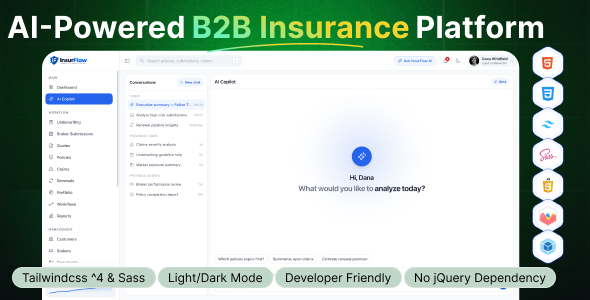
InsurFlow – AI-Powered B2B Insurance Platform HTML Template InsurFlow – AI-Powered B2B Insurance Platform HTML Template is a modern and technology-focused website...
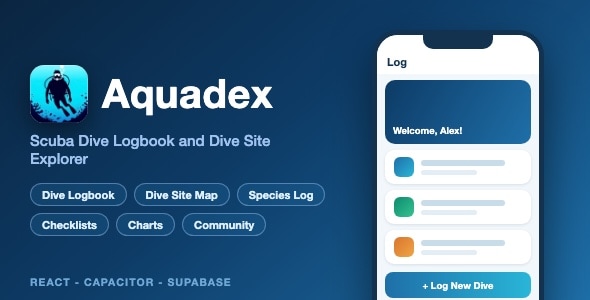
Aquadex | Dive Logbook and Dive Site Explorer With Species Log - Capacitor Explore underwater destinations, document memorable dives, and record marine...

Orvexa | AI Operations HTML Admin Template Orvexa | AI Operations HTML Admin Template is a modern administrative dashboard template designed for...
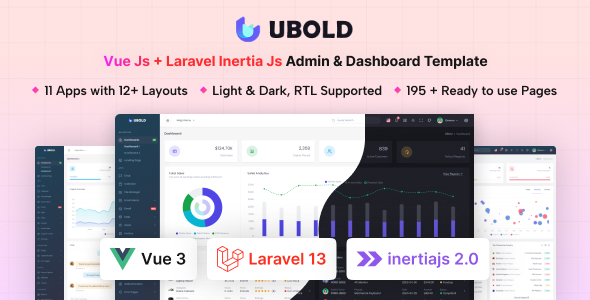
UBold - Vue + Laravel Inertia Js Tailwind CSS Admin Dashboard Template UBold is a powerful and modern admin dashboard template built...
