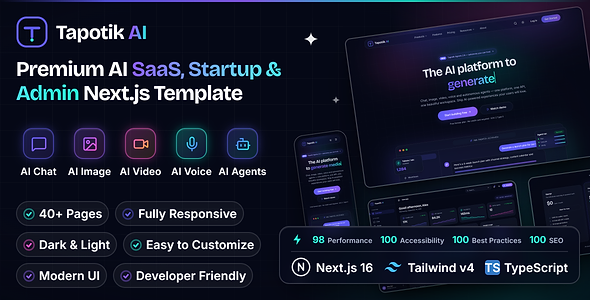
Tapotik AI – Premium AI SaaS, Startup & Admin Next.js Template is a modern website template designed for artificial intelligence startups, SaaS businesses, AI-powered software products, technology companies, and digital service providers. Built around the Next.js development ecosystem, Tapotik AI provides a potential foundation for creating a professional AI product website, presenting software features, introducing subscription offerings, and organizing administrative interface layouts. Its combination of AI SaaS positioning and admin-focused design makes it suitable for developers and businesses looking to establish a polished online presence for AI products, software services, and technology platforms.
Artificial intelligence and software-as-a-service businesses need websites that explain their products clearly, demonstrate their value, and guide visitors toward trying or purchasing a solution. At the same time, SaaS applications often require administrative interfaces for organizing users, reviewing activity, and managing operational information.
Tapotik AI is positioned to address these design needs through a Next.js-based template focused on AI products, startups, SaaS websites, and administration interfaces. It can serve as a starting point for presenting an AI product’s capabilities, explaining its use cases, displaying pricing information, and organizing application-related interface screens.
For an AI startup, the website can introduce intelligent automation, generative AI services, content creation tools, business productivity solutions, or other software offerings. For a SaaS business, it can provide a foundation for communicating product benefits, onboarding potential customers, and presenting subscription plans.
The Next.js ecosystem gives developers a modern JavaScript and React-based environment for extending the project. However, the template should not automatically be considered a complete operational AI SaaS platform. Features such as AI inference, billing, user authentication, database management, and subscription enforcement depend on the supplied implementation and any additional integrations.
A technology product website needs to communicate innovation while remaining clear and easy to navigate. Tapotik AI provides a potential starting point for presenting an AI-focused business with a professional visual identity.
The website can be customized to explain the product’s purpose, introduce its primary benefits, highlight important features, and guide visitors toward a relevant action.
Typical website sections for an AI SaaS product may include:
The availability and exact layout of these sections should be confirmed through the official demo and supplied package.
Developers can adapt the visual presentation to suit different markets, including AI productivity software, business automation tools, content platforms, analytics products, and developer-focused applications.
AI businesses often need to explain technical capabilities in terms that prospective customers can understand. A dedicated product section can communicate what the software does, which problems it addresses, and how users might benefit from it.
Tapotik AI can be adapted to present services such as:
These are potential content applications rather than a claim that the template implements each AI capability.
An effective product page should explain the intended audience, key benefits, practical use cases, and any important limitations. Where available, screenshots, product demonstrations, and examples can help visitors understand the solution before signing up.
A SaaS landing page should make the product’s value proposition clear and help visitors decide what to do next.
Tapotik AI can serve as a starting point for creating landing pages that introduce the software, communicate its differentiators, and guide visitors toward actions such as requesting a demo, exploring features, contacting sales, or beginning registration.
Useful conversion elements may include:
These sections can be adapted to the business model and target audience. For example, an enterprise AI platform may emphasize security, integration capabilities, and business value, while a self-service SaaS product may focus on ease of use and subscription options.
Working signup, lead capture, and account creation flows require functioning application logic or suitable external services.
Administrative interfaces are important for SaaS applications that require internal management of users, records, and operational information.
Tapotik AI’s admin-focused positioning makes it worth evaluating for projects that need dashboard-oriented layouts alongside their public-facing website.
An administrative interface may contain components such as navigation menus, summary cards, data tables, charts, filters, status indicators, and account settings, depending on the supplied implementation.
Potential dashboard use cases include:
These are common dashboard design patterns, not confirmed built-in functions of Tapotik AI. Developers should review the included admin pages and components to identify the actual available layouts.
A dashboard that displays sample data is not the same as a working administration system. Live data, permissions, database operations, and administrative actions require appropriate backend connections and application logic.
Subscription pricing is an important part of many SaaS business models. A dedicated pricing section can help explain the available plans and communicate differences between them.
A SaaS website may present free, starter, professional, and enterprise options, depending on the actual business model.
Plan information can include the intended audience, usage allowances, feature availability, billing frequency, and relevant conditions. Clear pricing communication helps potential customers understand what they receive before subscribing.
If the supplied template contains pricing layouts, developers can customize them to match the actual product’s plans.
However, displaying subscription prices does not automatically implement recurring billing, usage limits, plan upgrades, cancellations, or payment verification. Those functions require a suitable billing provider and backend logic unless explicitly included.
A growing AI business may serve several customer segments, each with different requirements. Dedicated feature and use case pages can help explain how the product fits different workflows.
For example, an AI productivity platform could present use cases for marketers, business owners, content teams, customer support departments, and developers.
A feature page can explain the purpose of an individual capability, describe how it fits into the workflow, and provide relevant examples.
This structure can also support a more organized website as the product grows. Developers can add new pages and content sections as additional features become available.
The actual page structure and component organization depend on the template’s supplied codebase.
Next.js builds on React and supports component-based interface development. When Tapotik AI follows standard React conventions, developers can organize the website into reusable elements and maintain consistent layouts across different pages.
Reusable components may include navigation bars, buttons, cards, feature sections, forms, dashboard widgets, and footer layouts.
A component-based approach can simplify visual updates and reduce duplicated interface code. Shared components also help maintain consistent spacing, typography, and behavior throughout the application.
The precise architecture depends on the included implementation, including its routing system, component structure, and any additional libraries.
Next.js supports structured routing for multi-page websites and applications. This can be useful for separating public marketing pages, product information, account-related screens, and administrative interfaces.
Depending on the project’s implementation, developers may organize routes for product features, pricing, contact information, documentation, and dashboard sections.
Protected routes, account permissions, and role-specific navigation require appropriate authentication and authorization logic. A route that visually resembles an admin page is not automatically protected from unauthorized access.
Developers should inspect the existing routing setup and follow the conventions used by the supplied project.
A template should reflect the identity of the product or company using it. Tapotik AI can potentially be adapted through changes to branding, colors, typography, imagery, text, and page structure.
Customization may include:
A consistent design system can help create a professional experience across both public-facing and administrative pages.
The exact styling approach, CSS framework, and available theme options should be confirmed from the supplied source files.
A Next.js front end can be connected to backend services and external APIs to support dynamic application behavior.
Potential integrations include authentication services, databases, analytics tools, customer relationship management systems, email providers, billing platforms, and AI model APIs.
For an AI SaaS product, a backend may be required to manage prompts, process requests, apply usage limits, record transactions, and protect sensitive credentials.
Private API keys should not be exposed in browser-delivered JavaScript. AI requests and other sensitive operations should be handled through an appropriately secured server-side layer.
These integrations require additional configuration and development unless they are already implemented in the supplied package.
Tapotik AI may be considered for a variety of technology projects.
AI startups: Establish a professional online presence for an AI-focused product or service.
AI content platforms: Present writing, summarization, and content productivity features, with actual AI processing supplied separately where needed.
Business automation SaaS: Explain automation workflows and communicate potential operational benefits.
Marketing technology products: Present tools for marketing workflows, campaign support, and content operations.
Enterprise software companies: Organize product information and provide a foundation for administrative interface design.
SaaS developers: Use the template as a starting point for a multi-page product website and related UI screens.
Digital agencies: Customize the design for clients building AI products, technology websites, and software platforms.
The suitability of the template depends on its actual page collection, included components, licensing conditions, and the project’s functional requirements.
SaaS websites and dashboards need to remain usable across different screen sizes. Visitors may explore product pages on smartphones, while administrators may use larger displays to review detailed information.
When evaluating Tapotik AI, check the actual implementation for responsive navigation, readable typography, properly scaled cards, accessible buttons, and dashboard layouts that work on smaller screens.
Administrative tables and charts may need special attention because complex data interfaces can become difficult to use on mobile devices.
Accessibility considerations include logical heading structures, keyboard navigation, appropriate color contrast, clear form labels, and meaningful alternative text for informative images.
The supplied implementation should be tested directly to verify its responsive behavior and accessibility.
Website speed and technical SEO can affect the visibility and usability of an AI SaaS marketing website.
Next.js provides several rendering and optimization options, but the benefits depend on how the project is configured and deployed.
Recommended practices include:
For marketing pages that depend on organic search, the chosen rendering strategy should support reliable access to the important page content.
An attractive template alone does not guarantee search rankings or high performance. These outcomes depend on implementation, content, hosting, and ongoing optimization.
Security becomes especially important when a SaaS website includes user accounts, subscription billing, AI services, or administrative functionality.
Developers should validate inputs, secure server-side endpoints, protect session information, and keep application dependencies updated.
If authentication is implemented, access controls must be enforced on the server rather than relying only on hiding dashboard links in the interface.
Administrative actions should be restricted to authorized users, and sensitive data should only be accessible to the appropriate accounts.
AI integrations should protect provider credentials and apply suitable request validation, usage limits, and error handling.
Payment integrations should use an appropriate payment provider and verify transaction results securely. A front-end template alone cannot provide these safeguards.
Regular updates, backups, testing, and monitoring can help maintain the application as the product evolves.
The setup process depends on the Next.js version, package manager, project structure, and dependencies included with Tapotik AI.
A typical installation workflow may involve:
The required deployment configuration may differ depending on whether the project uses static generation, server-side rendering, server actions, or other server-dependent features.
If AI APIs, databases, authentication, or billing services are integrated, their configuration and security requirements must also be addressed.
Always follow the official documentation to confirm the exact setup commands, supported versions, and hosting requirements.
Tapotik AI may be suitable for:
AI software startups: Present an AI product, explain its value proposition, and guide prospective customers toward product inquiries.
SaaS companies: Build a marketing website that introduces software features and subscription offerings.
Technology businesses: Establish a professional online presence for AI and software-related services.
AI product developers: Use a website and interface foundation for a project that will be connected to a separately developed AI backend.
Admin dashboard developers: Evaluate the included dashboard layouts as a starting point for internal management interfaces.
Web development agencies: Customize the template for client projects involving AI products, SaaS websites, and technology platforms.
Before selecting the template, review its included pages, actual dashboard components, licensing terms, dependencies, and the extent of backend functionality provided.
Tapotik AI – Premium AI SaaS, Startup & Admin Next.js Template provides a potential foundation for creating a professional website and interface experience for AI startups, SaaS companies, and technology-focused businesses.
Its AI SaaS positioning makes it suitable for presenting product capabilities, explaining services, communicating subscription options, and establishing a consistent brand identity. Its admin-focused positioning also makes it worth evaluating for projects that need dashboard-oriented interface layouts.
Built around the Next.js ecosystem, the template can provide developers with a starting point for customization and integration. However, production-ready functionality such as AI processing, user authentication, subscription billing, database management, and secure administrative operations must be confirmed in the supplied package or implemented separately.
For developers and businesses seeking a customizable foundation for an AI SaaS project, Tapotik AI is worth evaluating against the project’s design goals, technical requirements, and intended application architecture. Reviewing the official demo, documentation, included source files, and licensing conditions will help determine whether it is the right choice.
1. All digital products are the most recent version, with no possibility of free updates. After payment, you can request an update to the most recent version for 5 days if a new version is released. We free support within 5 days.
2. If a license is required (Excludes WHMCS license , we provide only method not license), please contact us via email or ticket for assistance with activation. Our license is only valid for activation and does not include support.
3. We provide Mobile, PHP script installation services for $19.90 / ₹1700. Please create a backup after installation as we do not support re-installation. For mobile app source code, we do not offer installation services.
4. If you have any questions, please contact us by email [email protected] or create a ticket on this page
5. Please note that any digital products presented on the website do not contain malicious code, viruses or advertising. You will receive the original files from the developers. We do not sell any products that have been downloaded from other websites.
6. The response time can last up to 6 hours.
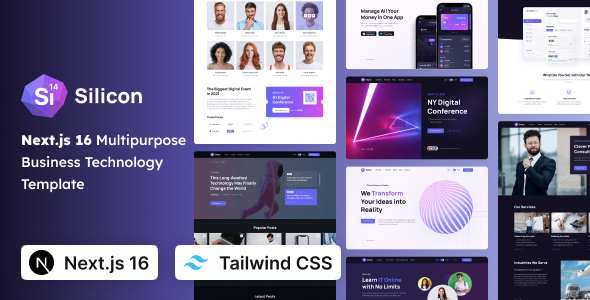
Silicon - Multipurpose Business, SaaS & Technology Tailwind CSS Next Template Silicon - Multipurpose Business, SaaS & Technology Tailwind CSS Next Template...
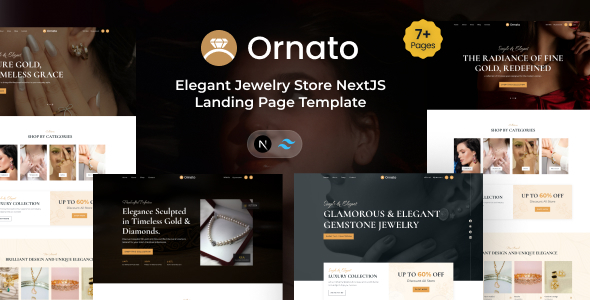
Ornato - NextJS Elegant Jewelry Store Landing Page Template Ornato is a luxurious and professionally crafted NextJS landing page template designed specifically...
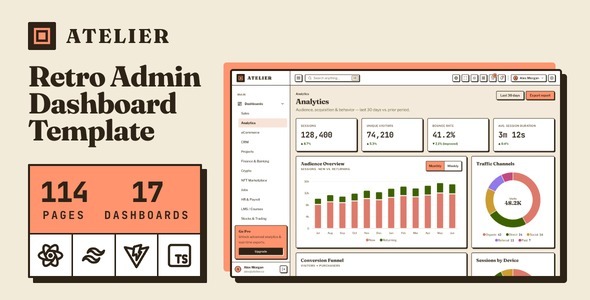
Atelier | Retro Style Admin & Dashboard Template Atelier | Retro Style Admin & Dashboard Template is a distinctive administrative interface template...
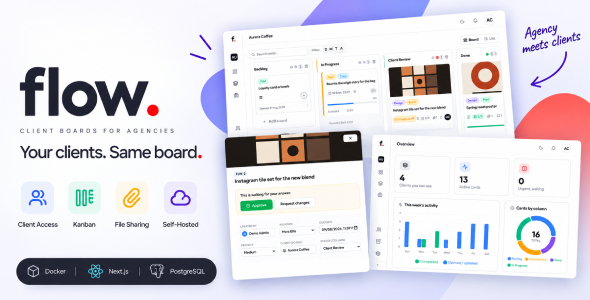
Flow | Client Portal and Kanban Project Management for Agencies Flow | Client Portal and Kanban Project Management for Agencies is a...
