
Pixy – Creative Agency Portfolio NextJS Template is a modern website template designed for creative agencies, digital marketing companies, design studios, freelancers, and professionals who want to showcase their work through an engaging online portfolio. With a creative presentation style and a development foundation built around Next.js, Pixy provides a starting point for building a professional digital presence that highlights services, projects, creative expertise, and brand identity.
In today’s competitive digital landscape, a well-designed portfolio website can help businesses communicate their value, demonstrate their capabilities, and build trust with potential clients. Pixy is suitable for creating an agency website that presents creative work in an organized and visually appealing format while giving visitors a clear path to explore services and make inquiries.
Whether you operate a branding agency, web development studio, graphic design business, advertising company, or independent creative practice, Pixy – Creative Agency Portfolio NextJS Template can serve as a foundation for developing a customized portfolio website that reflects your brand and business goals.
A creative agency website should communicate professionalism while giving its work the attention it deserves. Pixy is intended for portfolio-focused websites where visual presentation, clear content structure, and brand personality play an important role.
A well-organized agency website can introduce the business, explain its expertise, showcase selected projects, and guide visitors toward contacting the team. With appropriate customization, the interface can be adapted to different creative industries and business models.
Agencies can personalize the website’s visual identity through brand colors, typography, imagery, page content, and layout adjustments. This makes it possible to create a distinctive online experience rather than relying on a generic corporate website structure.
The final appearance and available page layouts depend on the components and design variations included in the original template package.
Next.js is a React-based framework for developing modern web applications and websites. It provides tools for structuring pages, reusing components, and choosing appropriate rendering approaches for different project requirements.
Pixy – Creative Agency Portfolio NextJS Template provides a starting point for developers who prefer building websites within the Next.js ecosystem. Developers familiar with React can adapt existing interface components, customize page sections, and extend the project according to the needs of an agency or portfolio business.
Using a framework-based template can help reduce repetitive interface development and establish a more consistent project structure. Instead of building every visual element from scratch, developers can focus on customizing the design, organizing content, and implementing the functionality needed for the final website.
The exact Next.js version, dependency requirements, styling technology, and project configuration should be confirmed in the included documentation before installation.
The homepage is often the first point of contact between a creative business and a potential client. It should communicate the agency’s identity, services, and strengths without making visitors work too hard to understand the offering.
Pixy can be customized to create a homepage that introduces the agency, highlights its creative direction, and presents its most important information in a logical sequence. Depending on the included layouts, suitable content may include an introductory hero section, service summaries, selected portfolio projects, company information, client testimonials, and contact prompts.
A strong homepage should balance visual impact with usability. Clear messaging, readable typography, meaningful imagery, and well-placed calls to action can help visitors understand the business and decide whether its services match their needs.
Developers can adapt the homepage content for different audiences, including startups, established companies, local businesses, and international clients.
A portfolio is one of the most important elements of a creative agency website. It allows potential clients to evaluate previous work, understand the agency’s style, and assess the relevance of its experience to their own projects.
Pixy – Creative Agency Portfolio NextJS Template can be adapted to present creative projects through organized portfolio sections and project-focused content. Depending on the components included, developers may be able to customize project cards, image galleries, category labels, and individual project presentation pages.
Portfolio content can cover a variety of creative disciplines, including:
For stronger results, each project should include relevant visuals, a concise explanation of the objective, the work performed, and the outcome where available. A carefully selected portfolio can demonstrate expertise more effectively than a large collection of unrelated projects.
Dynamic portfolio filtering, detailed case-study pages, and content-management integrations should be verified against the original package or implemented separately where necessary.
A professional agency website should explain what the business offers and how its services can help clients. Clearly defined service sections can make the website more informative and support visitors who are comparing different providers.
Pixy can be customized to present service categories relevant to the agency’s business model. For example, a digital agency may showcase website development, search engine optimization, paid advertising, social media management, branding, and content creation.
A design studio might focus on user experience design, interface design, brand identity, creative strategy, and visual communication. An independent developer could adapt the same general portfolio approach to highlight technical services, selected projects, and specialist expertise.
Each service section should explain the value delivered rather than simply listing a service name. Clear descriptions, relevant examples, and straightforward contact options can help prospective clients understand the agency’s capabilities.
The specific service pages and layouts available depend on the template package and any custom development.
An effective portfolio website communicates more than the services a company sells. It also explains the people, experience, approach, and values behind the work.
Pixy can be adapted to include an agency introduction, company background, creative philosophy, team information, and other brand-building content. These sections can help potential clients understand how the business works and what distinguishes it from competitors.
For a small creative studio, the emphasis might be on personal attention and specialized expertise. A larger agency may prefer to highlight its multidisciplinary team, collaborative process, and experience across industries.
Authentic descriptions, relevant imagery, and consistent branding can make the website feel more credible and memorable.
Trust is important when potential clients are deciding which agency to hire. A portfolio website can support that decision by presenting credible evidence of experience and client satisfaction.
Where the template provides suitable sections, Pixy can be customized to display client testimonials, project highlights, business credentials, or other relevant trust-building information.
Testimonials should be genuine and used with appropriate permission. Project descriptions should accurately represent the work completed, while client logos and other brand assets should only be used when authorized.
For agencies with measurable results, selected case studies can communicate the business impact of a project. This can include improvements in usability, campaign performance, website engagement, or operational efficiency when reliable data is available.
The availability of dedicated testimonial sliders, client-logo sections, or other specialized components should be confirmed in the included files.
Potential clients may discover an agency through desktop searches, mobile social media, shared project links, or tablet browsing. A responsive website helps ensure that the portfolio remains usable across different screen sizes.
Pixy can be evaluated and customized for a consistent browsing experience on desktops, laptops, tablets, and smartphones. During implementation, developers should check navigation, image scaling, project grids, text readability, spacing, and interactive controls.
Portfolio websites often contain large images and visually detailed project previews. Optimizing those assets and reviewing how they appear on smaller screens can help preserve the quality of the presentation without making the website unnecessarily difficult to use.
Responsive behavior should be tested using the actual template and supported browsers rather than assumed from the product name alone.
Every creative business has a distinct visual language. A customizable portfolio template allows agencies to align the website with their existing brand identity and target audience.
Pixy – Creative Agency Portfolio NextJS Template can serve as a starting point for adjusting brand colors, typography, images, logos, page content, and interface styling. Developers can also reorganize sections and adapt the messaging to suit different creative specialties.
A minimalist design studio might choose generous spacing, restrained colors, and large project imagery. A digital marketing agency may prefer a more energetic presentation with prominent service descriptions and clear conversion-focused calls to action.
Consistency is essential. The same visual language should carry through the homepage, service sections, project pages, and contact experience.
The extent of customization depends on the source code, styling conventions, reusable components, and documentation supplied with the product.
A portfolio website should make it easy for interested visitors to take the next step. Clear contact options help turn website traffic into meaningful business inquiries.
Pixy can be adapted to support contact-focused sections that encourage visitors to discuss a project, request a quotation, or learn more about the agency’s services.
Depending on the included functionality, a developer may configure contact forms, email links, telephone links, social media profiles, or external scheduling tools. Forms that need to deliver messages require appropriate processing, validation, spam protection, and a reliable delivery method.
Businesses can also improve the inquiry experience by explaining the types of projects they accept, the information clients should provide, and the next steps after submitting a request.
A contact interface is not necessarily connected to a working email service by default, so the actual submission and delivery functionality should be checked and configured before launch.
Search engine optimization can help a creative agency reach people searching for its services. A well-organized website provides a foundation for publishing relevant content and making important information accessible to search engines.
When configured appropriately, a Next.js website can support important SEO elements such as page titles, meta descriptions, canonical URLs, structured headings, image alternative text, and social sharing metadata.
Pixy can be customized with service-specific content, descriptive project pages, and relevant information about the agency’s location, specialties, and target market. For example, an agency serving local businesses may create content around its primary services and geographic service area.
Technical SEO requirements depend on the actual implementation. Developers should verify metadata handling, indexing behavior, sitemap generation, robots directives, canonical URLs, and rendering configuration rather than assuming every feature is included.
Search performance also depends on content quality, website speed, competition, authority, and other factors beyond the template itself.
Website performance matters for both visitors and business credibility. A portfolio should present high-quality visual work without creating unnecessary delays or making navigation frustrating.
A Next.js-based project can be configured to use appropriate image optimization, code organization, and rendering strategies, depending on the framework version and implementation. Developers should review large image assets, unnecessary dependencies, client-side JavaScript, and third-party scripts when optimizing the website.
Reusable components can make design updates more consistent and reduce the effort involved in maintaining repeated interface elements. Clear project organization and dependency management also help developers extend the site as the business evolves.
Actual performance depends on the supplied implementation, hosting environment, media assets, integrations, and development practices. Testing the completed website is essential before deployment.
Pixy – Creative Agency Portfolio NextJS Template can be adapted to a range of creative and professional website projects, depending on its included layouts and components.
Potential applications include:
These represent possible uses of the template rather than confirmation that every business-specific feature is included.
Pixy may be a suitable option for freelancers, agency owners, designers, and developers who want a Next.js-based starting point for a creative portfolio website.
It can be particularly useful for developers who are comfortable customizing React-based projects and want to adapt an existing interface instead of beginning with a blank project. Businesses with an established visual identity can use the template as a foundation for presenting their services and work in a more cohesive online format.
Before choosing the template, review the available demo, included pages, source files, documentation, framework compatibility, and license terms. Confirm that the supplied components match the project’s requirements and account for any additional development needed for dynamic content, forms, or third-party integrations.
Getting started with Pixy – Creative Agency Portfolio NextJS Template generally involves downloading the product, reviewing its documentation, preparing the development environment, and installing the required dependencies.
A typical workflow may include:
The precise installation commands and deployment requirements depend on the package version and project configuration. Follow the official product documentation for accurate instructions.
Pixy – Creative Agency Portfolio NextJS Template is a website development resource intended to help users build and customize a creative agency or portfolio website. Before purchasing, check the official product listing and documentation for the exact features, supported framework versions, included layouts, dependencies, and licensing conditions.
Do not assume that a frontend template automatically includes a content management system, database, authentication system, project management platform, or complete backend application. Features such as dynamic portfolio management, advanced contact processing, and third-party integrations may require additional development.
Hosting, domain registration, external services, premium dependencies, and custom implementation work may also involve separate costs.
Pixy – Creative Agency Portfolio NextJS Template provides a starting point for creating a modern online presence for creative agencies, digital studios, freelancers, and design professionals. Its portfolio-oriented purpose makes it suitable for websites that need to communicate creative expertise, present completed projects, explain services, and encourage prospective clients to get in touch.
With Next.js as its development foundation, Pixy can be customized to reflect different brand identities and business requirements. By combining thoughtful content, compelling project imagery, appropriate SEO configuration, responsive layouts, and functional contact options, developers can turn the template into a professional website tailored to their creative business.
For anyone planning a creative agency website or a Next.js-powered portfolio, Pixy – Creative Agency Portfolio NextJS Template is worth considering as a foundation for building a distinctive and professional digital presence.
1. All digital products are the most recent version, with no possibility of free updates. After payment, you can request an update to the most recent version for 5 days if a new version is released. We free support within 5 days.
2. If a license is required (Excludes WHMCS license , we provide only method not license), please contact us via email or ticket for assistance with activation. Our license is only valid for activation and does not include support.
3. We provide Mobile, PHP script installation services for $19.90 / ₹1700. Please create a backup after installation as we do not support re-installation. For mobile app source code, we do not offer installation services.
4. If you have any questions, please contact us by email [email protected] or create a ticket on this page
5. Please note that any digital products presented on the website do not contain malicious code, viruses or advertising. You will receive the original files from the developers. We do not sell any products that have been downloaded from other websites.
6. The response time can last up to 6 hours.
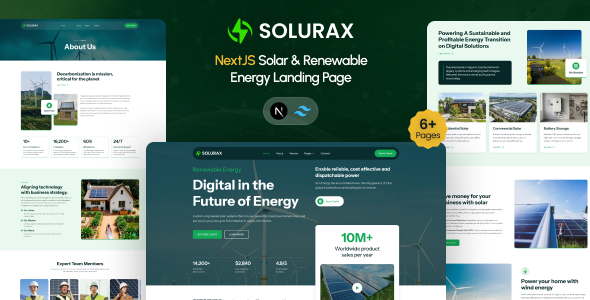
Solurax - NextJS Renewable & Solar Energy Landing Page Template Solurax - NextJS Renewable & Solar Energy Landing Page Template is a...
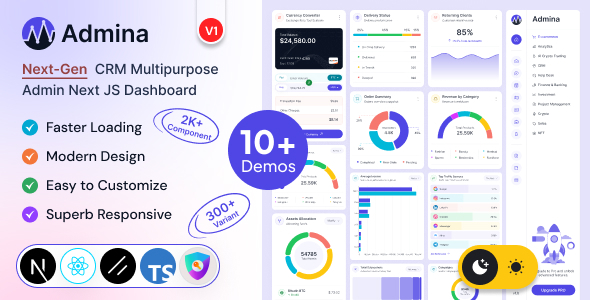
Admina - Tailwind & Nextjs Admin Dashboard with shadcn UI Admina - Tailwind & Nextjs Admin Dashboard with shadcn UI is a...
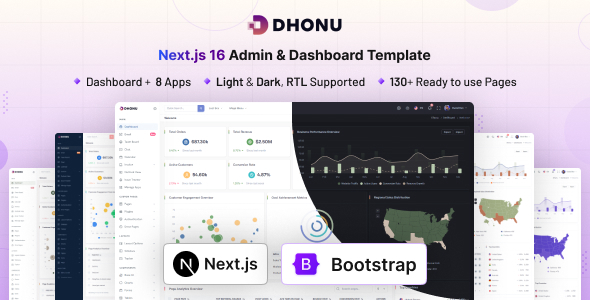
Dhonu - Next.js Admin & Dashboard Template Dhonu - Next.js Admin & Dashboard Template is a modern dashboard template designed for developers,...
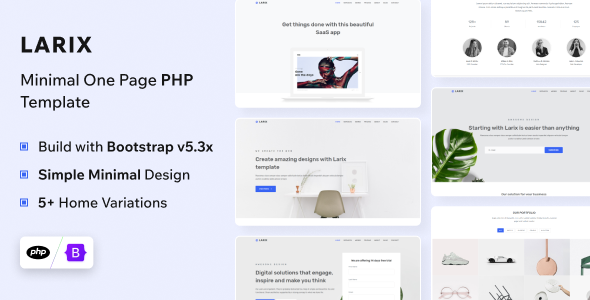
Larix - PHP Landing Page Template Larix is a modern and highly versatile PHP landing page template designed for startups, SaaS businesses,...
