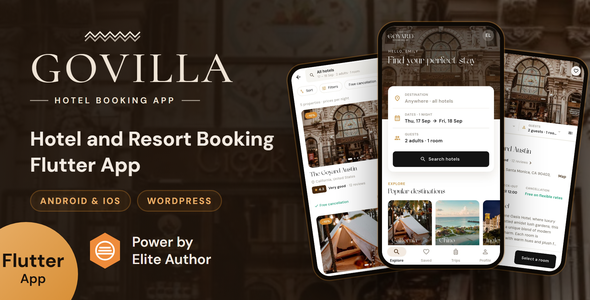
Govilla | Hotel and Resort Booking Flutter App is a modern mobile application template designed for businesses and developers who want to build a hotel reservation, resort booking, or travel accommodation application using Flutter. Created for the hospitality and tourism industry, Govilla provides a foundation for developing an engaging mobile experience where travelers can explore accommodation options, review property information, and move toward booking their preferred stay. Its Flutter-based approach makes it suitable for projects targeting Android and iOS, helping developers establish a consistent mobile experience across platforms while reducing the need to build separate applications from scratch.
Whether you are planning a hotel booking startup, a resort reservation platform, a vacation rental application, or a digital solution for hospitality businesses, Govilla can help streamline the initial UI development process. Developers can adapt the template to match their branding, connect it with suitable backend services, and extend its interface according to their business requirements.
A professional accommodation booking application needs to communicate trust, comfort, and convenience from the first screen. Travelers want to discover suitable properties quickly, understand the available amenities, and review essential details before making a reservation.
Govilla offers a starting point for creating this type of experience through a mobile-first interface concept. The design can be customized to support hotel discovery, resort exploration, accommodation details, and booking-related user journeys.
The interface can be adapted to different hospitality brands, from boutique hotels and luxury resorts to budget accommodations and holiday destinations. Developers can customize colors, typography, icons, imagery, spacing, and other visual elements to create a recognizable identity for their application.
Flutter is a cross-platform framework that allows developers to build mobile applications using a shared codebase. For a hotel and resort booking project, this approach can help reduce duplicated interface development and maintain a more consistent design across supported platforms.
Depending on the included project structure and the developer’s implementation, the Govilla template can serve as a foundation for:
The actual platform compatibility, Flutter version, dependencies, and build requirements should be checked against the package documentation before installation.
Property discovery is an important part of the accommodation booking journey. Users typically want to find a suitable place to stay based on their destination, travel dates, budget, property type, and personal preferences.
Govilla can be adapted to support a property discovery interface that organizes accommodation options into an accessible browsing experience. Depending on the implemented screens and backend integration, this experience may include property cards, destination images, accommodation summaries, and entry points to detailed property information.
A well-organized discovery experience helps users compare their options without navigating through an unnecessarily complicated interface. Developers can also tailor the browsing experience for specific business models, including luxury resorts, business hotels, family accommodation, or regional travel platforms.
Before reserving a room, travelers often need more information than a property name and a photograph. They may want to review room categories, amenities, location details, pricing information, accommodation policies, and other important conditions.
A hotel booking application built using Govilla can be extended with detailed property screens that present relevant information in a clear and structured format.
Potential content areas include:
The availability of these screens and fields depends on the supplied template. Additional sections can be implemented where the existing package does not include them.
Search and filtering features can make an accommodation application more practical, particularly when the platform contains a large number of properties.
Developers can evaluate Govilla as a foundation for a search experience that allows users to identify relevant hotels and resorts according to their travel requirements. With the necessary implementation, search tools may support destinations, arrival and departure dates, guest counts, room preferences, price ranges, property categories, and selected amenities.
Filtering can help users narrow down the results, while sorting options can organize properties by price, popularity, or other supported criteria.
These capabilities require suitable application logic and, where applicable, a backend search service. They should not be assumed to be fully operational in the original template without checking its included functionality.
An effective hotel reservation journey should make it easy for travelers to move from browsing a property to reviewing the details of a potential stay.
Govilla can provide a starting point for designing a booking workflow that connects property discovery, room selection, reservation details, and confirmation screens. Developers can adapt this flow to the policies and operational requirements of their accommodation business.
A complete booking implementation may include:
Real-time room availability, reservation processing, and confirmation require appropriate backend functionality. A UI template alone does not guarantee live inventory, completed reservations, or payment processing.
For a more personalized customer experience, a hotel booking application can include user accounts and reservation management tools.
Depending on the original package and additional development, the Govilla project can be extended with registration, login, profile management, saved traveler details, and booking history. These features can help returning customers access relevant reservation information without repeating every step of the process.
Developers may also integrate secure authentication services and account recovery functionality. If the application stores personal information, the implementation should follow appropriate data protection practices and use secure communication with the backend.
A convenient payment experience is an important consideration for online accommodation reservations. Travelers may expect to pay securely through supported digital payment methods, receive a transaction confirmation, and access their booking details afterward.
Govilla can be adapted to work with a suitable payment provider when the required backend and application integrations are implemented.
Depending on the target market, a booking platform may evaluate options such as Razorpay, Stripe, PayPal, or other regionally supported payment services. The right provider will depend on business registration, supported countries, settlement requirements, transaction fees, and the intended payment flow.
A production-ready implementation should handle payment status verification, failed transactions, duplicate requests, refunds, and booking confirmation consistently. Payment gateway availability should be verified in the original template rather than assumed from its category.
Every hospitality business has a different visual identity and customer base. A luxury resort may prefer a sophisticated presentation with high-quality destination photography, while a budget hotel platform may prioritize straightforward navigation and clear price comparisons.
Govilla can be customized to suit different branding requirements, subject to the flexibility of its source code.
Customization opportunities may include:
A consistent visual system helps establish brand recognition and makes the application easier to maintain as additional screens and features are introduced.
A functioning hotel booking service generally requires more than a mobile interface. Property information, room inventory, pricing, user accounts, reservations, and payment records need a reliable source of data.
Developers can connect the Govilla frontend to an appropriate backend through APIs, depending on the template’s architecture and integration support. A custom backend or compatible third-party service can manage the business logic and data needed for the application.
Potential backend responsibilities include property management, room availability, seasonal pricing, reservation records, user authentication, notifications, and administrative controls.
Before choosing a backend, review the template’s existing API structure, state management approach, dependencies, and data models. If the package contains only frontend screens, the required services will need to be developed or integrated separately.
Notifications can help travelers stay informed throughout the reservation process. A fully developed booking application may use push notifications or other communication channels to deliver booking confirmations, reminders, payment updates, and reservation changes.
Govilla can be extended with a suitable notification service where supported by the application architecture.
For example, notifications could remind guests about an upcoming check-in or inform them when a reservation status changes. Email or SMS integrations may also be useful for sending booking references and important accommodation information.
Notification delivery, scheduling, and user preferences require additional configuration and backend logic unless they are explicitly included in the supplied package.
Mobile usability is essential for travel applications because users frequently research and reserve accommodation while on the move.
Flutter supports interfaces that can adapt to different device dimensions, but the quality of the final experience depends on how the screens are implemented and tested. Developers should review layouts on different Android and iOS devices, check text scaling, and ensure that forms, images, buttons, and navigation remain accessible.
A well-structured booking experience should also provide clear loading indicators, useful validation messages, understandable error states, and appropriate feedback when an operation succeeds or fails.
These details help reduce confusion during important actions such as selecting dates, entering guest information, or completing a reservation.
Hotel booking applications may handle sensitive customer information, personal travel details, and payment-related workflows. Security and reliability should therefore be treated as essential parts of the final product.
Developers should use secure API connections, validate inputs, protect authentication credentials, and avoid storing sensitive information unnecessarily. Authorization checks should be enforced by the backend rather than relying only on the mobile interface.
Performance optimization can include appropriately sized images, efficient API requests, caching where suitable, and careful handling of application state. Booking operations should also account for situations in which room availability changes between the initial search and final reservation.
The template’s existing security and performance characteristics should be reviewed before deployment, as these qualities depend on both the supplied source code and the additional services used.
Govilla can be evaluated for a range of hospitality and travel-related projects, including:
Hotel Booking Startup: Build a branded mobile interface for discovering hotels and organizing accommodation reservations.
Resort Reservation Platform: Create a destination-focused application for showcasing resort properties, facilities, and room options.
Travel and Tourism Business: Develop a mobile experience that complements existing travel services and accommodation offerings.
Vacation Accommodation Marketplace: Establish a foundation for a platform featuring multiple properties and different accommodation categories.
Hotel Chain Application: Adapt the interface for a hospitality brand that wants to provide customers with a dedicated mobile booking experience.
App Development Agency: Use the template as a starting point for a client project, subject to the applicable license and the package’s customization capabilities.
Each use case may require different backend services, administrative tools, integrations, and business rules.
Before beginning development, review the supplied package and its documentation to understand the project structure and prerequisites.
A typical Flutter setup involves installing a compatible Flutter SDK, configuring Android Studio or another supported development environment, resolving the project’s dependencies, and preparing the required Android and iOS build configurations.
The development process generally includes:
The exact installation procedure depends on the files, Flutter version, plugins, and configuration included with Govilla.
Govilla provides a starting point for developers who want to explore a hotel and resort booking application using Flutter. Rather than beginning with an entirely blank mobile project, developers can assess the included interface, adapt suitable components, and focus their development effort on the specific requirements of their hospitality platform.
Its potential value lies in its accommodation-booking focus, cross-platform development approach, and flexibility for customization. It may be suitable for entrepreneurs validating a travel app concept, agencies developing hospitality solutions, and businesses planning a branded mobile reservation experience.
As with any application template, the final result depends on the quality of the included code, the completeness of the screens, the integrations selected, and the developer’s implementation.
Govilla | Hotel and Resort Booking Flutter App is a Flutter-based mobile application template for developers and businesses exploring hotel reservations, resort discovery, and accommodation booking solutions. It offers a potential foundation for creating a branded Android and iOS application tailored to the hospitality industry.
By customizing the interface and connecting the appropriate backend, availability management, booking logic, and payment services, developers can work toward a complete accommodation reservation platform. Before purchasing or deploying the template, review its official documentation, included screens, source-code quality, Flutter compatibility, and licensing terms to confirm that it meets your project requirements.
1. All digital products are the most recent version, with no possibility of free updates. After payment, you can request an update to the most recent version for 5 days if a new version is released. We free support within 5 days.
2. If a license is required (Excludes WHMCS license , we provide only method not license), please contact us via email or ticket for assistance with activation. Our license is only valid for activation and does not include support.
3. We provide Mobile, PHP script installation services for $19.90 / ₹1700. Please create a backup after installation as we do not support re-installation. For mobile app source code, we do not offer installation services.
4. If you have any questions, please contact us by email [email protected] or create a ticket on this page
5. Please note that any digital products presented on the website do not contain malicious code, viruses or advertising. You will receive the original files from the developers. We do not sell any products that have been downloaded from other websites.
6. The response time can last up to 6 hours.
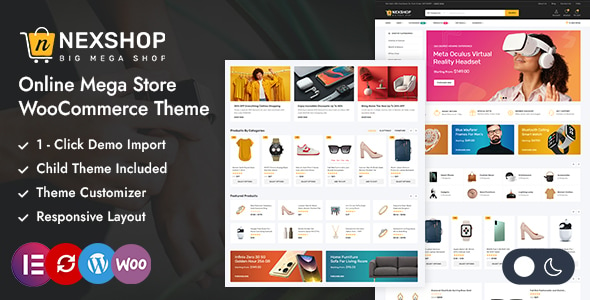
Nexshop - Mega Store Elementor WooCommerce Theme Nexshop - Mega Store Elementor WooCommerce Theme is a versatile eCommerce website theme designed for...

Learning Diner | HTML5 Educational Money and Math Cooking Game Learning Diner is an engaging HTML5 educational game concept that combines cooking-themed...
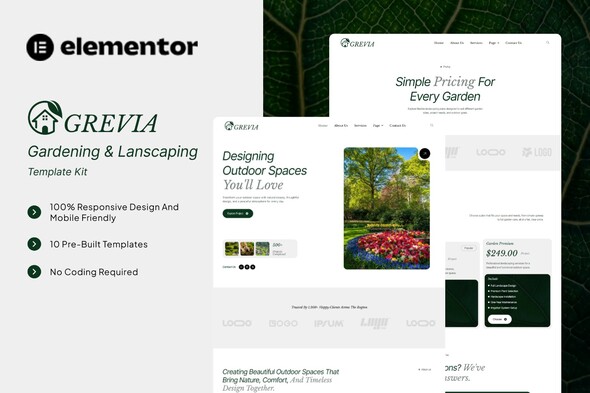
Grevia - Gardening & Landscaping Elementor Template Kit Grevia - Gardening & Landscaping Elementor Template Kit is a modern and professional website...
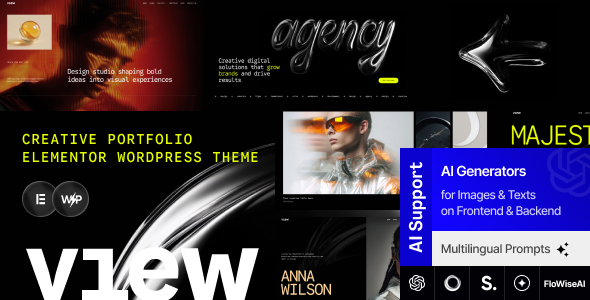
View - Creative Portfolio Elementor WordPress Theme View - Creative Portfolio Elementor WordPress Theme is a modern website theme designed for creative...
