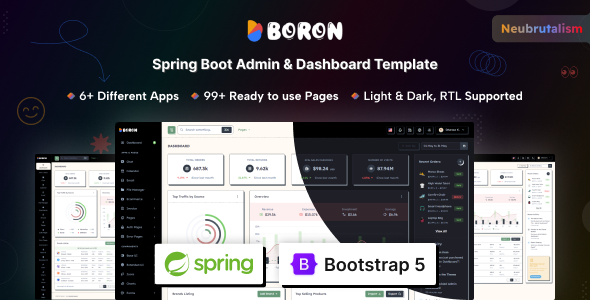
Boron – Spring Boot Admin & Dashboard Template is a professional admin dashboard template designed for developers and businesses building web applications with Spring Boot. It provides a structured foundation for creating administrative interfaces, management systems, analytics dashboards, and enterprise applications. Moreover, it helps developers organize application data and build a consistent user interface for everyday business operations.
Boron is suitable for projects that need an organized dashboard alongside a Java-based backend. Developers can adapt the interface to their branding, application modules, and business requirements. As a result, it can help simplify frontend development and provide a starting point for building scalable management applications.
Boron focuses on administrative interface design and Spring Boot-based application development. The exact features depend on the included product package and its implementation.
Spring Boot Integration: Use the template as a foundation for a Java-based web application built with Spring Boot, subject to the supplied project structure and compatibility requirements.
Modern Admin Dashboard: Organize important application information into structured sections. These may include summaries, recent activities, statistics, and other business data when the required components are included.
Reusable UI Components: Maintain a consistent interface through common elements such as buttons, forms, cards, navigation menus, and tables, depending on the package.
Organized Navigation: Arrange application modules in a clear menu structure so users can access relevant pages and administrative functions.
Data Management Interface: Create screens for reviewing and managing records, application information, and business operations.
Customizable Layout: Adapt the visual appearance, colors, typography, and page structure to match your application’s identity.
Backend Development Foundation: Connect the interface to suitable Spring Boot services and database operations to support the functionality your application requires.
Boron can serve as a starting point for several types of Java-based business applications. Its dashboard-oriented design can be adapted to different industries and workflows.
Furthermore, developers can customize the application around specific business needs. For example, a CRM may require customer tables and lead management screens, while an inventory system may focus on stock records and product information.
A dashboard should help users understand important information quickly. Boron can provide a visual foundation for presenting application data in an organized layout.
For example, a sales dashboard might display revenue summaries, customer counts, pending orders, and recent transactions. An inventory dashboard could highlight stock levels, product categories, and items that need attention.
Charts, tables, and summary cards can make complex information easier to review. However, live statistics require connections to suitable data sources and the relevant business logic.
Depending on the included components, you may need to configure a charting library or develop additional visualizations. Therefore, review the product demo and documentation to confirm which dashboard elements are included.
Spring Boot is a Java framework that helps developers build web applications and backend services. Boron can provide a starting point for projects that use this technology, provided the package supports the intended architecture.
Developers can build REST APIs, implement business logic, and connect application services to databases. The dashboard can then communicate with these services to display and update information.
Depending on the project, the backend may use Spring MVC, Spring Data, Spring Security, or other compatible libraries. However, these technologies are not necessarily included or configured in the template.
Before development, review the supplied source code, Java version, Spring Boot version, build tool, and dependency requirements. This helps ensure that the project matches your development environment.
Administrative applications often rely on forms and tables to manage information. Boron can provide a design foundation for these common interface patterns.
Forms may support creating records, editing user information, updating settings, or submitting data. Tables can organize customers, employees, products, transactions, and other business records.
You can customize these interfaces to match your application’s workflows. For example, an employee management system may require forms for employee details, while an inventory application may need fields for product quantities and stock status.
However, interface components do not automatically provide complete data management functionality. Developers must implement validation, API communication, database operations, error handling, and permission checks as required.
Many administrative applications need secure access controls. Spring Boot supports several approaches to implementing authentication and authorization, including integration with Spring Security.
Depending on the supplied package, Boron may provide a visual starting point for login pages or other account-related interfaces. The actual authentication process must be verified in the product documentation.
A production application may require secure login, session management, role-based access control, password recovery, and protected API endpoints. These functions need appropriate backend implementation.
In addition, validate incoming data, protect sensitive routes, manage credentials securely, and apply suitable access permissions. Never rely on frontend controls alone to protect confidential information.
Your application should have a consistent visual identity. Boron provides a starting point that developers can adapt to match their product or organization.
You can customize colors, typography, spacing, navigation, and dashboard layouts. For example, an enterprise application may use a compact layout with detailed tables, while a SaaS platform may prioritize summary cards and simplified navigation.
You can also remove unnecessary components and add new pages for your specific business requirements. This helps keep the interface focused and easier to maintain.
Before making extensive changes, review the template’s source structure and styling conventions. Following the existing architecture can make future updates and maintenance more manageable.
A complete management application usually requires a database and backend services. Boron can serve as the interface foundation, while Spring Boot can provide the server-side functionality when configured appropriately.
Depending on your requirements, you may connect the application to MySQL, PostgreSQL, or another compatible database. Spring Data or other suitable libraries can help manage data access.
REST APIs can connect the dashboard to backend services for retrieving, creating, updating, and deleting records. You may also integrate notifications, reporting services, and external APIs.
However, database connections, API endpoints, and application logic should not be assumed to come ready-made with the dashboard template. Review the included files to determine which features require additional development.
A dashboard should remain usable across different devices. Boron can provide a starting point for organizing content and navigation for desktop, tablet, and mobile screens.
Use clear menu labels, readable text, and consistent spacing. Keep important actions easy to find, and avoid displaying too much information in one section.
Additionally, test forms, tables, navigation menus, and charts on smaller screens. Complex tables may need horizontal scrolling or a different mobile layout.
Consider adding loading indicators, clear error messages, and useful empty states when connecting the dashboard to live data. These details help users understand the application when data is loading or an operation cannot be completed.
Performance matters when building a dashboard that handles large amounts of information. Developers can improve the final application by optimizing database queries, limiting unnecessary API requests, and managing large datasets efficiently.
Use pagination for large tables when appropriate. Avoid loading every record at once, and return only the information required for each screen.
In addition, review dependencies and remove unused components where practical. Test the application after updating libraries or framework versions to identify compatibility issues.
Before deployment, verify important workflows such as authentication, data entry, record updates, and error handling. Thorough testing helps create a more reliable user experience.
Boron may be suitable for Java developers, Spring Boot developers, software agencies, startups, and businesses building administrative or enterprise applications.
It can also help development teams establish a consistent dashboard interface before implementing their application’s business logic. Freelancers and agencies may adapt it for client projects, subject to the product’s license terms.
Before purchasing, review the live demo, included pages, source files, documentation, framework versions, and dependencies. Confirm that the template matches your technical requirements and intended application scope.
Boron offers a dashboard-focused design foundation for projects built around the Spring Boot ecosystem. It can help developers organize administrative pages and establish a consistent interface for managing business information.
Moreover, a reusable template can reduce repetitive interface development and allow teams to focus on application-specific functionality. With suitable backend services and database integration, the interface can support a wide range of business workflows.
For the best results, combine the template with secure authentication, clear data structures, responsive layouts, and thorough testing. Always verify the included features before purchasing.
Boron – Spring Boot Admin & Dashboard Template is a useful starting point for developers building Java-based admin panels, enterprise applications, and business management dashboards.
Its dashboard-oriented design can help you organize application screens and create a consistent user experience. With appropriate Spring Boot integration, database connectivity, security controls, and customization, you can adapt the template to your project’s requirements. Review the supplied documentation and source files before installation to confirm compatibility with your development environment.
1. All digital products are the most recent version, with no possibility of free updates. After payment, you can request an update to the most recent version for 5 days if a new version is released. We free support within 5 days.
2. If a license is required (Excludes WHMCS license , we provide only method not license), please contact us via email or ticket for assistance with activation. Our license is only valid for activation and does not include support.
3. We provide Mobile, PHP script installation services for $19.90 / ₹1700. Please create a backup after installation as we do not support re-installation. For mobile app source code, we do not offer installation services.
4. If you have any questions, please contact us by email [email protected] or create a ticket on this page
5. Please note that any digital products presented on the website do not contain malicious code, viruses or advertising. You will receive the original files from the developers. We do not sell any products that have been downloaded from other websites.
6. The response time can last up to 6 hours.
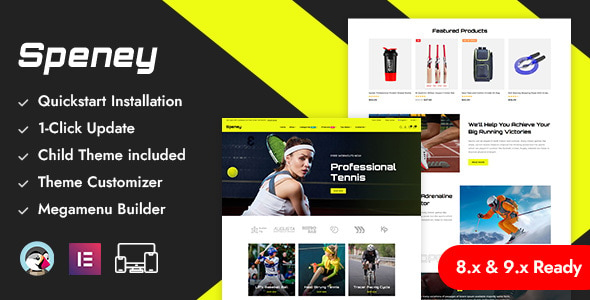
Speney - Sports Store Prestashop Responsive Theme Speney - Sports Store Prestashop Responsive Theme is a dynamic and professionally designed PrestaShop Responsive...
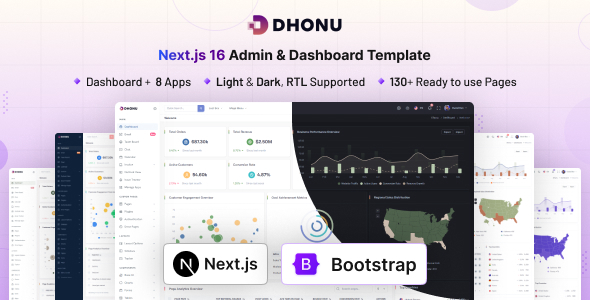
Dhonu - Next.js Admin & Dashboard Template Dhonu - Next.js Admin & Dashboard Template is a modern dashboard template designed for developers,...

Cokon - Kitchen Store Shopify 2.0 Theme Cokon - Kitchen Store Shopify 2.0 Theme is a modern and feature-rich Shopify 2.0 theme...
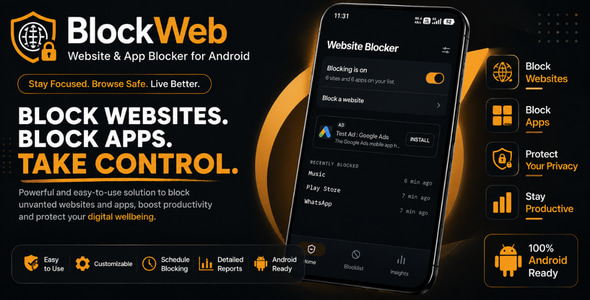
BlockWeb | Website Blocker for Android with Ads BlockWeb is a powerful Android application designed to help users improve productivity, reduce distractions,...
