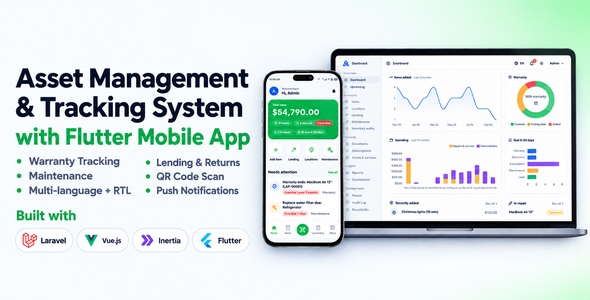
Assetory | Asset Management and Tracking System with Flutter Mobile App is a comprehensive software solution designed to help businesses, organizations, and institutions manage, monitor, and track their physical assets through a centralized digital platform. Combining an asset management system with a Flutter-based mobile application, Assetory provides a foundation for organizing asset records, monitoring asset information, and improving visibility across business operations.
Managing company assets manually can become challenging as an organization grows. Equipment, computers, office furniture, vehicles, tools, machinery, and other resources need proper documentation, allocation, maintenance, and tracking. Assetory is designed to address these operational needs by bringing asset-related information into a structured management environment.
Whether you operate a small business, corporate office, educational institution, warehouse, manufacturing facility, or service organization, Assetory can serve as a foundation for developing a more organized asset management workflow.
Asset management involves maintaining accurate information about the resources owned, rented, or used by an organization. A centralized system can make it easier to organize these records and provide authorized users with access to relevant asset information.
Assetory focuses on this management concept by providing an asset management and tracking solution supported by a mobile application.
Depending on the included modules, the system may support workflows for creating asset records, updating information, organizing assets into categories, monitoring assigned resources, and maintaining relevant operational details.
A centralized asset database can help businesses reduce scattered records, improve information accessibility, and establish more consistent asset management processes.
Accurate asset records are essential for maintaining visibility across an organization’s resources. Each asset may have different identification details, ownership information, specifications, and operational requirements.
An asset management platform can provide structured records for storing relevant information, depending on the supplied implementation.
Potential asset information fields include:
Organizing this information in a centralized system can help administrators understand what resources are available and how they are being used.
Asset tracking is an important part of managing business resources. Organizations need to know where their equipment is located, who is responsible for it, and whether it is currently available, assigned, under maintenance, or retired.
Assetory is positioned around asset management and tracking, providing a foundation for developing these workflows.
Depending on the included tracking functionality, businesses may be able to monitor asset records, review assignment information, and update asset status through the management system.
Additional tracking capabilities can be explored through features such as QR code identification, barcode scanning, GPS-based location tracking, or location check-in workflows. These features require the appropriate device permissions, hardware capabilities, and technical integrations if they are not already included.
The Flutter mobile application is an important part of Assetory’s product concept. Flutter is Google’s cross-platform development framework that allows developers to build mobile applications for Android and iOS using a shared codebase.
A mobile application can make asset-related information more accessible to employees, technicians, managers, and other authorized users who need to work away from a desktop computer.
Depending on the supplied modules, the mobile experience may support activities such as viewing asset information, accessing assigned resources, updating relevant records, and performing supported tracking operations.
A mobile-first approach can be particularly useful for organizations with distributed teams, field employees, warehouse operations, and multiple business locations.
Businesses often assign equipment and resources to individual employees, departments, branches, or project teams. Maintaining clear assignment records helps organizations understand who is responsible for each asset.
An asset allocation workflow can help administrators manage these relationships and maintain a history of resource assignments.
Depending on the included implementation, Assetory may be customized to support:
These workflows can help organizations maintain better accountability and reduce confusion when equipment is transferred or reassigned.
As an organization acquires more equipment and resources, categorization becomes increasingly important.
A structured category system can help administrators group similar assets and simplify asset searches and reporting.
Possible asset categories include:
Category structures can be customized according to the organization’s industry and operational requirements.
Regular maintenance helps businesses keep their equipment in usable condition and manage operational costs.
An asset management platform can be extended to support maintenance-related records, allowing organizations to document servicing activities and monitor equipment conditions.
Depending on the available modules, potential maintenance workflows may include service dates, maintenance descriptions, repair records, warranty details, and upcoming maintenance schedules.
Additional functionality could include maintenance reminders, technician assignments, service histories, and repair cost tracking.
These features can help organizations build a more proactive approach to asset maintenance, although their availability should be verified in the supplied product documentation.
Every business asset passes through different stages, from acquisition and assignment to maintenance, transfer, and eventual disposal.
Asset lifecycle management helps organizations maintain visibility throughout these stages.
A customized Assetory implementation can organize asset information around lifecycle statuses such as:
Tracking lifecycle information can help administrators understand how resources are being utilized and identify assets that require attention.
The exact status options and lifecycle workflows depend on the original system implementation.
A management dashboard can provide administrators with a convenient overview of asset-related information.
Instead of reviewing individual records manually, authorized users can access important operational information from a centralized interface.
Depending on the included dashboard modules, useful information may include:
Dashboard functionality can help decision-makers review operational information and identify areas that may require further attention.
Asset management platforms often involve different types of users with different responsibilities. Administrators may need broad management access, while employees and department managers may only require access to selected information.
Role-based access control can help organize these permissions.
Depending on the supplied implementation, the platform may be configured with user accounts, administrative permissions, and role-specific access.
Potential user groups include:
The actual roles and permission controls should be confirmed against the delivered system.
Asset reports can help organizations understand their resources and support better operational planning.
Depending on the reporting capabilities included in Assetory, businesses may be able to review asset information through organized lists, summaries, or other reporting formats.
Potential reporting areas include asset inventories, category summaries, assignment records, maintenance information, and lifecycle status.
Additional reporting features may include date filters, department-wise summaries, export options, and asset utilization analysis. These enhancements may require additional development if they are not included in the original package.
Assetory can be adapted for organizations that need to manage resources across different teams or operational environments.
Corporate Offices: Track computers, office furniture, electronic devices, and other workplace resources.
Educational Institutions: Organize classroom equipment, laboratory devices, computers, and institutional property.
Manufacturing Companies: Maintain records of machinery, tools, production equipment, and maintenance resources.
Warehouses: Manage storage equipment, operational tools, and other warehouse assets.
Healthcare Facilities: Organize eligible medical equipment, furniture, and administrative resources.
IT Companies: Maintain records of laptops, desktops, networking devices, and other technology assets.
Construction Businesses: Manage equipment, machinery, tools, and resources assigned to different projects.
Organizations often have asset management requirements that depend on their industry, internal processes, and existing software environment.
Assetory can provide a foundation for customization according to specific business needs.
Potential enhancements include:
External integrations and advanced tracking capabilities may require additional APIs, backend development, device permissions, and service configuration.
A structured asset management solution can help organizations improve the way they maintain and access resource information.
Key potential benefits include:
Before deploying Assetory, developers should review the supplied source code, system architecture, backend requirements, mobile application dependencies, and configuration instructions.
A typical implementation process may include:
If the platform uses external services for GPS tracking, QR scanning, notifications, or other integrations, the required API credentials and configuration must also be completed.
Assetory combines an asset management system concept with a Flutter mobile application, making it a useful starting point for businesses and developers interested in building a centralized resource management platform.
Its key highlights include:
Assetory | Asset Management and Tracking System with Flutter Mobile App is a software development solution for businesses, institutions, and developers looking to improve the management of physical assets. By combining an asset management platform with a Flutter-based mobile application, it provides a foundation for organizing resources, maintaining asset information, and developing mobile-friendly tracking workflows.
Whether you want to build an internal company asset management solution, manage equipment across multiple departments, or create a customized asset tracking platform for clients, Assetory can be evaluated and adapted to your operational requirements.
Note: Please review the official product documentation before purchasing or deploying. Confirm the included source code, administrative modules, backend and database requirements, Flutter app functionality, asset tracking methods, QR or barcode support, GPS integrations, reporting capabilities, and any external API or service costs.
1. All digital products are the most recent version, with no possibility of free updates. After payment, you can request an update to the most recent version for 5 days if a new version is released. We free support within 5 days.
2. If a license is required (Excludes WHMCS license , we provide only method not license), please contact us via email or ticket for assistance with activation. Our license is only valid for activation and does not include support.
3. We provide Mobile, PHP script installation services for $19.90 / ₹1700. Please create a backup after installation as we do not support re-installation. For mobile app source code, we do not offer installation services.
4. If you have any questions, please contact us by email [email protected] or create a ticket on this page
5. Please note that any digital products presented on the website do not contain malicious code, viruses or advertising. You will receive the original files from the developers. We do not sell any products that have been downloaded from other websites.
6. The response time can last up to 6 hours.
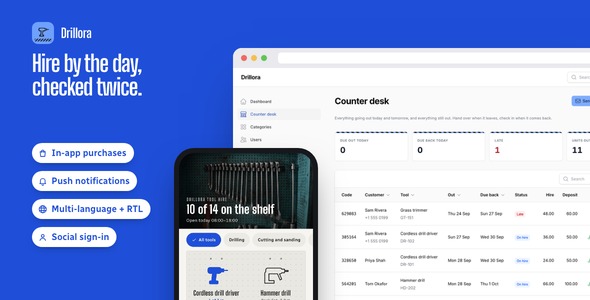
Drillora | Flutter Tool and Equipment Hire App with Laravel Admin Simplify equipment rentals, manage tool bookings, and connect customers with the...
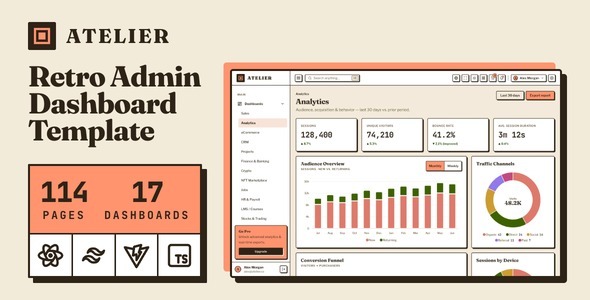
Atelier | Retro Style Admin & Dashboard Template Atelier | Retro Style Admin & Dashboard Template is a distinctive administrative interface template...
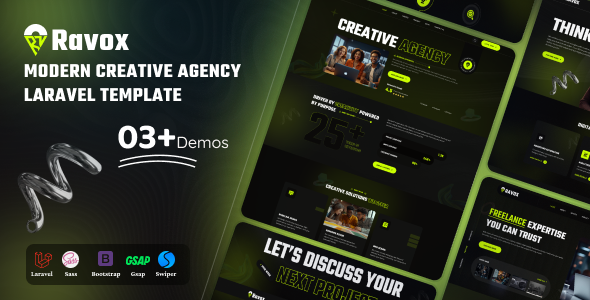
Ravox – Modern Creative Agency Laravel Template Ravox – Modern Creative Agency Laravel Template is a stylish and professional website template designed...
ReadyLMS Pro | Learning Management System With Website, Student App and Admin Dashboard ReadyLMS Pro | Learning Management System With Website, Student...
