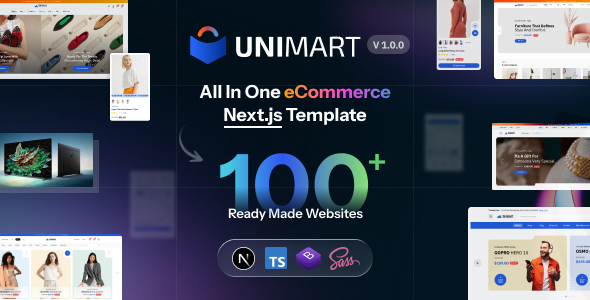
Unimart – Multipurpose eCommerce NextJs Template is a versatile website template designed for businesses looking to establish a modern online shopping experience using Next.js. Suitable for a wide range of eCommerce concepts, this template provides a frontend foundation for presenting products, organizing shopping categories, promoting featured items, and creating a professional digital storefront. Its multipurpose approach makes it a potential starting point for online retailers, entrepreneurs, web developers, and agencies building eCommerce websites for different product niches.
Whether you are launching a new online store, developing a shopping website for a client, or refreshing an existing storefront, Unimart can help streamline the initial design and frontend development process. Rather than creating every interface element from scratch, developers can adapt the layouts and components available in the template to match their business requirements. With suitable customization, the design can be tailored to different industries, product catalogs, branding styles, and customer experiences.
An effective online store needs to present products clearly while making it easy for visitors to explore categories and find relevant items. Unimart is intended to support eCommerce-oriented website projects where visual presentation, product discovery, and consistent page structure are important.
A multipurpose design approach can be useful when developing storefronts for different business categories. Depending on the layouts included in the package, developers may adapt the design for fashion accessories, electronics, home and lifestyle products, beauty items, furniture, general merchandise, or other retail niches.
The visual presentation can be customized with brand colors, typography, product photography, promotional banners, and suitable content. These adjustments help create a recognizable store identity while maintaining a consistent browsing experience throughout the website.
The precise page layouts and niche-specific demonstrations should be verified against the supplied product package.
Next.js is a React-based framework used to develop modern web applications and websites. It offers capabilities for organizing application routes, rendering pages, managing assets, and implementing different rendering strategies according to project requirements.
For developers, a Next.js template can provide a useful starting point for creating a structured storefront without implementing every frontend component independently. Existing layouts and reusable elements can be customized to suit the intended business, while additional components can be introduced as the project grows.
Next.js can support server rendering, static generation, and other rendering approaches, depending on how the application is configured. However, the actual rendering strategy used by Unimart depends on its implementation and should be checked in the source code.
Before installation, review the package documentation for the supported Next.js version, React version, package manager, build commands, styling dependencies, and deployment requirements.
A well-organized product catalog helps customers navigate an online store without unnecessary effort. Clear categories, descriptive product information, consistent imagery, and logical page layouts can make the shopping experience more convenient.
Unimart can serve as a foundation for presenting product categories and individual product information. Depending on the included layouts, suitable catalog content may include:
These elements can help developers create a structured storefront that communicates product information clearly. The availability of each element should be confirmed from the actual template files.
For larger catalogs, consider how product information will be managed and how categories, attributes, product variations, and inventory details will be maintained as the store expands.
The homepage is often the first major interaction customers have with an online store. It should communicate what the business sells, highlight relevant products, and provide straightforward paths to important shopping categories.
Unimart can be customized to support a homepage that reflects the store’s product range and promotional priorities. Developers may use suitable banner areas, featured collections, category sections, and product highlights when these layouts are available.
Promotional content should remain relevant to the target audience. For example, a fashion retailer may prioritize seasonal collections, while an electronics store may highlight product categories and new arrivals. A home goods business might focus on curated collections and lifestyle imagery.
Strong calls to action, readable text, and well-optimized images can improve the clarity of these sections. Avoid excessive banners or competing promotions that make it difficult for customers to identify the main shopping options.
Product detail pages provide the information customers need before deciding whether to purchase an item. A well-structured page can present the product’s appearance, features, specifications, pricing, and other relevant details in a consistent format.
Depending on the layouts supplied with Unimart, developers may adapt product pages to include:
The effectiveness of a product page depends on both its layout and the quality of its content. Use accurate product descriptions, clear photographs, useful specifications, and transparent pricing information.
Interactive features such as image zoom, variant selection, inventory updates, and dynamic pricing require suitable implementation or integration. They should not be assumed to function simply because a frontend layout contains corresponding visual elements.
Customers access online stores from desktops, laptops, tablets, and smartphones. A responsive interface helps maintain usability across these devices and supports a consistent shopping experience.
When implementing Unimart, developers should verify that the final website adjusts appropriately to different screen sizes. Product grids should reorganize cleanly, images should retain suitable proportions, navigation should remain accessible, and text should be easy to read.
Mobile testing should cover important shopping interactions, including opening menus, navigating categories, viewing product details, using product filters where available, and interacting with any purchase-related controls.
Responsive behavior should be tested using actual browsers and device sizes rather than relying solely on the appearance of a desktop preview. The final experience will depend on the supplied styles and any subsequent customizations.
Every eCommerce business has its own branding requirements. A premium fashion store may use editorial photography and minimal layouts, while an electronics retailer may emphasize product specifications and technical information. A general merchandise store may require a more varied category structure.
Unimart can be used as a starting point for these different visual directions. Common customization tasks include:
The extent of customization depends on the available source code, the project’s component structure, and the developer’s familiarity with React and Next.js.
A complete eCommerce website generally requires more than a visually appealing storefront. Customers need reliable mechanisms to select products, review their order, provide shipping details where applicable, and complete payment securely.
Unimart should be evaluated as a Next.js frontend template unless the package documentation explicitly confirms that additional commerce functionality is included. A product listing or cart interface does not automatically provide a functioning order-processing system.
To create a complete shopping platform, developers may need to integrate a commerce backend, headless eCommerce platform, custom API, or suitable third-party service. Depending on the chosen architecture, these integrations may handle product records, inventory, customer accounts, carts, orders, discounts, taxes, shipping, and payment processing.
Payment gateways should be implemented through their approved integration methods. Sensitive credentials must be kept out of publicly accessible frontend code, and checkout workflows should be tested for security and reliability before launch.
Website performance is particularly important for online stores, where customers may browse numerous categories and product pages. Large product images, unnecessary scripts, and inefficient data requests can negatively affect loading times and usability.
Developers can improve performance by optimizing image sizes, choosing suitable image formats, limiting unnecessary dependencies, reducing unused code, and loading nonessential media only when needed. Next.js provides image optimization and rendering capabilities that may be useful when correctly configured for the project.
Search engine optimization should also be addressed during implementation. Important tasks include creating descriptive page titles, writing relevant meta descriptions, using logical heading structures, adding meaningful image alternative text, and maintaining clear, consistent URLs.
For eCommerce websites, structured product data, canonical URLs, accurate availability information, and product-specific metadata may also be important. These capabilities often require additional configuration and reliable product data sources.
A template alone does not guarantee search rankings, structured data validation, or optimal performance. Results depend on implementation quality, content, hosting, and ongoing maintenance.
As an online business grows, its website may require additional functionality such as search, filtering, customer accounts, wishlists, reviews, inventory synchronization, analytics, email marketing, and order management.
Unimart can serve as a frontend foundation for these enhancements where its architecture supports the required integrations. Developers should evaluate the template’s existing code before selecting additional services or building custom functionality.
A commerce API or backend can provide dynamic product data, while analytics tools can help measure visitor behavior and purchasing activity. Search and filtering features may be particularly useful for stores with large catalogs.
Each integration should be tested for compatibility, security, accessibility, and performance. The selected technology stack should also be documented to simplify future maintenance and updates.
Unimart may be suitable for several types of users:
Online Retail Entrepreneurs: Build a customized storefront concept for a new retail business.
eCommerce Website Developers: Use an existing frontend structure as a starting point for client projects.
Digital Agencies: Adapt the design to create branded shopping experiences for different clients.
React and Next.js Developers: Work with a framework-based interface that can be extended through custom code.
Established Retailers: Explore a refreshed storefront design while planning the necessary commerce integrations.
Users should review the documentation, source code, included pages, licensing terms, and technical requirements before choosing the template for a production project.
Unimart – Multipurpose eCommerce NextJs Template provides a starting point for developers and businesses planning a modern online shopping website with Next.js. Its multipurpose positioning makes it relevant to a variety of retail concepts, while its frontend foundation can be adapted to different branding styles, product categories, and business requirements.
With thoughtful customization, responsive implementation, optimized product imagery, search-friendly content, and integration with a suitable commerce backend, Unimart can contribute to a professional eCommerce experience. Before deployment, verify the included features and technical requirements, and ensure that essential commerce functions such as inventory management, order processing, and secure payments are properly implemented or connected.
1. All digital products are the most recent version, with no possibility of free updates. After payment, you can request an update to the most recent version for 5 days if a new version is released. We free support within 5 days.
2. If a license is required (Excludes WHMCS license , we provide only method not license), please contact us via email or ticket for assistance with activation. Our license is only valid for activation and does not include support.
3. We provide Mobile, PHP script installation services for $19.90 / ₹1700. Please create a backup after installation as we do not support re-installation. For mobile app source code, we do not offer installation services.
4. If you have any questions, please contact us by email [email protected] or create a ticket on this page
5. Please note that any digital products presented on the website do not contain malicious code, viruses or advertising. You will receive the original files from the developers. We do not sell any products that have been downloaded from other websites.
6. The response time can last up to 6 hours.
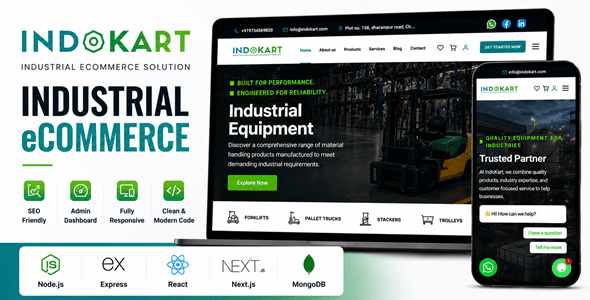
IndoKart | React Node.js eCommerce Platform With Admin Panel IndoKart is a modern and scalable eCommerce platform built with React and Node.js,...
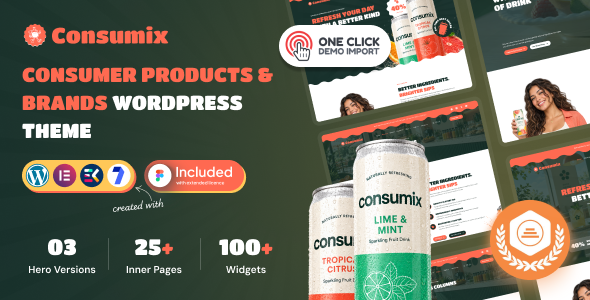
Consumix | Consumer Products & Brands WordPress Theme Consumix is a modern and professionally designed Consumer Products & Brands WordPress Theme created...
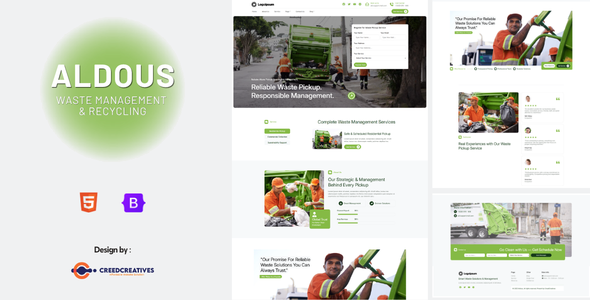
Aldous – Waste Pickup & Management HTML Bootstrap Template Aldous is a modern, professional, and environmentally focused Waste Pickup & Management HTML...
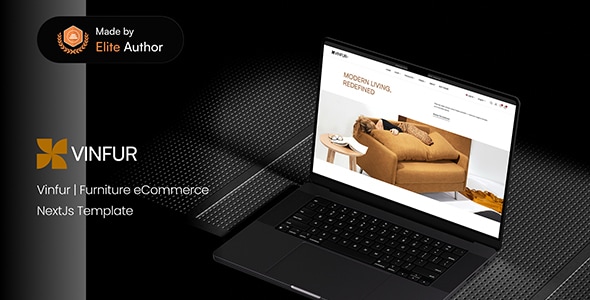
Vinfur | Furniture eCommerce NextJs Template Vinfur | Furniture eCommerce NextJs Template is a modern website template designed for furniture stores, home...
