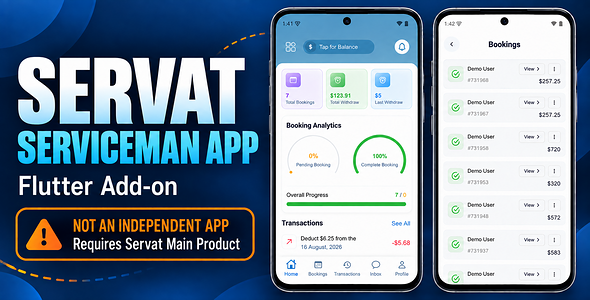
Servat Serviceman App | Flutter Add-on for Home Service Marketplace is a mobile application add-on designed for businesses developing or operating an on-demand home service marketplace. Built with Flutter, Servat Serviceman provides a foundation for a service-provider-facing application that can help professionals manage service requests, coordinate bookings, and organize their work through a mobile interface.
Home service marketplaces connect customers with professionals who provide services such as plumbing, electrical repairs, appliance maintenance, cleaning, painting, and other household solutions. While customers need a convenient way to find and book services, service providers need tools to receive requests, manage schedules, communicate with customers, and track job progress.
Servat Serviceman is designed around the service provider’s side of this process. As an add-on for a home service marketplace, it can help developers extend an existing platform with a dedicated mobile experience for servicemen and technicians. The exact integration requirements, supported workflows, and backend compatibility should be verified against the original product documentation.
A dedicated serviceman application can give service professionals a convenient way to manage their marketplace activities from a smartphone. Instead of relying exclusively on a web dashboard or manual communication, providers can access relevant work information through a mobile interface.
Depending on the included implementation, Servat Serviceman may be adaptable to support service requests, booking information, job statuses, and provider account details.
Potential serviceman workflows include:
These capabilities are examples of common serviceman-app workflows and should not be treated as guaranteed included features unless confirmed in the original package.
Flutter provides a cross-platform framework for developing mobile applications using a shared codebase for supported platforms. Servat Serviceman uses Flutter as its mobile development foundation, making it a potential starting point for building a consistent application experience across compatible devices.
Using an existing add-on can reduce repetitive interface development and allow developers to focus on integrating the provider application with the marketplace’s existing backend and operational processes.
Potential advantages include:
Supported operating systems, Flutter versions, and device compatibility should be verified in the supplied technical documentation.
Servat Serviceman is positioned as an add-on rather than necessarily a complete standalone marketplace. Its main purpose is to provide a serviceman-facing experience that can work alongside a compatible home service platform.
Before implementation, developers should establish how the add-on connects to the existing system. Relevant integration points may include authentication, provider records, service listings, bookings, customer details, and job-status updates.
Depending on the original architecture, integration may involve REST APIs, existing backend endpoints, shared data models, or other supported communication methods.
Developers should verify which marketplace products and backend versions are compatible with the add-on. An application built for a particular marketplace may require adjustments before it can work with a different platform.
Service request management is an important part of a home service provider’s daily workflow. A mobile interface can help professionals review relevant requests and understand what work needs to be completed.
Depending on the included implementation, Servat Serviceman may be adapted to display request details such as the requested service, booking information, customer notes, and scheduled time.
Potential request-management features include:
The availability of these actions depends on the existing marketplace logic and the features supplied with the add-on. Developers should confirm which request states and provider actions are already supported.
Service professionals often need to organize multiple appointments throughout the day. A scheduling workflow can help them understand upcoming work and coordinate their availability.
Servat Serviceman can be evaluated as a foundation for presenting booking information within a mobile application. Depending on the existing functionality, developers may be able to extend it with daily schedules, upcoming appointments, and booking status indicators.
Potential scheduling enhancements include calendar views, appointment reminders, availability management, and rescheduling workflows.
These features may require additional backend logic and synchronization with the marketplace’s booking system. Any changes to appointment times should be reflected consistently across the provider app, customer interface, and administrative dashboard.
Tracking the progress of a service request can improve coordination between customers, providers, and marketplace administrators.
Depending on the supplied implementation, Servat Serviceman may support or be adaptable to status updates that represent stages of a service booking.
A possible workflow could include request acceptance, travel to the customer, arrival, work in progress, and job completion. These stages are illustrative and should not be assumed to match the exact statuses included in the product.
A well-designed status workflow helps providers communicate progress and enables the marketplace to maintain more accurate operational records.
For any production implementation, status transitions should be validated by the backend so that unauthorized users cannot modify bookings belonging to other providers.
Provider profiles help a marketplace maintain information about the professionals offering services. A serviceman application can provide a convenient interface for viewing or updating the information permitted by the platform.
Depending on the available implementation, profile information may include a provider’s name, profile image, contact details, service categories, and other relevant professional information.
Potential extensions include skills, certifications, service areas, working hours, and profile verification status.
The actual profile fields and editing permissions depend on the existing marketplace. Sensitive account information should be protected, and changes affecting verification or eligibility should follow the platform’s administrative rules.
Home service marketplaces often cover several types of household and maintenance work. Organizing professionals by service category helps the platform match customer requirements with relevant providers.
Servat Serviceman can be evaluated for integration with the marketplace’s service categories and provider assignments.
Potential service categories include:
These categories are examples of possible marketplace use cases, not a guarantee that they are predefined in the application.
Developers should confirm how service categories are assigned and whether providers can manage multiple specialties through the existing backend.
A service professional often needs the correct customer details and service address to complete a booking. A mobile serviceman app can present relevant information needed for an assigned job.
Depending on the implementation, Servat Serviceman may be adapted to show customer contact details, service addresses, booking notes, and other information required to carry out the requested work.
Potential extensions include map links, navigation handoffs, location-based service assignments, and appointment reminders.
Map integration and live location tracking should not be assumed to be included unless specifically documented. If location data is collected, the application should request appropriate permissions and explain its purpose.
Customer information should be visible only to authorized providers with a legitimate need to access the booking.
Timely notifications can help service professionals respond to new requests and stay informed about changes to their schedules.
Depending on the original functionality and supported integrations, Servat Serviceman may be extended with push notifications for new assignments, booking changes, reminders, and other relevant events.
A push notification service such as Firebase Cloud Messaging may be considered where compatible with the application’s architecture.
Potential notification scenarios include:
Push notification support, delivery rules, and background behavior should be verified in the product documentation. Notifications should not expose unnecessary customer information on a locked device.
Service providers may need visibility into their earnings, commissions, and payment records when working through a marketplace.
Depending on the included implementation, Servat Serviceman could be evaluated for integration with the marketplace’s financial workflows.
Potential extensions include earnings summaries, completed-job totals, commission information, payout history, and payment status indicators.
These functions require appropriate backend data and should reflect the platform’s actual payment model. Provider payouts, tax records, wallet balances, and automated settlements should not be assumed to be included by default.
Financial information should be calculated and validated by the backend rather than relying on values stored only within the mobile application.
Customer feedback can help marketplaces assess service quality and give professionals insight into their performance.
If supported by the wider marketplace, Servat Serviceman may be adapted to display relevant ratings, reviews, or service feedback associated with completed jobs.
Potential enhancements include review summaries, feedback history, and quality indicators. The ability for providers to respond to reviews or dispute feedback depends on the marketplace’s moderation and review policies.
Developers should ensure that ratings and review records are retrieved from trusted backend sources and that feedback remains associated with the correct service and provider.
A serviceman app typically relies on an existing backend or administration system to manage provider accounts, service requests, bookings, and marketplace rules.
Servat Serviceman should therefore be assessed alongside the platform it is intended to extend. The add-on may depend on existing administrative workflows rather than supplying a separate, complete admin system.
Potential backend integration areas include provider management, service assignment, booking updates, permissions, and operational reporting.
Developers should verify whether any backend changes, additional API endpoints, or database migrations are required. They should also test that changes made by servicemen are reflected correctly in the customer-facing application and administrative dashboard.
A branded serviceman application can help a home service marketplace provide a consistent experience to its professional network.
Servat Serviceman can be evaluated as a starting point for customizing supported interface elements, including the application name, logo, colors, typography, icons, and navigation.
The interface can also be adapted to the terminology and workflow of a particular marketplace, provided the source code supports the necessary changes.
Developers should ensure that provider-facing screens remain straightforward and practical for professionals who may need to use the application while traveling between jobs or working at a customer’s property.
Because the application may handle customer addresses, booking details, provider accounts, and operational information, security should be considered throughout development.
Recommended practices include:
Performance testing should cover booking retrieval, API failures, network interruptions, notification handling, and synchronization with the marketplace backend.
The final application’s reliability depends on the supplied implementation, backend architecture, hosting environment, and any additional integrations.
Servat Serviceman may be suitable for:
Before choosing the add-on, review its supported marketplace, backend requirements, included features, source code, licensing terms, and compatibility with your existing system.
Servat Serviceman App | Flutter Add-on for Home Service Marketplace provides a foundation for creating a mobile experience specifically for professionals working through a home service marketplace. Its Flutter-based structure can be adapted to support service request handling, booking coordination, provider profiles, job-status updates, and other serviceman workflows where the necessary functionality is available.
As an add-on, compatibility with the existing marketplace backend is particularly important. Developers should confirm API support, booking synchronization, authentication, and any required configuration before deployment.
With appropriate integration, secure access controls, and a workflow tailored to service professionals, Servat Serviceman can serve as a starting point for extending a home service marketplace with a dedicated mobile application for its service providers.
1. All digital products are the most recent version, with no possibility of free updates. After payment, you can request an update to the most recent version for 5 days if a new version is released. We free support within 5 days.
2. If a license is required (Excludes WHMCS license , we provide only method not license), please contact us via email or ticket for assistance with activation. Our license is only valid for activation and does not include support.
3. We provide Mobile, PHP script installation services for $19.90 / ₹1700. Please create a backup after installation as we do not support re-installation. For mobile app source code, we do not offer installation services.
4. If you have any questions, please contact us by email [email protected] or create a ticket on this page
5. Please note that any digital products presented on the website do not contain malicious code, viruses or advertising. You will receive the original files from the developers. We do not sell any products that have been downloaded from other websites.
6. The response time can last up to 6 hours.
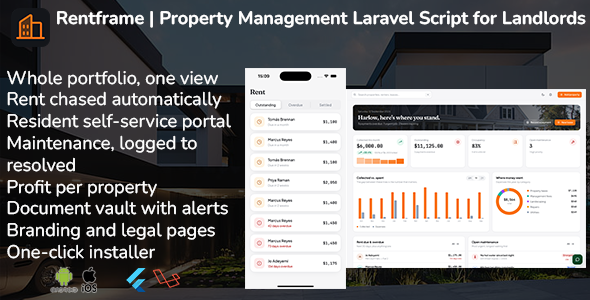
Rentframe | Property Management Flutter App With Laravel Backend Simplify rental operations, organize property information, and manage tenant-related activities with Rentframe |...

ReadyLMS Pro | Learning Management System With Website, Student App and Admin Dashboard ReadyLMS Pro | Learning Management System With Website, Student...
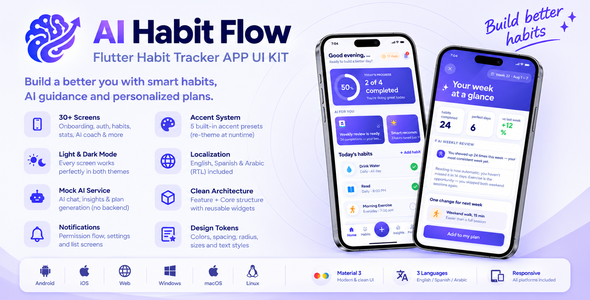
AI Habit Flow | Flutter Habit Tracker UI Kit AI Habit Flow is a beautifully crafted Flutter Habit Tracker UI Kit designed...
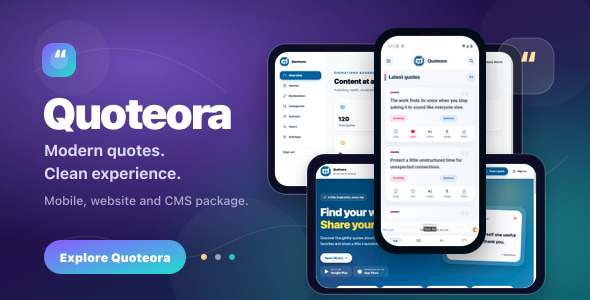
Quoteora | Flutter Quote App With Website and Admin CMS Quoteora | Flutter Quote App With Website and Admin CMS is a...
