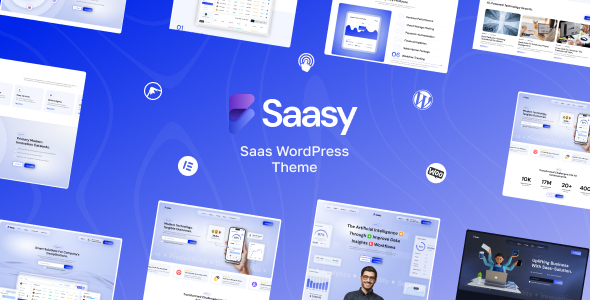
Sassy – Saas WordPress Theme is a modern website design solution created for Software as a Service (SaaS) companies, software startups, technology businesses, cloud-based application providers, and digital product developers looking to establish a professional online presence. Designed for the WordPress ecosystem, Sassy provides a foundation for presenting software products, explaining platform capabilities, highlighting business benefits, and guiding potential customers toward product trials, demonstrations, or subscription options.
In today’s competitive software industry, a well-designed website is an important part of a company’s marketing strategy. Prospective customers want to understand what a product does, how it addresses their challenges, and why it may be suitable for their business. Sassy offers a starting point for communicating these details through an organized website that can be customized to reflect your product’s identity and business objectives.
Whether you are launching a new SaaS startup, promoting a cloud-based business application, introducing a productivity platform, or creating a website for an established software company, Sassy can help simplify the website development process while providing room for future customization.
Sassy is intended for businesses that need a professional website to introduce software products and communicate their value to potential customers. A SaaS website should make product information easy to understand while helping visitors navigate features, pricing information, use cases, and support resources.
You can customize the available theme settings, page layouts, colors, typography, images, and content to align the website with your brand identity. For example, a business productivity platform may focus on workflow efficiency and collaboration, while an analytics software company may emphasize reporting, data insights, and business intelligence.
A consistent visual presentation helps communicate professionalism and makes it easier for visitors to recognize your brand. Clear headings, concise descriptions, and well-organized content can also help explain technical products to audiences with different levels of experience.
The exact design elements and available page layouts depend on the Sassy theme package and its documented features.
One of the main advantages of Sassy is its WordPress-based approach to website management. WordPress provides a content management system that allows businesses to create pages, publish blog posts, update product information, and manage website content through an administrative interface.
Depending on the theme’s supported features, you can customize the website’s appearance through the available theme settings, page editing tools, and compatible plugins. This can make routine content updates more convenient for marketing teams, business owners, and website administrators.
WordPress also supports a broad ecosystem of extensions for search engine optimization, contact forms, analytics, performance optimization, and other website management tasks.
Before installation, review the product documentation to confirm the required WordPress version, supported page builder, theme dependencies, and any recommended companion plugins. Do not assume that every customization feature or page builder is included unless it is specified in the package.
A software company’s website should explain its product clearly and help prospective customers understand how it fits their requirements. Sassy can provide a starting point for presenting software features, explaining workflows, and introducing the main benefits of your application.
You can customize suitable sections to introduce your platform, describe important capabilities, display interface screenshots, and communicate the problems your software is designed to address.
For example, a project management platform might highlight task organization, team collaboration, and project tracking. A customer relationship management product could focus on contact management, lead organization, and sales workflows.
Product descriptions should emphasize genuine capabilities and practical use cases. If a feature is still under development or requires a particular subscription plan, make that distinction clear.
The theme provides the website’s presentation layer; it does not automatically implement the software product itself.
Potential customers often compare several SaaS products before making a decision. A clear feature presentation can help them understand what distinguishes your platform and whether it matches their needs.
Sassy can be customized to present relevant product capabilities through suitable content sections and layouts. Depending on your software, these may include:
These are examples of features a SaaS company may want to communicate. The theme does not automatically include these software functions, and your website should describe only the capabilities that your product actually provides.
Visual demonstrations can help prospective customers understand a software interface before registering for a trial or requesting a demonstration. Sassy can be customized to display suitable product screenshots, interface previews, diagrams, and other visual material where the available layouts support them.
Use authentic screenshots that show relevant parts of your application, such as dashboards, reporting interfaces, task lists, or configuration screens. Short explanatory captions can help visitors understand what they are seeing and how each feature supports a specific workflow.
If you provide a live demonstration, interactive preview, or product video, ensure that the linked experience works correctly on desktop and mobile devices.
A static screenshot or promotional interface is not the same as a functional software application. Live product demonstrations, interactive sandboxes, and in-browser trials require additional implementation or integration with your SaaS platform.
Pricing is an important consideration for many SaaS customers. A clear pricing presentation can help visitors compare available plans and understand which option suits their needs.
Sassy can be customized to present pricing information through appropriate page sections, if included in the theme package. You may organize plans around the number of users, feature availability, usage limits, storage allowances, support levels, or other criteria relevant to your software.
A pricing page may include:
These are examples of possible pricing models rather than a guarantee that the theme includes a ready-made pricing table or subscription system.
Clearly communicate billing periods, usage restrictions, renewal conditions, trial eligibility, and cancellation policies. If your pricing depends on a custom quotation, provide a straightforward way for prospective customers to contact your sales team.
Recurring payments, subscription management, plan enforcement, and account upgrades require an appropriate SaaS backend, payment provider, or compatible third-party service. A WordPress theme alone does not provide a complete subscription billing platform.
A SaaS website should help interested visitors take the next step in evaluating or adopting a product. Depending on your business model, this may involve creating an account, starting a free trial, requesting a demonstration, or contacting the sales team.
Sassy can be customized to include calls to action, contact sections, and inquiry forms where supported by its layouts and your WordPress configuration.
Consider using clear messages such as requesting a demo, exploring features, viewing plans, or contacting sales. The wording should match the actual action available to the visitor.
You can also provide information about implementation assistance, onboarding, product documentation, and support options where relevant.
Contact forms require appropriate submission handling through a compatible plugin or service. Features such as automated lead qualification, CRM synchronization, email sequences, and sales pipeline management may require additional integrations.
Sassy can be adapted for a variety of software businesses because SaaS products serve many different industries and business requirements.
Potential applications include:
The theme’s suitability for each use case depends on the actual layout options and the customization required. Advanced product-specific features must be implemented separately.
SaaS customers may visit your website from desktop computers, tablets, and smartphones. A responsive website helps ensure that important product information remains accessible across different screen sizes.
Sassy can provide a starting point for a multi-device website, depending on the responsive behavior of the supplied theme and your final configuration.
After installation, test navigation menus, product screenshots, feature sections, pricing layouts, buttons, and contact forms on different devices. Check that text remains readable, images scale appropriately, and important calls to action are easy to use on smaller screens.
If you add comparison tables, interactive product previews, or embedded videos, verify that these elements remain usable on mobile devices.
Responsive behavior should be tested after customization, particularly when you add new sections or use third-party plugins.
Every SaaS company has a different audience, visual identity, and market position. Sassy can be adapted to reflect those differences through the customization options supported by the theme.
Common customization possibilities include:
The exact editing workflow depends on the theme’s included settings, page builder compatibility, and required plugins. Major structural changes may require additional CSS, PHP, or other WordPress development work.
Search engine optimization can help potential customers discover your software product when searching for relevant tools, features, or business solutions. A well-organized website can make it easier for visitors and search engines to understand what your product offers.
With Sassy, you can create descriptive product pages, feature pages, use-case explanations, integration guides, and educational blog content, depending on your site’s configuration.
Recommended practices include writing descriptive page titles, using meaningful headings, creating readable URLs, optimizing images, and publishing original content that answers common customer questions.
A compatible SEO plugin can help manage metadata, XML sitemaps, canonical URLs, and other supported optimization tasks. You can also publish tutorials, comparison guides, product updates, and use-case articles to support your broader content strategy.
The theme itself does not guarantee search engine rankings, traffic growth, trial registrations, or sales. Results depend on content quality, competition, website performance, technical implementation, and ongoing marketing efforts.
A professional SaaS marketing website should load efficiently and provide a dependable browsing experience. When implementing Sassy, optimize images, avoid unnecessary plugins, keep WordPress and compatible extensions updated, and configure appropriate caching and performance tools.
Use HTTPS, secure administrator credentials, and maintain reliable backups. Review plugin permissions and remove extensions that are no longer required.
If the website collects contact details, customer inquiries, or account-related information, ensure that the relevant forms and integrations handle data appropriately. A privacy policy should accurately explain how information is collected and used.
If your website links to or integrates with the SaaS application’s authentication or payment systems, verify those connections separately. Sensitive credentials and application secrets should not be exposed in publicly accessible website code.
Actual website performance and security depend on the hosting environment, theme implementation, plugins, and maintenance practices.
Sassy may be suitable for a wide range of businesses and professionals, including:
Its SaaS-oriented purpose makes it a useful starting point for businesses that want a dedicated website to explain their software and communicate its value to prospective customers.
Before installing Sassy, review the product documentation for the required WordPress version, theme dependencies, page builder compatibility, included layouts, and recommended plugins.
A typical implementation involves installing the theme through the WordPress administration interface, activating the required dependencies, configuring supported theme settings, and customizing the website’s content and branding.
After setup, test all navigation links, buttons, contact forms, images, and responsive layouts. If you connect the website to a product registration system, payment service, CRM, or external SaaS platform, verify each integration independently.
Remember that a WordPress theme primarily controls the website’s presentation. Full SaaS functionality, including user accounts, application dashboards, subscriptions, and product operations, requires a separate application or appropriate integrations unless explicitly included.
Sassy – Saas WordPress Theme provides a practical foundation for creating a professional website for SaaS startups, software companies, cloud application providers, and digital product businesses. Its WordPress-based approach offers a convenient starting point for presenting software features, explaining product benefits, showcasing interface previews, communicating pricing information, and encouraging potential customers to take the next step.
Whether you are launching a new software startup, promoting a subscription-based application, or refreshing the marketing website for an established technology company, Sassy can help you build a customized online presence aligned with your business goals. With clear product messaging, consistent branding, responsive testing, appropriate WordPress configuration, and a well-planned SEO strategy, Sassy – Saas WordPress Theme can support a professional digital presence for your software business.
1. All digital products are the most recent version, with no possibility of free updates. After payment, you can request an update to the most recent version for 5 days if a new version is released. We free support within 5 days.
2. If a license is required (Excludes WHMCS license , we provide only method not license), please contact us via email or ticket for assistance with activation. Our license is only valid for activation and does not include support.
3. We provide Mobile, PHP script installation services for $19.90 / ₹1700. Please create a backup after installation as we do not support re-installation. For mobile app source code, we do not offer installation services.
4. If you have any questions, please contact us by email [email protected] or create a ticket on this page
5. Please note that any digital products presented on the website do not contain malicious code, viruses or advertising. You will receive the original files from the developers. We do not sell any products that have been downloaded from other websites.
6. The response time can last up to 6 hours.
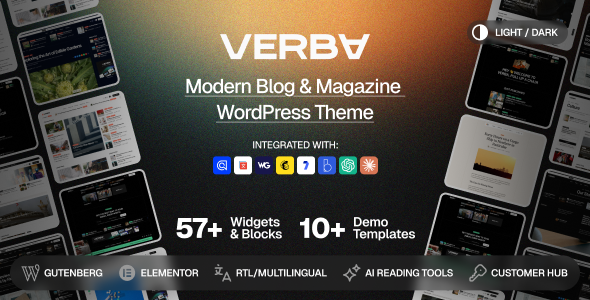
Verba – Modern Blog & Magazine WordPress Theme Verba – Modern Blog & Magazine WordPress Theme is a modern, elegant, and versatile...
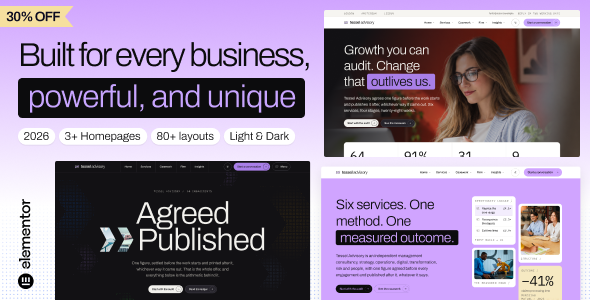
Ledger - Consulting, Business & Corporate WordPress Theme Ledger is a professional and modern Consulting, Business & Corporate WordPress Theme designed for...
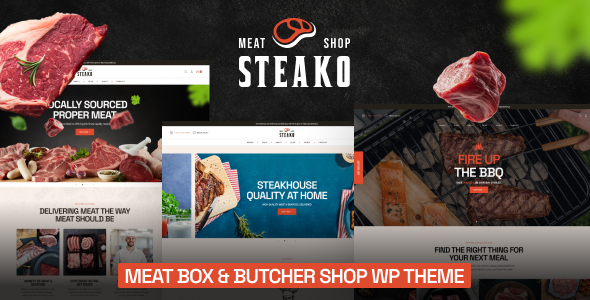
Steako - Butcher Shop & Meat Box WordPress Theme Steako - Butcher Shop & Meat Box WordPress Theme is a premium and...
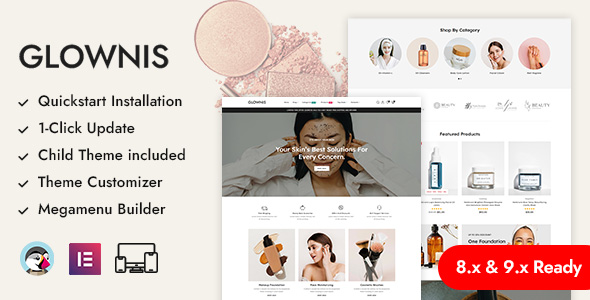
Glownis - Beauty Salon & Cosmetics Shop Prestashop Responsive Theme Glownis - Beauty Salon & Cosmetics Shop Prestashop Responsive Theme is a...
