
Learnify LMS – Complete Laravel LMS & Course Selling Marketplace with Flutter Mobile App is a comprehensive eLearning platform designed to help educators, instructors, training organizations, and entrepreneurs build an online learning business. Combining a Laravel-powered web application with a Flutter mobile app, Learnify LMS provides a foundation for creating, managing, and selling educational courses through a centralized digital platform.
Online education has become an important way for individuals and organizations to share knowledge, develop professional skills, and reach learners across different locations. Whether you want to sell programming tutorials, business training, graphic design courses, academic lessons, language programs, or professional development content, a dedicated learning management system can help you organize educational materials and manage the learning experience more efficiently.
Learnify LMS is designed for businesses that want to bring course publishing, learner management, instructor administration, and online course sales together in one ecosystem. The Laravel backend provides the foundation for managing platform data and business logic, while the Flutter mobile application extends the intended learning experience to supported mobile devices.
Whether you are launching a new online academy, building a marketplace for independent instructors, or expanding an existing education business, Learnify LMS can serve as a starting point for developing a flexible digital learning environment. Its suitability for your project will depend on the specific modules, integrations, and customization options included in the supplied package.
A learning management system helps educational businesses organize course content, manage learners, and deliver educational resources through a centralized platform. Learnify LMS is intended to support this type of digital learning environment by bringing course-related administration and learning workflows into a single application.
Depending on the included implementation, the platform may support course creation, learner enrollment, user administration, educational content organization, and course-related records. These capabilities can help reduce the need to manage educational activities through multiple disconnected tools.
A centralized LMS can be useful for independent educators, online academies, coaching institutes, professional training companies, and businesses that deliver structured learning programs.
For entrepreneurs, Learnify LMS offers a potential foundation for establishing an online education service without having to develop every core component from scratch. Before deployment, review the included feature list and demonstration to confirm the exact functionality available.
One of the primary purposes of a course-selling platform is to make educational content available for purchase through an organized digital storefront.
Learnify LMS is positioned for online course businesses that want to present educational offerings and build a commercial learning experience. Depending on the supplied features, the platform may support course listings, course descriptions, instructor information, pricing details, and enrollment workflows.
A well-organized course marketplace helps prospective learners discover educational content and understand what each course offers before enrolling.
Businesses can use this type of platform to serve different audiences, including students, working professionals, freelancers, entrepreneurs, and individuals interested in developing new skills.
Potential marketplace extensions include instructor commissions, promotional campaigns, discount codes, featured courses, and expanded catalog filters. These should be treated as customization opportunities unless explicitly included in the supplied version.
Well-structured course content is essential to an effective online learning experience. Learners benefit from clear learning objectives, logically organized lessons, and educational materials that are easy to navigate.
Learnify LMS provides a foundation for managing online educational offerings. Depending on the implementation, course management features may allow authorized users to create or update course information, organize lesson content, and maintain relevant educational records.
Courses can be designed around subjects such as web development, programming, digital marketing, business management, photography, graphic design, finance, language learning, and other educational topics.
The precise content formats supported by the platform should be verified before purchase. Video lessons, downloadable resources, quizzes, assignments, certificates, and progress tracking are common LMS capabilities, but their availability depends on the modules included in this particular product.
A structured course management workflow can help educators maintain their educational catalog as new lessons and learning programs are introduced.
An online education business needs a practical way to manage the people who create courses and the learners who access them.
Learnify LMS is designed around an educational platform model that can bring user administration and course-related activities together. Depending on the supplied configuration, administrators may have access to user records, course enrollment information, and other relevant platform data.
If instructor management is included, it may help platform operators coordinate educational content from multiple contributors. A marketplace with multiple instructors can potentially support a wider course catalog than a platform managed by a single educator.
Student management capabilities can also help administrators maintain organized learner records and review enrollment-related information.
For businesses operating a multi-instructor marketplace, features such as instructor approval, commission calculation, payout management, and instructor-specific dashboards should be checked in the original documentation rather than assumed to be included.
Learnify LMS uses Laravel as its server-side technology foundation. Laravel is a PHP framework commonly used to develop database-driven web applications, administrative systems, and online business platforms.
For an LMS, the backend is responsible for supporting application logic, managing records, processing requests, and connecting different parts of the platform.
Depending on the included implementation, the Laravel application may provide administrative tools for managing users, courses, categories, enrollment records, platform settings, and other supported resources.
A Laravel-based codebase can also offer a starting point for developers who need to adapt the platform to a specific business model. Possible customizations include additional course fields, organization-specific user roles, new reporting features, and integrations with external services.
Before modifying the system, developers should review its Laravel version, database structure, authentication setup, API endpoints, package dependencies, and installation instructions.
The inclusion of a Flutter mobile application allows Learnify LMS to extend its intended learning experience beyond the web browser.
Mobile access is valuable for learners who want to explore courses, review educational materials, and interact with a learning platform using their smartphones. It can also help education businesses provide a more convenient way for students to access supported learning activities.
Depending on the included mobile implementation, users may be able to sign in, browse available courses, access enrolled learning content, or manage supported account activities through the app.
Flutter enables cross-platform mobile development from a shared codebase, making it a practical technology for applications targeting supported Android and iOS environments.
The exact screens, mobile operating system support, API integration, media playback functionality, and account synchronization behavior should be confirmed from the supplied project files and documentation.
Features such as offline lessons, background downloads, push notifications, and in-app purchases require specific implementation and should not be assumed to be available by default.
An effective learning platform should make it straightforward for users to find educational content and understand how to access it.
Learnify LMS can provide a foundation for an organized learning interface where course information and supported educational activities are presented through a structured application.
Depending on the available design and functionality, the user experience may include course listings, individual course details, account screens, enrollment information, and access to available learning materials.
A clear navigation structure can help learners move between different parts of the platform without unnecessary confusion.
For course creators, an organized interface can also simplify the process of maintaining course information and managing the educational catalog.
Businesses planning to use the platform for a large audience should evaluate the supplied web and mobile interfaces, accessibility, responsiveness, and usability before launching to customers.
As an education business grows, its course catalog may expand across multiple subjects, skill levels, and learner groups. A structured catalog helps users discover relevant content without having to browse an unorganized list of offerings.
Depending on the included functionality, Learnify LMS may support course categorization and the organization of educational resources into meaningful groups.
Potential categories include technology, business, marketing, design, personal development, academic education, health and fitness education, and vocational training.
Additional catalog features such as keyword search, advanced filters, difficulty levels, ratings, wishlists, and personalized recommendations should be verified against the actual implementation.
A well-maintained course catalog can make an online academy easier to navigate and provide a stronger foundation for future growth.
Course enrollment connects learners with the educational content they are entitled to access. In a commercial LMS, enrollment workflows are particularly important because they connect course discovery, payment processing, and learning access.
Learnify LMS is intended for course delivery and selling workflows. Depending on the supplied implementation, the application may support enrollment records and access to relevant courses after the appropriate enrollment process.
For paid educational programs, the exact purchasing process depends on the included payment functionality and configuration. Before going live, confirm whether the system supports one-time payments, free enrollment, subscriptions, coupons, refunds, or other pricing models relevant to your business.
Course access rules should also be reviewed to understand how the application handles expired access, cancelled purchases, refunds, and administrator-issued enrollments.
A carefully configured enrollment process helps create a more predictable experience for both learners and platform operators.
Selling educational content online requires a reliable way to collect payments and associate successful transactions with course access.
Depending on the integrations provided, Learnify LMS may be adaptable to supported payment gateways for processing course purchases. The actual payment providers, supported currencies, transaction flows, and configuration requirements must be checked in the supplied documentation.
An online course business may generate revenue through individual course purchases, bundled learning programs, premium content, or recurring membership plans where supported by the implementation.
If you plan to operate a multi-instructor marketplace, additional business logic may be required to calculate platform fees, instructor earnings, refunds, and payouts.
For an Indian education business, payment requirements may include support for INR transactions and suitable local payment providers. International businesses may also need additional currencies and internationally supported gateways. Confirm compatibility before selecting the platform for a particular market.
Payment credentials should always be configured securely, and financial transactions should be tested thoroughly before accepting real customer payments.
A centralized administrative interface can help an education business oversee its online learning operations.
Depending on the supplied modules, the Learnify LMS administration area may provide tools for managing supported application records, reviewing course information, maintaining user accounts, and configuring platform settings.
An organized dashboard can make routine administrative tasks more manageable and provide a starting point for monitoring business activity.
Potential enhancements include enrollment summaries, revenue reports, course performance statistics, user activity records, and instructor performance metrics. Their availability should be confirmed in the product demo or feature documentation.
For businesses operating at scale, administrative permissions and access controls should be configured carefully so that team members can access the functions required for their responsibilities.
Many online education businesses need more than a course catalog. They may also require tools to assess learning outcomes and help students understand their progress.
Depending on the modules included in Learnify LMS, the platform may be extended with assessment and learning-progress features that complement the course delivery experience.
Possible additions include quizzes, assignments, completion tracking, certificates, lesson prerequisites, and course completion rules.
Certificates can be useful for professional development programs and structured training courses, while assessments can help instructors evaluate learners’ understanding of educational material.
However, these are common LMS extension possibilities, not a guarantee that every feature is included in the supplied package. Review the current feature list carefully if certificates, quizzes, or detailed progress tracking are essential to your business model.
Learnify LMS can be evaluated for several types of digital education ventures.
The right configuration will depend on the number of users, course formats, business model, payment requirements, and administrative workflows.
Educational businesses often change their requirements as their learner base and course catalog grow. A flexible technology foundation can help support these changes over time.
Because Learnify LMS combines Laravel and Flutter, developers can evaluate opportunities to customize both the web backend and supported mobile workflows.
Potential improvements may include additional payment providers, expanded reporting, custom course fields, branded mobile interfaces, new notification channels, learning analytics, and integrations with customer relationship management or email marketing platforms.
Businesses may also consider additional localization, multilingual content, accessibility improvements, or organization-specific enrollment workflows.
These enhancements require appropriate development work and should not be confused with functionality already included in the original package. The final level of customization will depend on the existing code structure, available APIs, dependencies, and license permissions.
Before installing Learnify LMS, review the product documentation to identify the required hosting environment, PHP and Laravel versions, database requirements, and Flutter development tools.
A typical setup may involve preparing a compatible server, configuring database credentials, installing backend dependencies, setting application environment variables, and connecting the mobile app to the correct API endpoint. The actual installation process depends on the supplied package and its documentation.
Additional setup may be required for payment gateways, email delivery, file storage, video hosting, mobile application identifiers, and platform-specific publishing.
For production use, configure HTTPS, secure administrative accounts, appropriate database permissions, backups, and access controls. Course videos and downloadable resources may require additional storage capacity and bandwidth planning.
Also verify whether the product includes source code, setup instructions, updates, technical support, and permission for your intended commercial use.
Before choosing Learnify LMS for a production education business, check the original demo and documentation for the precise features included in the current release.
Pay particular attention to course creation, lesson formats, student enrollment, instructor management, payment integration, marketplace commissions, mobile app functionality, and administrative controls.
Do not assume that all LMS capabilities—such as live classes, video hosting, quizzes, certificates, offline learning, subscriptions, or automated instructor payouts—are included unless the seller explicitly documents them.
Review licensing terms, third-party service requirements, ongoing hosting costs, and maintenance responsibilities. A successful online education business also needs suitable educational content, customer support, marketing, and a reliable approach to protecting user information.
Learnify LMS – Complete Laravel LMS & Course Selling Marketplace with Flutter Mobile App offers a technology foundation for entrepreneurs, educators, and businesses interested in building an online course platform with web-based administration and mobile learning access.
By combining Laravel backend technology with a Flutter mobile application, the solution is positioned for organizations that want to explore course management, educational content delivery, and online course sales within a connected digital ecosystem.
Whether you are planning an online academy, a professional training platform, or a course-selling marketplace, Learnify LMS can be evaluated as a starting point for your project. Review the included modules, payment integrations, mobile functionality, technical requirements, and licensing terms to ensure that the product meets your specific business needs.
1. All digital products are the most recent version, with no possibility of free updates. After payment, you can request an update to the most recent version for 5 days if a new version is released. We free support within 5 days.
2. If a license is required (Excludes WHMCS license , we provide only method not license), please contact us via email or ticket for assistance with activation. Our license is only valid for activation and does not include support.
3. We provide Mobile, PHP script installation services for $19.90 / ₹1700. Please create a backup after installation as we do not support re-installation. For mobile app source code, we do not offer installation services.
4. If you have any questions, please contact us by email [email protected] or create a ticket on this page
5. Please note that any digital products presented on the website do not contain malicious code, viruses or advertising. You will receive the original files from the developers. We do not sell any products that have been downloaded from other websites.
6. The response time can last up to 6 hours.
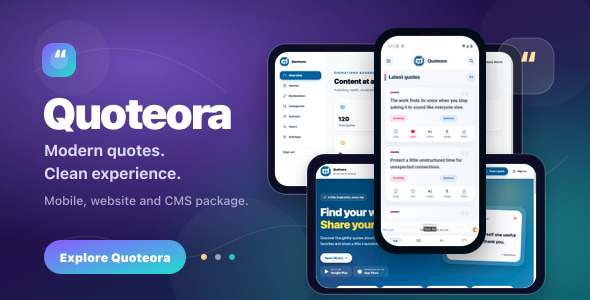
Quoteora | Flutter Quote App With Website and Admin CMS Quoteora | Flutter Quote App With Website and Admin CMS is a...
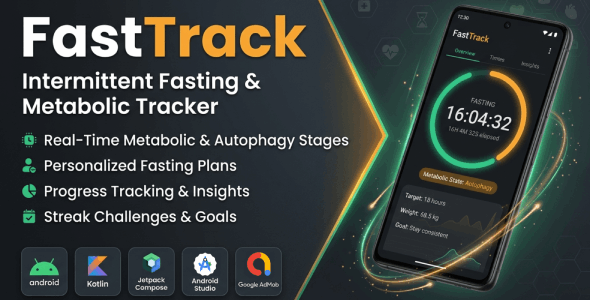
FastTrack | Intermittent Fasting and Metabolic Tracker - Android App Template FastTrack is a powerful and modern intermittent fasting and metabolic tracking...
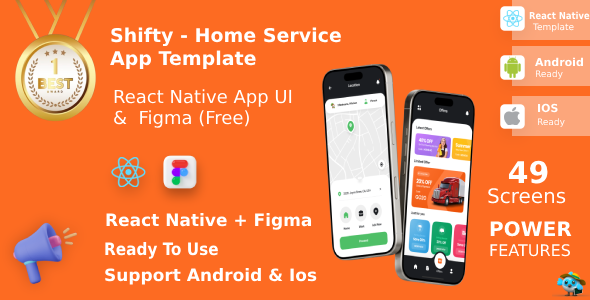
Shifty | Multi-Service Booking App UI Kit for React Shifty | Multi-Service Booking App UI Kit for React is a modern user...
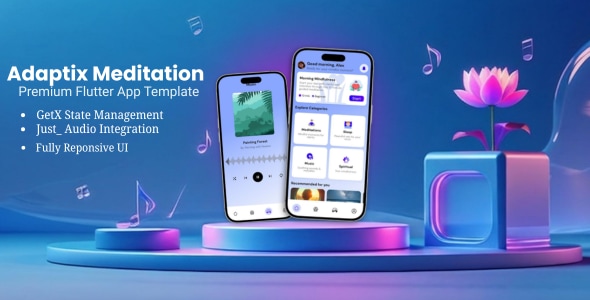
Adaptix Meditation | Flutter app Template Adaptix Meditation | Flutter app Template is a modern mobile application design solution created for meditation...
