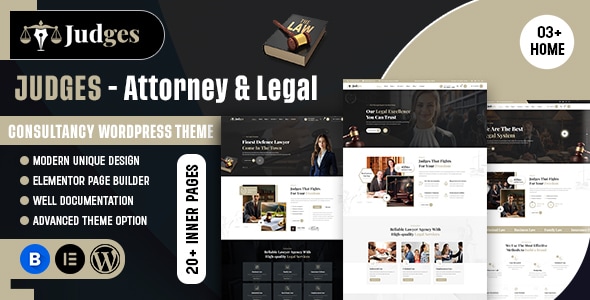
Judges – Attorney & Legal Consultancy WordPress Theme is a professional website theme designed for law firms, attorneys, legal consultants, advocates, solicitors, barristers, and other professionals working in the legal services industry. It provides a WordPress-based foundation for creating a credible online presence where legal professionals can introduce their practice, explain their services, showcase their experience, and connect with prospective clients.
Whether you operate an independent legal practice, manage a multi-attorney law firm, provide corporate legal consultancy, or specialize in litigation and dispute resolution, Judges offers a suitable starting point for building a dedicated legal website. A well-structured website can help visitors understand your areas of practice, learn about your professional background, and find the appropriate way to request a consultation.
With its legal industry focus, Judges can be customized to reflect your firm’s identity and communication style. By combining informative service pages, attorney profiles, legal resources, and accessible contact information, you can create a website that supports your professional reputation and client acquisition efforts.
A legal website should communicate professionalism, clarity, and trust. Prospective clients may be searching for help with a business dispute, family matter, property transaction, contractual issue, or another legal concern. They need to understand what services your practice offers and how to contact your team.
Judges is positioned for the attorney and legal consultancy sector, making it a relevant option for businesses that need a law-focused website rather than a generic corporate layout.
Depending on the theme’s included templates, you may be able to create sections for legal services, attorney biographies, firm introductions, case studies, client testimonials, legal articles, and consultation requests.
A professional design can help organize complex information into clear sections while maintaining a consistent visual identity across the website.
You can customize the presentation to suit an individual attorney, a boutique law firm, a specialist legal consultancy, or a larger practice with multiple departments.
Law firms frequently provide services across several areas of law. Organizing these services into individual pages helps visitors identify the expertise relevant to their circumstances.
Judges can serve as a foundation for presenting different legal practice areas, depending on its supplied layouts and customization options.
Potential practice areas include:
Corporate and commercial law
Civil litigation and dispute resolution
Criminal defense
Family and matrimonial law
Property and real estate law
Employment and labor law
Contract drafting and review
Intellectual property law
Banking and financial legal services
Taxation and regulatory compliance
Estate planning and succession matters
Legal advisory and consultancy services
Each practice-area page can explain the services offered, the types of matters handled, and the process for contacting your firm.
For example, a corporate legal consultancy could explain its contract review, business formation, and compliance services, while a family law practice might provide general information about matrimonial disputes and related legal procedures.
Keep all legal information accurate and appropriate to the jurisdictions in which your practice operates.
Clients often want to understand the qualifications and experience of the legal professional they may work with. Attorney profiles provide an opportunity to introduce your team and communicate relevant expertise.
Depending on the theme’s available page layouts, Judges can be customized to present individual attorney or consultant profiles.
A professional profile may include:
Attorney name and professional photograph
Professional qualifications and credentials
Areas of legal specialization
Relevant experience
Languages spoken
Professional memberships, where applicable
Published articles or legal commentary
Contact or consultation information
For a multi-attorney law firm, individual profiles can help visitors identify the professional whose expertise best matches their needs.
Use accurate qualifications and verifiable professional details. Avoid unsupported claims about case outcomes or success rates, and follow the professional advertising and disclosure rules applicable to your jurisdiction.
The homepage introduces your firm and helps visitors understand your services and professional approach.
Depending on the supplied Judges templates, you may be able to organize the homepage around important business information and client-facing content.
Potential homepage sections include:
A hero section introducing your legal practice
An overview of your primary practice areas
Attorney and legal consultant profiles
A firm introduction and professional background
Featured legal resources or articles
Client testimonials, where permitted
Office locations and contact information
Consultation request calls to action
Frequently asked questions
Important professional notices or disclaimers
For example, a commercial law firm might highlight corporate advisory and contract services, while an individual attorney could focus on a smaller number of specialist practice areas.
Clear navigation and concise explanations help visitors find relevant information without having to understand complicated legal terminology before contacting your firm.
The exact sections and design controls depend on the theme’s included layouts and supported editing tools.
Many legal practices rely on consultation requests to begin relationships with prospective clients. A website can make this process more accessible by providing clear contact options and an organized inquiry form.
Judges can provide the visual foundation for consultation and contact pages, while compatible WordPress form plugins can support the submission process.
A basic inquiry form may request:
Name and preferred contact details
General category of legal assistance required
Preferred contact method
Preferred consultation time
A brief description of the inquiry
Avoid collecting more sensitive information than necessary through a general website form. Prospective clients should be informed not to submit confidential documents or detailed case information until an appropriate, secure process has been established.
Advanced features such as appointment calendars, automated reminders, client intake workflows, and CRM integrations may require additional plugins or external services.
A clear inquiry process can help your team respond more efficiently while giving prospective clients a straightforward way to make contact.
A legal website can also serve as an educational resource for visitors who want to understand legal concepts, procedures, and common questions.
WordPress includes publishing tools that can be used to create articles, updates, announcements, and informational guides. Judges can provide the design foundation for this content, depending on its included blog layouts.
Potential article topics include:
General explanations of legal procedures
Contract drafting and review considerations
Business compliance information
Property transaction guidance
Employment law updates
Family law information
Intellectual property fundamentals
Regulatory changes affecting businesses
Answers to frequently asked legal questions
Publishing useful, well-reviewed information can help demonstrate subject-matter expertise and make your website more informative.
Legal content should be reviewed by an appropriately qualified professional. Clearly distinguish general educational information from legal advice tailored to a particular person’s circumstances, and include relevant jurisdictional context.
Where permitted by applicable professional rules and confidentiality obligations, a law firm may use carefully prepared case summaries or representative examples to explain its experience.
Judges can serve as a starting point for presenting this material through project-style pages, articles, or selected portfolio layouts if those features are included.
A suitable case summary might describe the general legal issue, the type of service provided, and the broad process followed without revealing confidential information.
When publishing case-related material, obtain any necessary permissions, remove identifying details where appropriate, and avoid implying that similar results are guaranteed for future clients.
Some jurisdictions impose strict restrictions on testimonials, advertising, and claims about legal outcomes. Review the rules that apply to your practice before publishing such content.
WordPress provides a flexible content management platform for building and maintaining a law firm website. Judges can be customized through the settings, templates, and editing tools supported by the theme.
Depending on its implementation, customization options may include changing colors, typography, logos, images, page content, navigation, and supported layout elements.
You can incorporate your firm’s visual identity, professional photography, office information, and practice-area descriptions to create a consistent presentation.
A corporate legal consultancy may prefer a restrained visual style, while an independent attorney may choose a more personal design that emphasizes individual expertise and direct communication.
Before installation, review the official theme documentation to confirm its supported page builder, demo-import process, required plugins, and customization controls. Some layouts or advanced features may require additional plugins or premium editing tools.
Prospective clients may discover a law firm through search engines, professional referrals, local directories, or social media. They may access the website from a desktop computer, tablet, or smartphone.
A responsive design helps ensure that essential legal information and contact details remain accessible across different screen sizes.
Judges should be evaluated for responsive behavior before launch. Important elements include navigation menus, attorney profiles, practice-area pages, article layouts, consultation buttons, and inquiry forms.
Mobile visitors should be able to review your services, find office contact details, and submit a general inquiry without unnecessary difficulty.
Actual responsiveness depends on the theme implementation, content, installed plugins, and customizations. Test the finished website on real devices before publishing it.
Local search visibility can help attorneys and legal consultancies reach people looking for legal services in a particular city or region.
Judges provides a WordPress-based foundation, but SEO performance depends on content quality, technical setup, competition, professional regulations, and ongoing optimization.
To support discoverability, create clear practice-area pages, descriptive page titles, useful legal resources, and accurate contact information. Where appropriate, provide separate pages for office locations and the services available at each location.
For example, a law firm may explain its commercial legal consultancy services and the geographic areas in which its professionals are authorized to practice.
A compatible SEO plugin can help manage metadata, XML sitemaps, canonical URLs, and other supported settings.
Maintain consistent business information across your website and relevant professional directories. If you use a Google Business Profile, keep its details accurate and follow the platform’s rules.
Avoid misleading claims about qualifications, locations, specializations, or results. No theme can guarantee search rankings or a specific number of inquiries.
A professional legal website should load efficiently so visitors can access important information without delay.
When configuring Judges, use appropriately sized images, optimize media files, and avoid unnecessary plugins. Reliable hosting and compatible caching tools can help improve loading times.
Keep WordPress, the theme, and installed plugins updated. Create backups before major changes and test contact forms, navigation, and important service pages after updates.
If your website uses appointment tools, embedded maps, or third-party forms, check their impact on page performance and compatibility.
Measure the finished website on desktop and mobile devices rather than assuming a particular performance score from the theme itself.
Legal practices may handle sensitive client information, making website security and privacy particularly important.
Use strong administrator passwords, configure HTTPS, keep WordPress and extensions updated, and maintain regular backups. Install plugins from reputable sources and restrict administrative access to authorized staff.
General website inquiry forms should be designed to collect only the information necessary for initial contact. Avoid inviting visitors to upload sensitive case files through an ordinary form unless an appropriately secure process is in place.
Publish a suitable privacy policy and explain how inquiry information is handled. If you introduce appointment scheduling, client portals, or document exchange, evaluate the security and privacy implications of those systems.
Legal advertising, confidentiality, professional conduct, and data protection requirements vary by jurisdiction. Ensure that your website’s content and functionality comply with the rules applicable to your practice.
Judges can be considered for a variety of businesses and professionals in the legal services sector.
Law firms: Present multiple practice areas, introduce attorneys, and provide a central point of contact for prospective clients.
Independent attorneys: Build a professional website focused on individual expertise, qualifications, and consultation requests.
Legal consultancy firms: Explain advisory services for businesses, organizations, and individuals.
Corporate legal advisors: Highlight commercial contracts, compliance support, business advisory, and regulatory services.
Civil litigation practices: Provide general information about dispute resolution services and legal representation.
Specialist legal practices: Create focused websites around particular areas of law and the audiences they serve.
Legal professional groups: Introduce team members, publish educational resources, and communicate organizational information.
The theme’s suitability for a particular practice depends on its included templates, supported integrations, and the functionality you require.
Judges offers a legal-industry-focused starting point for professionals who want to establish a credible website for their practice.
Its main appeal is the opportunity to organize practice areas, attorney information, educational content, and contact options within a WordPress website that can be customized to reflect a firm’s identity.
Potential benefits include:
A design direction suited to attorneys and legal consultancies
Opportunities to present individual legal practice areas
Pages for attorney biographies and professional credentials
A foundation for legal articles and educational resources
Customizable contact and consultation pages
WordPress content management for ongoing updates
Potential integration with appointment and inquiry tools through compatible plugins
Before purchasing, review the official product listing to verify included demos, supported page builders, required plugins, customization options, and technical requirements.
Judges – Attorney & Legal Consultancy WordPress Theme is a suitable option to consider for creating a professional website for law firms, independent attorneys, legal consultants, and specialist legal practices.
Its legal-focused positioning provides a foundation for introducing your firm, presenting practice areas, showcasing professional experience, publishing educational resources, and making it easier for prospective clients to get in touch.
Whether you manage a multi-attorney firm or operate an independent consultancy, Judges can help you establish a consistent online presence aligned with your professional identity.
For the best results, use accurate legal information, clearly explain your services, maintain up-to-date professional details, and make contact options easy to find. Combine these elements with responsive design, secure inquiry workflows, local SEO, and regular website maintenance to create a professional legal website designed to support client communication and long-term business growth.
1. All digital products are the most recent version, with no possibility of free updates. After payment, you can request an update to the most recent version for 5 days if a new version is released. We free support within 5 days.
2. If a license is required (Excludes WHMCS license , we provide only method not license), please contact us via email or ticket for assistance with activation. Our license is only valid for activation and does not include support.
3. We provide Mobile, PHP script installation services for $19.90 / ₹1700. Please create a backup after installation as we do not support re-installation. For mobile app source code, we do not offer installation services.
4. If you have any questions, please contact us by email [email protected] or create a ticket on this page
5. Please note that any digital products presented on the website do not contain malicious code, viruses or advertising. You will receive the original files from the developers. We do not sell any products that have been downloaded from other websites.
6. The response time can last up to 6 hours.
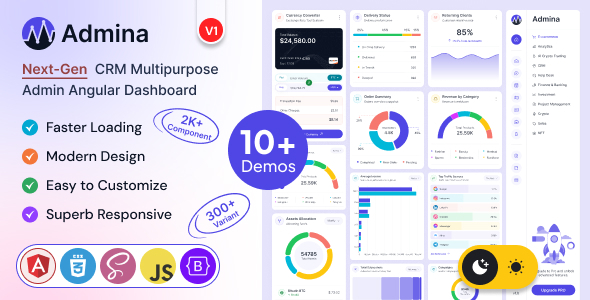
Admina – Angular 22 Admin Dashboard Template Multipurpose Admina – Angular 22 Admin Dashboard Template Multipurpose is a modern administrative dashboard template...

Seoai - SEO Agency & Digital Marketing HTML Template Seoai - SEO Agency & Digital Marketing HTML Template is a modern and...

Insectra - Bugs & Pest Control HTML Template Insectra - Bugs & Pest Control HTML Template is a modern and professionally designed...
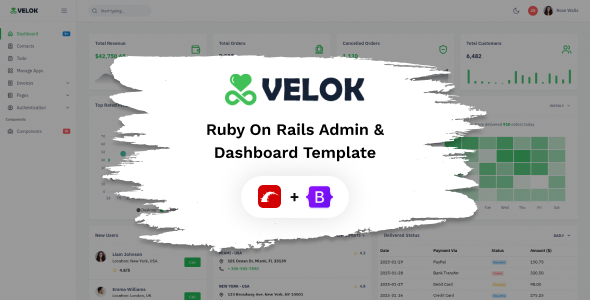
Velok - Ruby on Rails Admin & Dashboard Template Velok - Ruby on Rails Admin & Dashboard Template is a modern administrative...
