
InstituteFlow – Education & Online Course NextJS Template is a modern website template designed for educational institutions, online learning platforms, training centers, coaching institutes, and digital course providers looking to establish a professional presence on the web. Built around the Next.js development ecosystem, InstituteFlow provides a starting point for creating engaging educational websites that present courses, introduce instructors, share learning resources, and guide students toward their learning goals. Its education-focused design makes it suitable for businesses and organizations that want to showcase academic programs, promote online courses, and build a convenient digital learning experience.
Whether you are developing an online academy, a professional training website, a university information portal, a coding bootcamp platform, or a coaching institute website, InstituteFlow can help simplify the frontend development process. Developers can customize its layouts, page structures, typography, colors, and content to match their institution’s identity and educational objectives. By combining an education-oriented interface with a modern web development framework, this template offers a foundation for building a scalable and visually consistent learning website.
An effective educational website should make it easy for students to discover courses, understand learning opportunities, and find the information they need before enrolling. InstituteFlow is designed for education-related projects where clear content presentation and straightforward navigation are important.
The template can be adapted to showcase featured courses, academic programs, learning categories, instructor profiles, institutional information, and promotional content. These sections help visitors understand what an institution offers without having to navigate through an unnecessarily complicated interface.
A consistent design can also help educational organizations establish credibility. Professional typography, structured content sections, and a balanced visual hierarchy make course information easier to read and allow important calls to action to stand out.
Developers can customize the design to suit different educational brands, from technology-focused training academies to traditional educational institutions and independent online educators.
Next.js is a React-based framework used to develop modern web applications and websites. It provides a structured development environment for building reusable interface components, managing routes, and implementing rendering strategies suited to different project requirements.
InstituteFlow provides a starting point for developers who want to build an education website using the Next.js ecosystem. Its source structure can be adapted to the application’s required pages, navigation, content organization, and visual identity.
Depending on the implementation and supported version, a Next.js project may use features such as server-side rendering, static generation, and optimized navigation to support an efficient website experience. The actual capabilities available in InstituteFlow depend on the included source code and its configuration.
Developers should review the package documentation to confirm the required Node.js version, Next.js version, dependencies, installation process, and supported build commands before beginning customization.
Course discovery is an essential part of an online education website. Visitors need to understand which subjects are available, what each course covers, and which learning opportunities are relevant to their goals.
InstituteFlow can be customized to present courses through organized listing pages, featured course sections, subject categories, and individual course information pages, depending on the layouts included in the template.
A course listing interface may display details such as:
These elements can help visitors compare learning options and identify suitable programs. Developers can connect course listings to static content, a content management system, an API, or a database-backed service depending on the project’s requirements.
Dynamic filtering, sorting, search, and enrollment processing require the relevant functionality to be implemented or integrated where it is not already included.
Individual course pages allow educational providers to explain the value and structure of their learning programs. InstituteFlow can serve as a foundation for developing course detail pages that communicate important information before a student decides to enroll.
A customized course page may include an introduction, learning objectives, a syllabus, course requirements, instructor details, intended audience, and frequently asked questions. It may also present pricing information, course duration, available learning formats, and enrollment instructions.
For example, a programming academy could create separate pages for frontend development, backend development, database management, and software engineering. A professional training organization could use similar structures for business, finance, marketing, or project management courses.
Clear course information helps visitors make informed decisions and gives educational providers a consistent way to present their offerings.
The precise page layouts and components supplied with InstituteFlow should be verified through the product preview and included documentation.
Educational websites serve different audiences, from school students to university applicants and working professionals. InstituteFlow can be adapted to several education-related business models by adjusting the content, page structure, branding, and calls to action.
Potential use cases include:
Online learning platforms: Present digital courses, learning paths, subject categories, and instructor information.
Coaching institutes: Promote exam preparation programs, tutoring services, and classroom or online training.
Universities and colleges: Showcase academic departments, educational programs, admissions information, and institutional news.
Professional training centers: Advertise skill-development programs, certification preparation, and career-focused learning.
Coding academies: Organize programming courses, technology workshops, and software development training programs.
Language learning websites: Present language courses, proficiency levels, learning schedules, and enrollment options.
Corporate training providers: Promote employee development programs, leadership training, and specialized business education.
These are potential applications for a customized website rather than a guarantee that every education-specific module is included in the template.
Instructors play an important role in helping students evaluate the quality and relevance of an educational program. A dedicated instructor profile can introduce a teacher’s experience, professional background, teaching subjects, and areas of expertise.
InstituteFlow can be adapted to present instructor or faculty information through profile cards, dedicated biography pages, or course-related instructor sections, depending on the available components.
An educational website might include profile photographs, professional introductions, qualifications, subject specializations, and links to relevant courses. These details can help visitors understand who is responsible for delivering a particular learning experience.
For institutions with multiple teachers, a consistent profile structure makes it easier to maintain an organized faculty directory. Dynamic profile management can be implemented through a CMS or backend system if required by the project.
Students often access educational websites from different devices, including desktop computers, laptops, tablets, and smartphones. A responsive design helps content remain accessible as screen dimensions change.
InstituteFlow can be evaluated and customized for responsive presentation across common device sizes. Course cards, navigation menus, text sections, images, and forms should be tested to ensure that visitors can interact with the website comfortably.
Mobile usability is particularly important for course discovery because visitors may first encounter an educational provider through a search result or social media link on their phones.
Developers should test the actual template across different viewport sizes and browsers. Responsive behavior can also require adjustments when adding new components, integrating third-party widgets, or changing the original layout.
Search engine visibility can be valuable for educational organizations that want to attract students looking for specific courses, certifications, or training programs.
A properly implemented Next.js website can support search engine optimization through meaningful page titles, descriptive metadata, logical heading structures, readable URLs, and appropriate rendering strategies. InstituteFlow can be customized to support these practices as part of the completed website.
For example, an online academy might create dedicated pages for individual subjects, specialized courses, and instructor profiles. This organization helps visitors navigate the website and gives search engines clearer information about the content of each page.
Additional SEO work may include optimized image assets, internal linking, canonical URLs, structured data where appropriate, XML sitemaps, and descriptive meta descriptions.
Using an SEO-friendly framework does not automatically guarantee search rankings. Results depend on the quality of the implementation, useful content, technical configuration, competition, and ongoing optimization.
Educational institutions often need a website that reflects their own identity rather than a generic learning platform. InstituteFlow can provide a visual starting point that developers adapt to match the organization’s brand and communication style.
Possible customization tasks include updating the logo, changing the color palette, selecting suitable typography, replacing demonstration content, adjusting page layouts, and adding institution-specific images.
A technology training company might prefer a modern, high-contrast design, while a school or university may require a more traditional visual presentation. A private tutor could simplify the website to focus on services, testimonials, course information, and contact details.
Developers can also adjust navigation labels, calls to action, and content hierarchy to reflect the organization’s main conversion goals.
The extent of customization depends on the supplied source code and the developer’s requirements.
A course website may begin with static information and later require more advanced functionality as the business grows. InstituteFlow can be used as the frontend foundation for a broader application when the necessary integrations are implemented.
Depending on the project, developers may connect the website to a headless CMS, REST API, GraphQL service, or custom backend. These integrations can support dynamic course listings, instructor information, blog articles, announcements, and other content.
An online learning business might also require user authentication, student dashboards, enrollment records, payment processing, or course progress tracking. Such functionality generally requires additional backend services or a dedicated learning management system unless explicitly included in the product package.
Before selecting the template for a production project, review the available integrations, dependencies, data-fetching approach, and supported authentication or payment features.
Educational websites frequently need to turn interested visitors into prospective students. An effective enrollment journey should explain the next step clearly, whether that means submitting an inquiry, booking a consultation, registering for a course, or contacting an admissions team.
InstituteFlow can be customized to include calls to action that guide visitors toward these objectives. Depending on the available layouts, suitable additions may include inquiry forms, consultation links, enrollment buttons, newsletter sign-up sections, and contact information.
For example, a coaching institute could use an inquiry form to collect a student’s preferred subject and contact details. A professional training provider could direct visitors to a course registration page.
Form submissions must be connected to a suitable backend, email service, CRM, or other processing system if the functionality is not already provided. Developers should also implement appropriate validation, spam protection, and privacy safeguards.
Website performance affects how easily visitors can access course information and navigate between pages. Next.js offers development and rendering options that can help teams optimize suitable applications, but performance depends on how the final website is implemented.
Developers working with InstituteFlow should review image sizes, frontend dependencies, component structure, data requests, and page rendering behavior. Large images, unnecessary JavaScript, and inefficient API calls can affect the user experience if they are not managed carefully.
Reusable React components can also support maintainability by allowing common interface elements to be updated consistently. A shared course card or navigation component, for example, can reduce duplicated code across multiple pages.
Before deployment, teams should test production builds, verify environment configuration, check important navigation paths, and confirm that the website functions correctly on the intended hosting platform.
InstituteFlow – Education & Online Course NextJS Template may be suitable for web developers, educational entrepreneurs, training organizations, universities, coaching centers, and digital course businesses looking for a Next.js-based website foundation.
It can be useful for teams that want to accelerate the design and frontend development of an educational website while retaining the flexibility to customize content and integrate additional services.
Developers familiar with React and Next.js may find the template especially useful because they can adapt its components to their preferred development workflow. Beginners can also evaluate it as a learning resource, provided they are comfortable installing dependencies and following the included technical documentation.
Before purchasing, review the live demo, included pages, source files, framework version, dependencies, licensing terms, and documentation to confirm that the package meets your requirements.
InstituteFlow – Education & Online Course NextJS Template offers a starting point for creating a modern educational website with a focus on course discovery, instructor presentation, learning information, and student engagement. Its Next.js-oriented development approach makes it a potential option for online academies, coaching institutes, training providers, and other education-focused projects.
By customizing its layouts and connecting the frontend to appropriate content and backend services, developers can build a website aligned with their organization’s educational goals. Additional implementation may be required for dynamic course management, student authentication, payments, enrollment processing, and learning management features.
For developers and educational businesses seeking a customizable foundation for an online learning website, InstituteFlow is worth evaluating against the project’s design requirements, technical stack, and long-term development plans.
1. All digital products are the most recent version, with no possibility of free updates. After payment, you can request an update to the most recent version for 5 days if a new version is released. We free support within 5 days.
2. If a license is required (Excludes WHMCS license , we provide only method not license), please contact us via email or ticket for assistance with activation. Our license is only valid for activation and does not include support.
3. We provide Mobile, PHP script installation services for $19.90 / ₹1700. Please create a backup after installation as we do not support re-installation. For mobile app source code, we do not offer installation services.
4. If you have any questions, please contact us by email [email protected] or create a ticket on this page
5. Please note that any digital products presented on the website do not contain malicious code, viruses or advertising. You will receive the original files from the developers. We do not sell any products that have been downloaded from other websites.
6. The response time can last up to 6 hours.
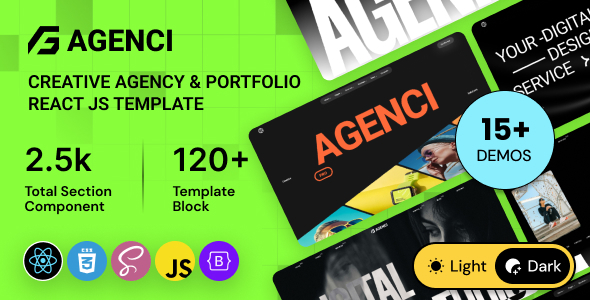
Agenci – Creative Agency & Portfolio React JS Template Agenci – Creative Agency & Portfolio React JS Template is a modern, creative,...
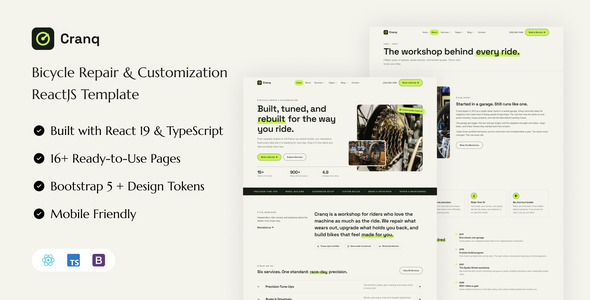
Cranq - Bicycle Repair & Customization React Template Cranq - Bicycle Repair & Customization React Template is a modern website template designed...
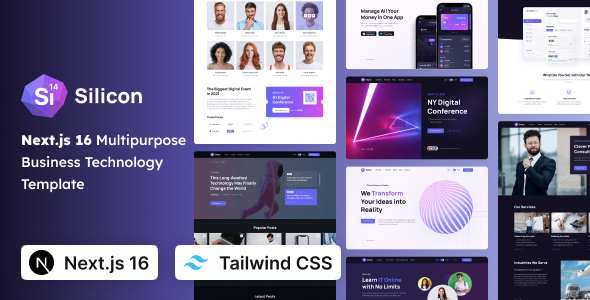
Silicon - Multipurpose Business, SaaS & Technology Tailwind CSS Next Template Silicon - Multipurpose Business, SaaS & Technology Tailwind CSS Next Template...
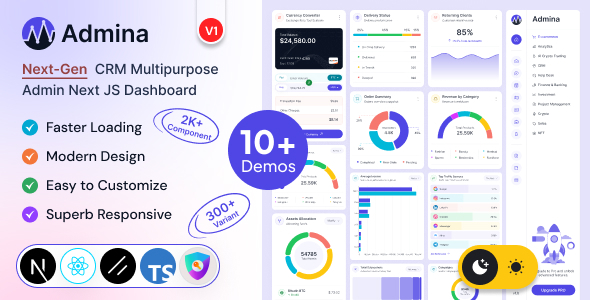
Admina - Tailwind & Nextjs Admin Dashboard with shadcn UI Admina - Tailwind & Nextjs Admin Dashboard with shadcn UI is a...
