
Bizora | Flutter Business App – Invoices, Inventory and Staff is a business management application solution designed for entrepreneurs, small business owners, retailers, and developers who want to create a centralized digital platform for managing everyday business operations. With a focus on invoicing, inventory tracking, and staff management, Bizora provides a foundation for developing a mobile business application that helps organize important records and streamline routine administrative tasks.
Managing sales, stock levels, invoices, employees, and business information across separate tools can make daily operations more complicated than necessary. A unified business application can help bring these activities into a more organized workflow, making essential information easier to access and manage.
Bizora can be evaluated by startups, local retailers, wholesalers, service providers, and development agencies looking to build a customized business management solution using Flutter. The exact invoicing workflows, inventory features, staff permissions, reporting tools, and backend integrations should be verified through the supplied product documentation.
Modern businesses need reliable ways to organize daily transactions, maintain accurate stock information, and coordinate staff activities. A centralized application can reduce the effort involved in switching between different tools and help business owners maintain better visibility into their operations.
Bizora is positioned around three important business functions: invoices, inventory, and staff management. Depending on the supplied modules, the application can serve as a foundation for a business workflow that connects sales documentation, stock records, and employee-related information.
Potential use cases include:
The actual suitability of the application depends on the included features, supported business workflows, and amount of customization required.
Flutter is a cross-platform development framework that enables developers to build mobile applications using a shared codebase. This approach can help maintain a consistent interface across supported Android and iOS devices.
Bizora’s Flutter application can be evaluated as a mobile interface for accessing supported business records and operational tools.
Depending on the included screens, the application may provide dashboards, invoice views, inventory listings, staff information, and other business-related interfaces. The exact screen structure and functionality should be confirmed in the original package.
A well-organized business app should make common tasks easy to complete, with clear navigation, readable information, and useful feedback when users create or update records.
Before development, verify the required Flutter version, dependencies, platform compatibility, and backend communication method.
Invoicing is an essential part of many business operations. Businesses need a consistent way to document sales, record customer information, calculate totals, and maintain transaction histories.
Bizora highlights invoice management in its product title, making its invoicing workflow an important feature to review.
Depending on the included implementation, an invoice management system may support customer details, line items, quantities, unit prices, applicable taxes, discounts, totals, and invoice status.
Potential invoice-related capabilities include:
The actual fields, calculations, document formats, and payment-related functions depend on the supplied package. Features such as automatic recurring invoices, payment reminders, and online payment collection may require additional development.
For production use, invoice calculations should be reliable, and generated documents should follow the applicable business and tax requirements.
Inventory management helps businesses monitor products, quantities, and stock movements. Accurate stock information can reduce the risk of selling unavailable items and make replenishment planning easier.
Bizora’s inventory focus makes it relevant for businesses that need to organize their product records and stock information through a mobile interface.
Depending on the original implementation, inventory management may include product names, descriptions, identifiers, categories, prices, and quantity records.
Potential inventory workflows include:
These capabilities should be verified in the original documentation. Advanced inventory functions such as barcode scanning, multiple warehouses, batch tracking, supplier purchase orders, and automated reorder rules may require additional implementation.
A reliable inventory workflow should also define how stock quantities change after sales, returns, damaged goods, and manual adjustments.
A structured catalog makes it easier to select products or services when preparing invoices and reviewing business records.
Depending on the supplied data model, Bizora may be adapted to maintain a catalog of items with relevant descriptions, prices, categories, and other business attributes.
For product-based businesses, the catalog may include stock quantities and product identifiers. Service businesses may instead focus on service descriptions, pricing units, and applicable charges.
A consistent catalog can reduce repeated data entry and help maintain standardized invoice descriptions.
If the business sells products in different units, sizes, or variants, developers should verify whether the original application supports these structures or whether additional data fields and interface changes are needed.
Staff management can help business owners organize employee information and control access to relevant application functions.
Bizora specifically highlights staff functionality, making it important to review how the application handles staff records, permissions, and operational responsibilities.
Depending on the included modules, staff management may involve employee profiles, contact information, role assignments, and account administration.
Potential staff-related capabilities include:
These are possible capabilities rather than guaranteed built-in features. Attendance tracking, payroll processing, leave management, shift scheduling, and performance reporting should be treated as additional requirements unless the documentation confirms their inclusion.
A secure staff system should apply appropriate access controls so that employees can use the features necessary for their responsibilities without automatically gaining access to all business data.
A dashboard can help business owners review important information without opening every individual record.
Depending on the supplied implementation, Bizora may provide or support a dashboard that summarizes selected business activities.
Potential dashboard metrics include invoice counts, sales totals, inventory summaries, low-stock indicators, and staff information. The actual metrics depend on the available data and reporting logic.
A useful dashboard should distinguish between different types of information, such as issued invoices, paid invoices, outstanding balances, and available stock. This helps reduce confusion when reviewing business performance.
More advanced analytics, date-range comparisons, profit calculations, and forecasting may require additional development if they are not already part of the product.
Many businesses need to maintain customer details for invoicing and supplier information for purchasing and inventory replenishment.
Depending on the supplied data structure, Bizora can be evaluated for extension with customer and supplier records.
A customer directory may contain names, contact details, billing addresses, and relevant transaction history. Supplier records may contain business information, contact details, and references to purchased products.
Keeping these records organized can reduce repeated data entry and make it easier to locate relevant information when preparing invoices or managing stock.
The actual customer and supplier management features should be verified in the original package. Integration with external accounting systems, customer relationship management tools, or procurement platforms may require additional API development.
Business reporting helps owners understand transactions, monitor activity, and identify areas that require attention.
Bizora’s invoice and inventory focus provides a potential foundation for reports based on available business records.
Depending on the implementation, a reporting module could summarize invoice activity, product sales, stock levels, outstanding amounts, and other operational data.
Potential reports include:
The reliability of these reports depends on accurate source data and clearly defined calculations. Profit reporting, tax summaries, and accounting statements require additional financial logic and should not be assumed to be included.
Businesses should validate all financial reports before relying on them for tax filing, accounting, or formal financial decisions.
Different businesses have different branding requirements, product catalogs, tax rules, and operational workflows. A customizable application can help adapt the interface to these needs.
Depending on the supplied source code and license, Bizora may be customized with a business logo, colors, typography, interface elements, product categories, invoice layouts, and other supported settings.
Potential customization areas include:
Before making significant modifications, developers should review the project structure, configuration options, available source files, and licensing terms.
A business management application typically requires a backend or data storage layer to maintain records and synchronize changes across users and devices.
For Bizora, developers should review the supplied architecture to understand how invoices, inventory records, staff accounts, and other business data are stored and accessed.
Potential backend responsibilities include authentication, data validation, record management, invoice processing, inventory updates, and user permissions.
If the application is intended for multiple employees or devices, the system should ensure that changes remain consistent and that concurrent stock or invoice updates do not create incorrect records.
Additional integrations may include accounting software, payment gateways, document generation services, or external inventory systems. Their availability depends on the existing architecture and may require custom development.
Businesses may want to connect invoices with payment collection or record whether customers have paid in full, paid partially, or still owe a balance.
Depending on the supplied functionality, Bizora may be adapted to support payment status tracking or integration with an appropriate payment provider.
For an India-focused business, providers such as Razorpay may be evaluated if the business is eligible and the integration suits its requirements. Other markets may require different payment services.
Online payment processing, automated reconciliation, refunds, and payment reminders should not be assumed to be included unless documented.
A production implementation should verify transaction status securely on the server, maintain accurate financial records, and handle failed or duplicate payment requests appropriately.
Business applications may store customer contact information, invoices, transaction records, product details, and employee information. Protecting these records is essential for maintaining confidentiality and operational reliability.
A production-ready implementation should use secure authentication, encrypted network communication, input validation, appropriate authorization, and protected database access.
Staff permissions should be designed around actual business responsibilities. Sensitive configuration values and API credentials should not be exposed in publicly distributed mobile application code.
Developers should also establish backup procedures, error logging, data retention policies, and a process for applying security updates. Financial and employee records may be subject to additional legal or regulatory requirements depending on the region.
The application’s security depends on the supplied source code, backend configuration, hosting environment, and ongoing maintenance.
A business app should make common tasks quick and reliable, especially when users need to create invoices, search for products, or update stock records during busy working hours.
Developers should test navigation, form validation, list performance, calculations, and synchronization across supported devices.
The application should provide clear feedback when records are saved, when validation fails, or when a network request cannot be completed. Important actions such as deleting an invoice or changing stock quantities should include suitable safeguards.
Performance improvements may include efficient API requests, optimized lists, careful state management, and appropriate local caching. Offline editing should be implemented only when the application can synchronize changes reliably without creating conflicting records.
Before installing Bizora, review the official documentation to confirm the required Flutter version, backend technology, database requirements, dependencies, API configuration, and deployment environment.
A typical development workflow may involve:
The exact installation commands and configuration steps depend on the supplied package. Developers should follow its official documentation and test the complete workflow before using real business data.
Bizora can be evaluated by a variety of businesses and development teams.
Retail Shops: Organize product information, invoices, and stock records through a mobile-oriented workflow.
Small Businesses: Explore a centralized application for everyday administrative tasks.
Wholesalers and Distributors: Evaluate inventory and invoicing workflows for product-based operations.
Service Providers: Manage service invoices and related business records, depending on the included functionality.
Business Startups: Build a customized business management application around specific operational requirements.
Freelance Developers and Agencies: Assess the product as a foundation for eligible client projects, subject to its license and customization capabilities.
The best fit depends on the actual invoice, inventory, and staff modules included in the package.
Bizora is positioned for businesses that want to bring invoicing, inventory, and staff-related workflows into a mobile business management solution.
Its potential value lies in providing a starting point for organizing common business operations without designing every interface from scratch. Developers can evaluate the included components and customize them according to the needs of a retail shop, service company, or other small business.
The most important evaluation criteria are invoice functionality, inventory accuracy, staff permissions, reporting capabilities, backend architecture, source-code quality, and deployment requirements.
Reviewing the official documentation and live demo is essential to determine whether Bizora is suitable for your business workflow or whether additional accounting, inventory, and employee management modules will be required.
Bizora | Flutter Business App – Invoices, Inventory and Staff is a business management application product intended for entrepreneurs, retailers, developers, and organizations seeking a mobile-first approach to everyday operations.
With appropriate configuration and additional development where necessary, it can provide a foundation for managing invoices, organizing inventory, and coordinating staff-related functions in a unified application.
Before purchasing or deploying Bizora, verify the included Flutter screens, invoice calculations, inventory workflows, staff management features, backend integrations, security controls, installation requirements, and license terms to ensure the product meets your business needs.
1. All digital products are the most recent version, with no possibility of free updates. After payment, you can request an update to the most recent version for 5 days if a new version is released. We free support within 5 days.
2. If a license is required (Excludes WHMCS license , we provide only method not license), please contact us via email or ticket for assistance with activation. Our license is only valid for activation and does not include support.
3. We provide Mobile, PHP script installation services for $19.90 / ₹1700. Please create a backup after installation as we do not support re-installation. For mobile app source code, we do not offer installation services.
4. If you have any questions, please contact us by email [email protected] or create a ticket on this page
5. Please note that any digital products presented on the website do not contain malicious code, viruses or advertising. You will receive the original files from the developers. We do not sell any products that have been downloaded from other websites.
6. The response time can last up to 6 hours.

ReadyLMS Pro | Learning Management System With Website, Student App and Admin Dashboard ReadyLMS Pro | Learning Management System With Website, Student...
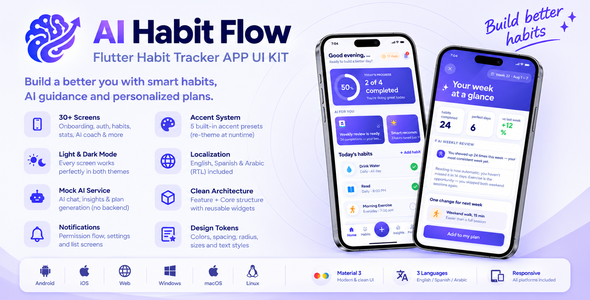
AI Habit Flow | Flutter Habit Tracker UI Kit AI Habit Flow is a beautifully crafted Flutter Habit Tracker UI Kit designed...

Yield | Revenue Analytics PHP Script With Flutter App Yield | Revenue Analytics PHP Script With Flutter App is a revenue analytics...
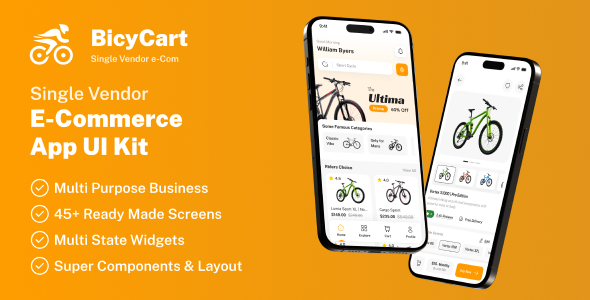
BicyCart | Single Vendor eCommerce Flutter App UI Template BicyCart | Single Vendor eCommerce Flutter App UI Template is a modern mobile...
