
Bevy – Multipurpose eCommerce HTML Template is a modern and versatile website template designed for businesses that want to establish a professional online shopping presence. Suitable for a wide range of retail industries, Bevy provides a customizable front-end foundation for presenting products, highlighting promotions, organizing shopping categories, and creating an engaging browsing experience. Its multipurpose positioning makes it a potential choice for fashion stores, electronics retailers, beauty and cosmetics brands, home decor businesses, lifestyle shops, accessories stores, and other online retail ventures.
A well-designed eCommerce website helps customers discover products, compare available options, understand product details, and navigate toward purchasing decisions. Bevy can help developers establish the visual structure of a storefront without building every page from scratch. By customizing its layouts, colors, typography, product imagery, and content, businesses can create a shopping website that reflects their brand identity and product catalog.
Built around standard HTML-based web development, Bevy is suitable for developers, freelancers, agencies, and business owners who want flexibility when creating a custom online store interface. The finished website can be adapted to different product categories and promotional strategies, depending on the layouts and components included in the template package.
An online store needs to balance visual appeal with straightforward navigation. Customers should be able to identify the products being sold, browse relevant categories, and find important information without unnecessary complexity.
Bevy offers a starting point for creating a contemporary storefront that can be tailored to different retail markets. Developers can organize product collections, promotional sections, featured items, and brand information into a cohesive shopping experience.
For fashion retailers, the design can emphasize product photography, seasonal collections, and style-focused merchandising. Electronics stores can adapt the layout to present specifications, product comparisons, and featured devices. Beauty and lifestyle brands can use suitable visual assets and category structures to communicate their product range.
The exact page designs and visual components depend on the included package. Reviewing the live demo and supplied files before implementation will help determine how closely the available layouts match a particular store’s requirements.
Bevy is an HTML eCommerce template, making it suitable for developers who prefer direct control over front-end markup and styling.
HTML provides the structure for page content, while CSS controls visual presentation. JavaScript can provide interactive behavior where supported by the supplied implementation. This approach gives developers the flexibility to modify the storefront without depending on a particular content management system.
Common customization tasks may include editing page markup, changing stylesheets, replacing product images, updating navigation links, and adjusting scripts. Developers can also extend the existing structure with additional pages or interface elements as the project grows.
An HTML template is primarily a front-end resource and should not automatically be treated as a complete eCommerce platform. Features such as inventory management, customer accounts, order processing, secure checkout, payment gateway integration, and database-backed product management require a suitable backend or eCommerce platform unless explicitly included in the package.
A well-organized product catalog makes it easier for customers to explore a store’s inventory. Category navigation can help shoppers move between product types, brands, collections, and promotional selections.
Bevy can be customized to present a range of catalog structures according to the business’s requirements. A clothing store might organize products by gender, clothing type, or seasonal collection, while an electronics retailer might use categories for smartphones, computers, accessories, and home technology.
Potential catalog elements include:
The availability of these elements depends on the actual template files. Where a desired feature is not already included, developers can build it using the existing HTML, CSS, and JavaScript structure.
For larger stores, category labels should be descriptive and navigation should remain consistent across pages. This makes it easier for customers to understand the catalog and find relevant products.
Product presentation plays an important role in eCommerce because shoppers often make initial decisions based on product images, titles, prices, and short descriptions.
Bevy can serve as a foundation for product cards that display essential shopping information in a clear and visually consistent format. Depending on the supplied layouts, developers may be able to adapt elements such as product photography, product names, price labels, discount indicators, and action buttons.
A dedicated product detail page can provide more space for comprehensive descriptions, product specifications, available variations, image galleries, sizing information, and shipping details.
To improve the customer experience, use high-quality images that accurately represent the product and ensure that text remains readable on smaller screens. Product descriptions should explain genuine benefits, important specifications, materials, dimensions, compatibility, or other details relevant to the item.
If the template includes visual shopping controls, confirm whether those controls are functional or merely part of the demonstration interface. Working cart updates, stock checks, product variations, and order submission generally require additional application logic or integration with an eCommerce backend.
Customers browse online stores using a variety of devices, including desktop computers, laptops, tablets, and smartphones. A responsive storefront helps maintain a usable shopping experience across these different screen sizes.
Bevy can be customized and tested to support responsive layouts for product grids, navigation menus, promotional banners, and product detail sections. Developers can adjust spacing, image proportions, text sizes, and column arrangements to make the interface easier to use on smaller screens.
For example, a desktop catalog with several product columns can be adapted to display fewer columns on a tablet or smartphone. Navigation menus may need to collapse into a compact mobile format, while buttons and interactive elements should remain easy to tap.
Responsive behavior depends on the supplied HTML and CSS implementation. Developers should test important pages across multiple viewport sizes and check for horizontal scrolling, overlapping elements, cropped product images, and difficult-to-use controls.
Every online store needs a distinctive visual identity. Bevy’s HTML foundation allows developers to customize its presentation to match a retailer’s branding, audience, and product positioning.
Customization possibilities include:
A consistent design system can help maintain visual quality across the storefront. Before making extensive changes, establish the main brand colors, typography choices, image guidelines, and button styles that should be used throughout the website.
Developers should also check internal links, asset paths, and interactive behavior after editing the template.
Promotions can help an online store communicate seasonal campaigns, new product launches, special collections, and limited-time offers.
Bevy can be adapted to feature marketing content that supports the retailer’s sales strategy. Depending on the available layouts, this may include hero banners, campaign graphics, featured collections, discount announcements, or highlighted product categories.
A fashion retailer could promote a seasonal collection, while a home decor business could showcase room styling ideas or a new product range. An electronics store might highlight a product launch or a curated selection of accessories.
For effective promotional content, use clear headlines, relevant imagery, concise supporting text, and descriptive calls to action. Ensure that discount claims are accurate and that promotional links lead to the appropriate products or collections.
If rotating banners or sliders are included, test their behavior on mobile devices and ensure that visitors can access the content without relying on fast animations or automatic transitions.
Search engine optimization can help potential customers discover an online store through relevant product and category searches. Bevy provides a front-end foundation that developers can adapt to support an organized, search-friendly website.
Recommended practices include:
For a larger catalog, product and category pages should have clear titles and descriptive content that reflects the actual inventory. Structured data for products, prices, availability, and reviews may also be useful when implemented correctly.
An HTML template does not guarantee search rankings or automatically provide every advanced SEO feature. Developers should evaluate the final implementation and add any required metadata, structured data, sitemap generation, and indexing controls.
Store performance affects how quickly customers can browse products and interact with the website. A storefront that loads efficiently can help reduce unnecessary friction, especially for visitors using mobile connections.
When customizing Bevy, developers should optimize image dimensions, compress visual assets, use appropriate image formats, and remove unused scripts where practical. Large banners and product galleries should be sized according to their display requirements rather than loading unnecessarily large files.
It is also important to review the number of external resources, fonts, animations, and third-party scripts used on the website. Performance should be tested with browser developer tools and suitable performance measurement tools before launch.
Usability improvements include clear navigation, readable product information, consistent button styles, accessible form labels, visible keyboard focus, and sufficient color contrast. These details can make the shopping interface easier to understand and use.
Actual performance will depend on the supplied code, image assets, hosting environment, and any additional features integrated into the website.
A storefront template often serves as the visual layer of a larger eCommerce solution. Bevy can be used as a starting point for a custom shopping interface that connects to a suitable backend or commerce platform, subject to compatibility and development requirements.
Possible extensions include product database integration, cart functionality, checkout workflows, customer accounts, inventory synchronization, shipping calculations, order notifications, and payment processing.
Developers may also connect analytics services, marketing tools, customer support platforms, or other third-party services as needed.
These integrations are not guaranteed to be included in the HTML template. A production-ready store must handle customer information, orders, payments, and other sensitive operations securely. Payment card details should be processed through an appropriate payment provider rather than handled directly by an unprotected front-end page.
For businesses that need a ready-to-manage store, consider whether the HTML design should be integrated with an existing commerce platform or developed into a custom application.
Getting started with Bevy generally involves reviewing the downloaded package, identifying the main pages and assets, and preparing the website for customization.
A typical workflow includes:
These are general HTML deployment steps rather than guaranteed package-specific instructions. Follow the supplied documentation for the exact setup requirements, dependencies, and available components.
Bevy is suitable for web developers, freelance designers, digital agencies, startup retailers, and businesses seeking a customizable front-end foundation for an online store.
It may be useful for fashion boutiques, electronics shops, beauty brands, furniture retailers, accessory stores, lifestyle businesses, and other companies that sell physical or digital products.
Developers can use the template to accelerate front-end development, while agencies can adapt its presentation to different client projects, subject to the applicable license terms.
Businesses that require advanced inventory controls, order management, shipping integrations, and secure online payments should evaluate the backend requirements separately. The right implementation depends on whether the project needs a visual storefront, a connected commerce website, or a fully operational eCommerce application.
Before purchasing or deploying Bevy, review the official product listing and live demo to verify the included pages, available components, supported browsers, documentation, dependencies, and licensing conditions.
Bevy – Multipurpose eCommerce HTML Template provides a flexible starting point for creating a modern online storefront across a variety of retail industries. Its HTML-based structure allows developers to customize product presentations, category layouts, promotional sections, branding, and responsive page designs according to the needs of a particular business.
With clear navigation, accurate product information, optimized imagery, and a consistent visual identity, a customized Bevy website can help retailers present their catalogs professionally and create a more engaging browsing experience.
For a fully operational online store, combine the front-end template with the appropriate commerce platform or backend services required for product management, cart operations, checkout, payment processing, and order fulfillment. Verify the actual package features before implementation to ensure that the template matches your project’s requirements.
1. All digital products are the most recent version, with no possibility of free updates. After payment, you can request an update to the most recent version for 5 days if a new version is released. We free support within 5 days.
2. If a license is required (Excludes WHMCS license , we provide only method not license), please contact us via email or ticket for assistance with activation. Our license is only valid for activation and does not include support.
3. We provide Mobile, PHP script installation services for $19.90 / ₹1700. Please create a backup after installation as we do not support re-installation. For mobile app source code, we do not offer installation services.
4. If you have any questions, please contact us by email [email protected] or create a ticket on this page
5. Please note that any digital products presented on the website do not contain malicious code, viruses or advertising. You will receive the original files from the developers. We do not sell any products that have been downloaded from other websites.
6. The response time can last up to 6 hours.

Axten – AI Agency & Technology WordPress Theme Axten – AI Agency & Technology WordPress Theme is a modern and technology-focused website...
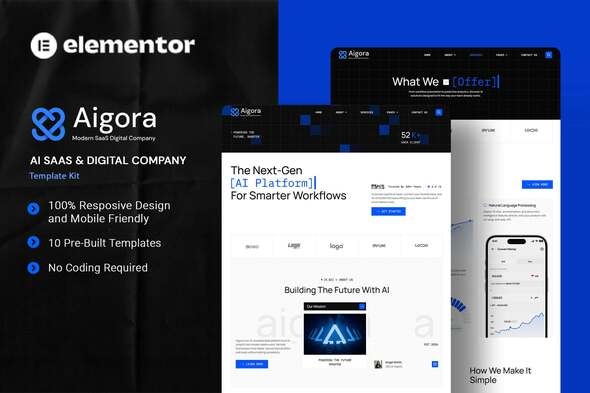
Aigora - AI Saas & Digital Company Elementor Template Kit Aigora – AI Saas & Digital Company Elementor Template Kit is a...
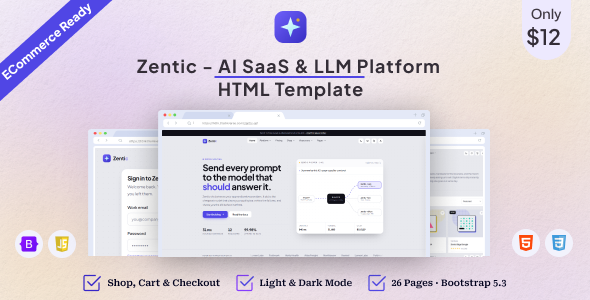
Zentic - AI SaaS & LLM Platform HTML Template Zentic - AI SaaS & LLM Platform HTML Template is a modern website...

ITzen - IT Solutions & Services WordPress Theme ITzen - IT Solutions & Services WordPress Theme is a modern and professional website...
