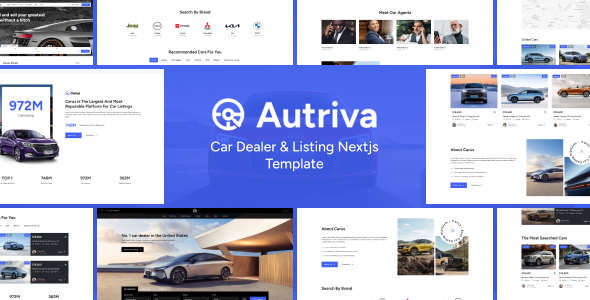
Autriva – Car Dealer & Listing Nextjs Template is a modern website template designed for car dealerships, automotive marketplaces, vehicle listing platforms, used car sellers, luxury automobile showrooms, and automotive businesses that want to establish a professional online presence. Built around the Next.js development ecosystem, Autriva provides a foundation for showcasing vehicles, presenting automotive services, organizing car listings, and helping prospective buyers explore available vehicles through a structured digital experience.
With its automotive-focused design direction, Autriva is suitable for businesses that want to display vehicle inventories, highlight featured cars, provide essential vehicle information, and encourage customers to make inquiries. The template can be customized for new car dealerships, pre-owned vehicle businesses, independent automotive brokers, luxury car showrooms, and online vehicle discovery platforms.
Whether you are building a website for a single dealership or developing the frontend for a larger automotive marketplace, Autriva can help you establish a consistent visual identity and organize vehicle information effectively. Its actual functionality depends on the included source files, page layouts, components, and any additional integrations implemented during development.
A car dealership website needs to present vehicles clearly while helping potential buyers navigate a large amount of information. Visitors often want to compare models, review photographs, check specifications, understand pricing, and contact a seller before arranging a viewing or test drive.
Autriva is positioned for the automotive industry, making it relevant to businesses that want a contemporary and professional online showroom. Its design can be customized with vehicle photography, brand elements, structured listing sections, and prominent calls to action that guide visitors toward relevant information.
The website can be adapted to different automotive brands, from premium luxury dealerships to practical used-car businesses and multi-brand vehicle marketplaces. Colors, typography, logos, imagery, and content can be adjusted to reflect the company’s identity and target audience.
A clear visual hierarchy helps distinguish featured vehicles, inventory categories, dealership information, and contact options. This allows visitors to focus on the vehicles and services that matter most to them.
Vehicle listings are central to an automotive website. A well-organized listing interface allows customers to browse available vehicles and quickly identify options that match their requirements.
Autriva can serve as a foundation for presenting vehicle inventory, depending on the layouts and components included in the template. Listings may be customized to display essential details such as vehicle images, make, model, year, price, mileage, transmission, fuel type, and general vehicle condition.
Potential inventory categories include:
These categories are examples of possible content organization rather than a guarantee of prebuilt category pages.
An organized inventory helps dealerships present their available vehicles more effectively. Each listing should use accurate specifications and current pricing so customers can make informed comparisons before contacting the seller.
A vehicle detail page gives prospective buyers a closer look at an individual automobile. It can bring together photographs, specifications, pricing information, vehicle history details where available, and contact options in one location.
Autriva can be customized to present individual vehicle pages with structured information. Depending on the actual implementation, a detail page may include a photo gallery, an overview, technical specifications, equipment highlights, and dealership contact information.
Useful vehicle information may include:
The final information structure should reflect the vehicle types and details the dealership actually provides. For used cars, transparent descriptions of condition, ownership history, and known issues can help establish trust with potential buyers.
Visitors to an automotive marketplace often have specific preferences related to price, manufacturer, body style, mileage, fuel type, and vehicle age. Search and filtering tools can help them narrow down the available inventory.
Autriva can be extended with suitable search and filtering functionality, depending on the included components. Potential filters include vehicle make, model, price range, year, body type, transmission, fuel type, mileage, and condition.
A search interface can help visitors move from a broad inventory page to a smaller selection of relevant vehicles. Sorting options may also be useful for organizing listings by price, newest additions, or other supported attributes.
However, a visual search form does not automatically provide functional inventory search. Dynamic filtering requires suitable application logic and access to the relevant vehicle data. Developers should verify which interactions are included in the template and which require additional implementation.
Autriva can be adapted for a traditional car dealership that wants to expand its reach beyond a physical showroom. A dealership website can introduce the business, display available inventory, communicate its services, and help customers arrange in-person visits.
Potential dealership sections include a company introduction, featured vehicles, inventory categories, financing information, trade-in services, after-sales support, and contact details.
Dealerships can also create dedicated pages for specific manufacturers or vehicle segments. For example, a multi-brand showroom may organize its inventory by manufacturer, while a specialist dealership may focus on luxury vehicles or electric cars.
The content should accurately represent the business’s inventory, service offerings, and commercial policies. Clear dealership information helps visitors understand who is selling the vehicle and how to proceed with an inquiry.
Many buyers want to inspect a vehicle or arrange a test drive before making a purchasing decision. A well-placed inquiry interface can help dealerships capture these requests and respond to interested customers.
Autriva can be customized to provide contact forms, dealership phone numbers, email links, location information, and test drive inquiry options where supported by the implementation.
A test drive form may request a customer’s name, contact information, preferred vehicle, and requested appointment time. Dealers can use these details to follow up and coordinate availability.
These are potential integrations rather than guaranteed built-in features. Functional forms require submission handling, validation, spam protection, and a reliable method of delivering inquiries to the dealership.
If the website needs appointment scheduling, automated confirmations, staff calendars, or customer relationship management integration, additional development or a third-party service may be necessary.
Car buyers frequently browse vehicle listings on mobile phones while comparing options or sharing listings with friends and family. A responsive website helps maintain a usable experience across smartphones, tablets, laptops, and desktop computers.
When properly implemented, Autriva can provide a foundation for layouts that adapt to different screen sizes. Vehicle cards, image galleries, specifications, navigation menus, and contact actions should remain accessible without unnecessary horizontal scrolling.
Mobile usability is especially important for inventory search and vehicle details. Search controls should be manageable on smaller screens, images should scale appropriately, and important vehicle information should remain easy to read.
Before launching the website, test the actual pages across commonly used browsers and devices. Custom galleries, filters, menus, and third-party widgets should also be tested to ensure that they work correctly on mobile layouts.
Autriva uses the Next.js development ecosystem, which is built around React and is commonly used for modern websites and web applications.
React allows developers to create reusable interface components, while Next.js provides application structure and supports different rendering strategies, routing approaches, and optimization capabilities depending on the framework version and project configuration.
For an automotive website, reusable components can help maintain consistency across vehicle cards, specification lists, dealership sections, navigation menus, and inquiry interfaces. This can make it easier to expand the website as the vehicle inventory and business requirements grow.
A Next.js template can reduce the initial work involved in creating a frontend, allowing developers to focus on adapting the content, styling, and application structure.
The exact Next.js version, routing system, styling framework, and available components should be confirmed in the official product documentation before development begins.
Every dealership has different branding, inventory requirements, and customer communication needs. A customizable website helps businesses present their services in a way that aligns with their market and audience.
Depending on the supplied source code, Autriva can be customized by modifying React components, updating page content, replacing images, changing styles, and adjusting navigation.
Common customization tasks include:
The available editing workflow depends on the template’s architecture, dependencies, and styling conventions. Reviewing the source files and documentation helps developers understand the existing structure before making substantial changes.
Search engine optimization can help car dealerships attract customers searching for particular vehicles, manufacturers, and automotive services.
Autriva can provide a frontend foundation for an SEO-focused website, but search performance depends on content quality, technical configuration, competition, website authority, and ongoing optimization.
Recommended practices include writing unique page titles and meta descriptions, using descriptive URLs, maintaining a logical heading hierarchy, and creating useful content for inventory categories and dealership services.
Vehicle detail pages should include accurate specifications and descriptive text rather than relying exclusively on images. Dealership pages can provide location information and explain the services offered in the relevant market.
Next.js supports rendering approaches that can help make public page content accessible to search engines when configured correctly. However, the framework alone does not guarantee higher rankings.
Additional optimization may include XML sitemaps, canonical URLs, image alternative text, internal links, appropriate structured data, and performance testing. Any vehicle-specific structured data should accurately represent the information displayed on the page.
Automotive websites often rely on high-quality images to communicate a vehicle’s condition, design, interior features, and exterior appearance. However, large image files can slow down listing pages and negatively affect the browsing experience.
Developers can improve performance by using appropriately sized images, efficient image formats, optimized fonts, and sensible loading strategies. Next.js offers image optimization capabilities when configured and supported by the project.
The actual performance of Autriva will depend on the implementation, hosting environment, number of listings, image sources, and third-party scripts. A template should be tested rather than assumed to be fast simply because it uses a modern framework.
For larger inventories, developers should also consider efficient data retrieval, pagination, caching, and avoiding unnecessary loading of complete vehicle datasets.
A static or frontend-only template can display vehicle information, but a production automotive marketplace may need a system for managing listings and keeping inventory current.
Depending on business requirements, Autriva can be connected to a backend application, database, dealership management system, or inventory API. Such an integration may support creating and updating vehicle records, changing prices, managing availability, and removing sold vehicles from public listings.
A complete inventory management solution may also require administrative access controls, image uploads, data validation, search indexing, and audit records.
These capabilities require additional backend implementation or an appropriate third-party service unless explicitly included in the original package. Before development, identify the source of vehicle data and determine how updates will be synchronized with the public website.
Automotive websites may collect personal information through customer inquiries, test drive requests, finance inquiries, or contact forms. Protecting that information is important for customer trust and responsible business operations.
Autriva provides a frontend starting point, but overall security depends on the full application architecture. Recommended measures include HTTPS, secure server configuration, input validation, appropriate access controls, updated dependencies, and safe handling of submitted information.
If the website supports customer accounts, financing applications, document uploads, or payment-related workflows, those features require additional security measures and suitable backend services.
Collect only the information necessary for each workflow, publish an appropriate privacy policy, and avoid storing sensitive customer information in publicly accessible frontend code.
Autriva can be considered for a range of automotive website projects, including:
Its suitability for a specific project depends on the included pages, components, source code, and additional functionality required.
Before beginning development, review the official product documentation and verify the required Node.js version, package manager, Next.js version, and dependencies.
A typical setup process involves downloading the template files, installing the required packages, configuring the local development environment, and running the project according to the supplied instructions. Developers can then inspect the available pages, replace sample content, update branding, and customize the vehicle listing structure.
Additional configuration may include setting environment variables, preparing production hosting, connecting a database or inventory API, and implementing customer inquiry forms.
Before publishing, test all important routes, verify vehicle images and specifications, check responsive layouts, and confirm that inquiry forms work correctly. If inventory search, test drive scheduling, or dynamic vehicle availability is required, test those features separately with realistic data before making the website available to customers.
Autriva – Car Dealer & Listing Nextjs Template provides a starting point for creating a modern automotive website for dealerships, used car sellers, luxury showrooms, and vehicle marketplace businesses. Its Next.js foundation is relevant to developers who want to customize a contemporary frontend for presenting vehicle inventories, detailed specifications, dealership information, and customer inquiry options.
By combining professional vehicle photography, organized listings, responsive layouts, search optimization, and appropriate backend integrations, businesses can adapt Autriva to support their automotive sales and marketing objectives.
Before purchasing or deploying Autriva, review the official demo, included pages, source code, framework requirements, documentation, and licensing terms. Confirm which search, filtering, listing, and booking-related features are included and which require additional development so the finished website meets your operational and technical requirements.
1. All digital products are the most recent version, with no possibility of free updates. After payment, you can request an update to the most recent version for 5 days if a new version is released. We free support within 5 days.
2. If a license is required (Excludes WHMCS license , we provide only method not license), please contact us via email or ticket for assistance with activation. Our license is only valid for activation and does not include support.
3. We provide Mobile, PHP script installation services for $19.90 / ₹1700. Please create a backup after installation as we do not support re-installation. For mobile app source code, we do not offer installation services.
4. If you have any questions, please contact us by email [email protected] or create a ticket on this page
5. Please note that any digital products presented on the website do not contain malicious code, viruses or advertising. You will receive the original files from the developers. We do not sell any products that have been downloaded from other websites.
6. The response time can last up to 6 hours.
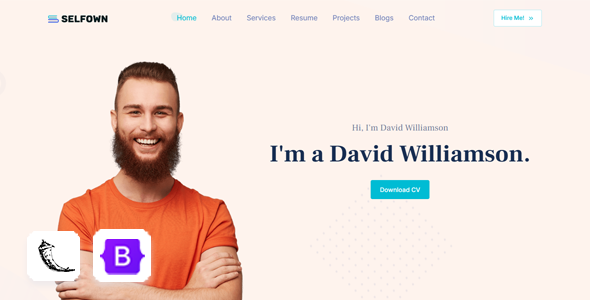
Selfown – Flask Personal Portfolio Template Selfown is a modern, elegant, and professional Flask Personal Portfolio Template designed for developers, designers, freelancers,...
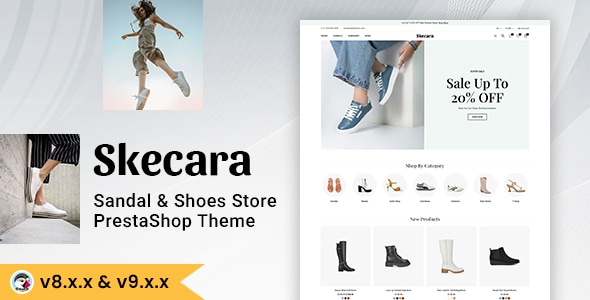
Skecara - Fashion & Sports Footwear Shoes PrestaShop Theme Skecara is a stylish and modern PrestaShop theme specifically designed for footwear stores,...
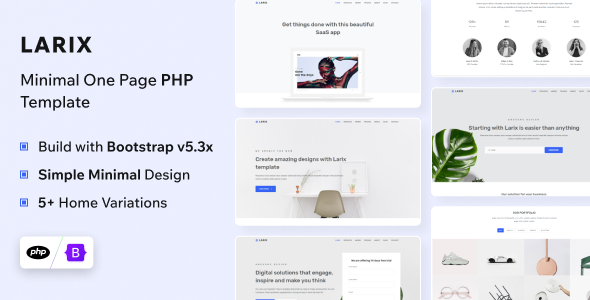
Larix - PHP Landing Page Template Larix is a modern and highly versatile PHP landing page template designed for startups, SaaS businesses,...
PGSports - Sport Club & Team WordPress Theme PGSports - Sport Club & Team WordPress Theme is a dynamic and professionally designed...
