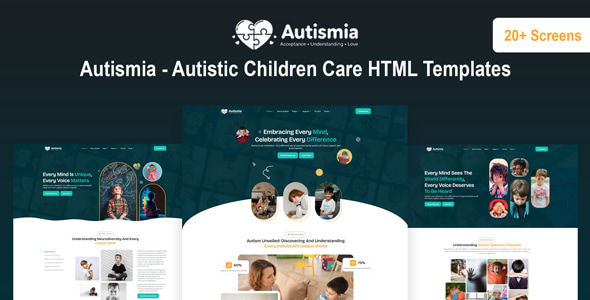
Autismia – Autistic Children Care HTML Templates is a thoughtfully designed website template intended for autism support centers, child development organizations, special education providers, therapy centers, and organizations dedicated to supporting autistic children and their families. With a care-focused design direction, Autismia provides a foundation for creating an informative and welcoming online presence that communicates available services, introduces care professionals, and helps families find relevant support resources.
Designed for developers, healthcare organizations, educational institutions, and web development agencies, this HTML template can be customized for autism support programs, child development centers, family guidance services, inclusive learning initiatives, and related organizations. Its specialized focus makes it a useful starting point for building a website that presents important information in an accessible and organized format.
Whether you are developing a website for an autism support center, a special education institution, a child development clinic, or a nonprofit organization, Autismia offers a customizable foundation for communicating services and connecting with families seeking information and support.
A website for an autism support organization should communicate care, respect, accessibility, and professionalism. Autismia is designed around the needs of organizations working with autistic children and their families, helping them present information in a clear and approachable manner.
The template can be customized to reflect the identity of a therapy center, educational institution, nonprofit initiative, or child development organization. Thoughtful typography, appropriate colors, relevant imagery, and clear navigation can help create a welcoming digital environment for parents, caregivers, and other visitors.
Organizations can adapt the content to explain their mission, introduce their team, describe available programs, and communicate how families can make contact. The goal is to make important information easy to understand without overwhelming visitors with unnecessary visual or textual complexity.
The final design should prioritize respectful language, inclusive imagery, and accessible navigation to reflect the organization’s commitment to supporting autistic children and their individual needs.
Autismia is an HTML website template intended to provide a foundation for building a customized website using standard web technologies. HTML defines the page structure, while CSS and JavaScript may be used in the supplied project to control styling, layout, and interactive behavior.
Developers can customize the page content, typography, colors, images, navigation, and other available interface elements according to the organization’s requirements. The template can also be adapted to suit different hosting environments that support static website files.
If the organization needs dynamic functionality, the website may be extended with a suitable backend, content management system, or third-party service. Examples include contact form processing, appointment requests, content updates, and administrative tools.
The exact number of included pages, supported libraries, responsive components, and interactive features should be verified in the product documentation before development begins. An HTML template does not automatically include a database, administrative dashboard, or complete appointment management system.
Organizations that support autistic children may provide a range of educational, developmental, family guidance, and support services. Autismia can be customized to explain these offerings and help families understand which programs are available.
Potential service categories include:
These are examples of content that an organization may choose to include. They are not a guarantee that the template contains dedicated pages for every service, and the final website should describe only the services the organization actually provides.
The homepage is often the first place families visit when learning about an autism support organization. Autismia can serve as a foundation for presenting the organization’s purpose, available services, and approach to supporting children and families.
A customized homepage may include a welcoming introduction, a summary of key programs, information about the organization, team highlights, useful resources, and clear contact options, depending on the layouts available in the template.
The introduction should explain whom the organization supports, what services it provides, and how families can learn more. Clear messaging can reduce uncertainty for visitors who may be exploring support options for the first time.
Organizations can also communicate their values, approach to inclusion, and commitment to respecting each child’s individuality. Any claims about professional qualifications, clinical outcomes, or specialized services should be accurate and supported by the organization’s actual practices.
Families often need understandable information about the programs available to their children. Autismia can be adapted to present program details in a structured format that helps visitors explore relevant options.
Each program description may explain its purpose, intended age group, general approach, eligibility requirements where applicable, and the process for making an inquiry. Organizations can also clarify whether a program involves educational activities, developmental support, therapy, family guidance, or another service.
Content should avoid presenting a single approach as appropriate for every autistic child. Autism is a spectrum, and children can have different communication styles, interests, support needs, and preferences.
A respectful website should emphasize individualized support, meaningful participation, and collaboration with families. Clear descriptions help visitors understand the organization’s services without creating unrealistic expectations.
Information about the people delivering services can help families understand an organization’s experience and professional background. Autismia can be customized to introduce team members, educators, therapists, support workers, and other relevant staff.
A team section may include professional names, roles, qualifications, areas of expertise, and short biographies where appropriate. Organizations should obtain permission before publishing staff photographs or personal information.
Professional information should be presented accurately and should distinguish between clinical practitioners, educators, administrative staff, and other support roles. Any references to certifications, licenses, or specialist training should reflect verified qualifications.
If the supplied template does not include a dedicated team layout, developers can adapt an existing section or create an additional page to present this information.
A website can be a valuable source of information for parents, caregivers, educators, and community members. Autismia can be extended with educational content that helps visitors understand the organization’s approach and discover relevant support resources.
Depending on the website’s needs, content may cover communication support, inclusive learning environments, family guidance, available community programs, and practical information about accessing services.
An organization may also publish announcements, awareness campaigns, event details, or educational articles. If a blog or resource section is not included in the original HTML package, it may need to be developed separately or connected to a content management system.
Educational content should use respectful, understandable language and reliable sources. Medical or therapeutic information should be reviewed by suitably qualified professionals when necessary, and the website should clearly distinguish general educational information from individualized professional advice.
Making contact should be straightforward for families who want to learn about programs or discuss available services. Autismia can be customized to present contact details and guide visitors toward appropriate inquiry channels.
Depending on the implementation, a contact form may collect a visitor’s name, email address, telephone number, preferred service, and message. Organizations should request only the information necessary to respond to the inquiry.
Because the website concerns children and potentially sensitive family information, contact workflows should be designed with privacy in mind. Visitors should understand how their information will be used and how to contact the organization securely.
A working form requires a suitable submission handler, validation, spam protection, and secure data processing. These functions may require backend development or a third-party form service and should not be assumed to be included in a static HTML template.
Families may visit the website using desktop computers, tablets, and smartphones. A responsive implementation helps ensure that important information remains readable and accessible across different screen sizes.
Autismia can be tested and customized to support clear navigation, appropriately scaled images, readable typography, and usable contact controls on mobile devices. Visitors should be able to find service information without dealing with unnecessarily complicated menus or crowded layouts.
Accessibility is particularly important for organizations serving people with different communication and sensory needs. Developers should consider readable text, sufficient color contrast, meaningful link labels, keyboard navigation, visible focus indicators, and descriptive alternative text for informative images.
Avoid relying exclusively on color to communicate important information. Clear headings and consistent page structures can also help visitors navigate content more comfortably.
A responsive layout does not automatically guarantee full accessibility. The completed website should be reviewed and tested against appropriate accessibility guidelines, including relevant WCAG recommendations.
Every autism support organization has its own identity, community, programs, and communication style. Autismia can be customized to reflect these differences while maintaining a clear and respectful presentation.
Customization may include the organization logo, brand colors, typography, photographs, illustrations, navigation labels, and page content. A center may choose a calm, minimal visual style, while an educational organization may prefer a brighter design suited to its programs and audience.
Visual choices should prioritize readability and usability rather than relying on stereotypes about autism or assuming that every autistic child has the same preferences.
Organizations can also include information about their mission, values, service approach, community involvement, and available support options. A consistent identity across the homepage, service pages, team information, and contact sections helps create a cohesive online presence.
Search engine optimization can help families and caregivers discover relevant support organizations through online searches. Autismia’s HTML structure can serve as a foundation for a search-friendly website when the pages are implemented correctly.
Developers can customize page titles, meta descriptions, headings, URLs, image alternative text, and written content to reflect the organization’s actual services and service area.
Separate pages for important programs may help visitors find more specific information. Organizations serving a particular city or region can also provide accurate location details and contact information where relevant.
Technical SEO considerations include descriptive page metadata, crawlability, appropriate indexing, sitemap generation, canonical URLs where necessary, and optimized image assets.
A template does not automatically guarantee search rankings. Visibility depends on content quality, technical implementation, competition, local relevance, and ongoing optimization.
A website should allow visitors to find important information without unnecessary delays. Developers can optimize Autismia by reviewing image sizes, stylesheet delivery, JavaScript usage, fonts, and other assets included in the package.
Optimized images can improve loading performance, while a logical information hierarchy helps visitors locate service descriptions, organizational information, and contact details more efficiently.
Testing the completed website on different devices and browsers can help identify layout issues, broken links, and interaction problems before launch.
If the website is extended with dynamic forms, resource management, or other backend functionality, developers should also review the performance and reliability of those integrations.
Although Autismia is an HTML template, it can serve as a starting point for a broader website as the organization’s needs evolve.
Depending on the project requirements and additional development, the website may be extended with a blog, event listings, program registration, appointment request forms, donation information, or a content management system.
Organizations may also require secure administrative tools for updating content, managing inquiries, or maintaining program information. These features generally require backend functionality, third-party services, or additional application development.
If the website collects information about children or families, any additional system should be designed with appropriate privacy safeguards, access controls, and data retention practices.
The availability of these capabilities depends on the supplied package and the implementation. An HTML template should not be treated as a complete healthcare, therapy, or child management platform unless the documentation explicitly confirms those features.
Autismia is suitable for web developers, freelancers, digital agencies, autism support centers, special education providers, child development organizations, and nonprofit initiatives looking for a specialized website foundation.
Developers can adapt the template for different organizations, customize the content to match their programs, and extend the website where additional functionality is needed. Organizations can use it as a starting point for presenting their mission, introducing their team, and communicating available services to families.
Before beginning development, review the package files, installation instructions, included page layouts, dependencies, responsive behavior, and usage terms. This helps establish the actual scope of the template and identify any additional work required for forms, content management, or other features.
Autismia – Autistic Children Care HTML Templates provides a foundation for creating a professional, informative, and welcoming website for autism support centers, special education providers, child development organizations, and family support initiatives.
From presenting care programs and introducing qualified professionals to sharing educational resources and making contact information accessible, Autismia can be customized to meet a variety of organizational communication needs. With respectful content, inclusive design choices, accessible navigation, appropriate privacy safeguards, and careful technical implementation, Autismia – Autistic Children Care HTML Templates can help organizations establish an online presence that connects families with relevant information and support.
1. All digital products are the most recent version, with no possibility of free updates. After payment, you can request an update to the most recent version for 5 days if a new version is released. We free support within 5 days.
2. If a license is required (Excludes WHMCS license , we provide only method not license), please contact us via email or ticket for assistance with activation. Our license is only valid for activation and does not include support.
3. We provide Mobile, PHP script installation services for $19.90 / ₹1700. Please create a backup after installation as we do not support re-installation. For mobile app source code, we do not offer installation services.
4. If you have any questions, please contact us by email [email protected] or create a ticket on this page
5. Please note that any digital products presented on the website do not contain malicious code, viruses or advertising. You will receive the original files from the developers. We do not sell any products that have been downloaded from other websites.
6. The response time can last up to 6 hours.
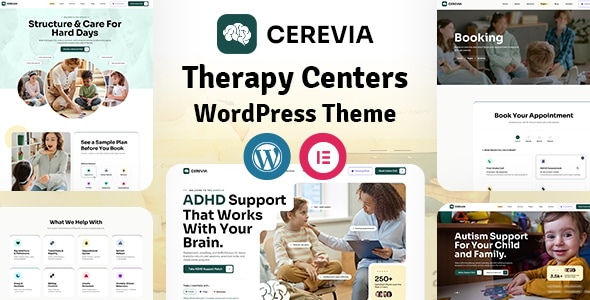
Cerevia - Therapy Centers WordPress Theme Cerevia - Therapy Centers WordPress Theme is a professional website theme designed for therapy centers, counseling...
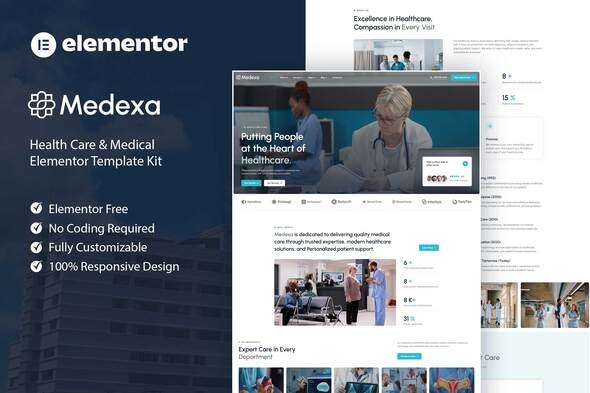
Medexa - Health Care & Medical Elementor Template Kit Medexa - Health Care & Medical Elementor Template Kit is a modern website...
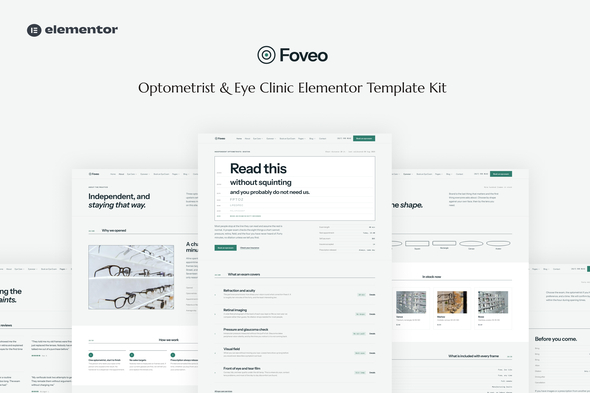
Foveo - Optometrist & Eye Clinic Elementor Template Kit Foveo - Optometrist & Eye Clinic Elementor Template Kit is a professional website...

Docaid - Medical & Health Care WordPress Theme Docaid - Medical & Health Care WordPress Theme is a modern and professionally designed...
