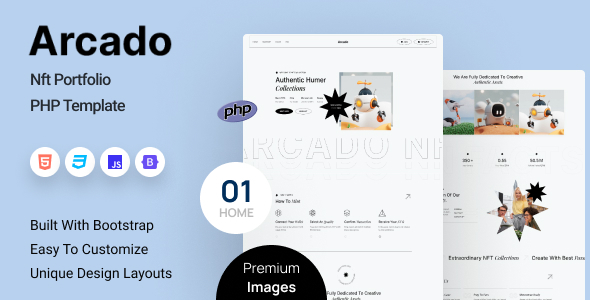
Arcado – NFT Portfolio PHP Template is a modern website template designed for NFT artists, digital creators, blockchain enthusiasts, cryptocurrency projects, and Web3 businesses looking to establish a professional online presence. Created as a foundation for NFT portfolio and digital art websites, Arcado can be customized to showcase non-fungible token collections, introduce artists, present digital artwork, highlight creative projects, and communicate information about blockchain-based initiatives.
The growing digital collectibles ecosystem has created new opportunities for artists, illustrators, 3D designers, digital creators, and NFT project teams to connect with collectors and communities online. A well-organized website helps creators present their work, communicate their artistic identity, and provide visitors with a central place to explore collections and learn about upcoming projects. Arcado offers a customizable starting point for building this type of website, with a PHP-based structure that developers can adapt to their project requirements.
Whether you are creating a personal NFT artist portfolio, a digital collectibles showcase, a Web3 project website, or a promotional website for an NFT collection, Arcado provides a foundation for developing a visually engaging digital experience. Developers can customize the website’s branding, content, artwork presentation, and supporting functionality to match the goals of the project.
An NFT portfolio website needs to communicate creativity while presenting digital assets in an organized and accessible way. Arcado is intended to support projects that want to display NFT-related content and establish a recognizable digital identity.
The template can be adapted to present digital artwork, collection previews, artist biographies, project descriptions, roadmaps, community information, and contact details. Depending on the layouts included in the supplied package, developers may also be able to create dedicated pages for individual collections, featured artwork, and project updates.
Its PHP-oriented implementation makes Arcado relevant to developers who work with PHP-based websites and want the flexibility to customize the underlying source code. The actual page structure, included assets, dependencies, and dynamic functionality should be verified against the package documentation before implementation.
Arcado should be understood as a website template rather than an automatically complete NFT marketplace. Features such as wallet authentication, blockchain transactions, NFT minting, ownership verification, and marketplace trading require suitable blockchain integrations or additional development unless they are explicitly included in the product package.
Visual presentation is particularly important for NFT portfolios because digital artwork is often the main reason visitors explore a project. An effective website should allow the artwork to stand out while maintaining a consistent brand identity.
Arcado can be customized to create a contemporary visual experience for digital art collections and blockchain-related projects. Developers can adapt colors, typography, backgrounds, spacing, image treatments, and page layouts to reflect the style of the artist or NFT brand.
A creator working with minimalist illustrations may prefer a clean and spacious presentation, while a project featuring fantasy artwork, collectibles, abstract graphics, or 3D characters may benefit from a more expressive visual direction.
The template can serve as a starting point for organizing artwork into visually consistent sections. Developers should review the supplied designs to determine the exact layout options and components available.
Arcado is identified as a PHP template, making it suitable for developers seeking a PHP-oriented foundation for an NFT portfolio website.
Depending on the supplied package, the source files may include PHP pages, HTML markup, CSS stylesheets, JavaScript resources, images, and other front-end assets. These resources can be reviewed and customized to align the website with the project’s branding and content requirements.
PHP can also be used to generate dynamic pages, reuse shared website components, process forms, and connect the presentation layer to a database or external API. However, the availability of these capabilities depends on the included code and the additional development performed.
Typical customization tasks may include:
The template should not be assumed to include a complete content management system, NFT minting engine, or blockchain backend unless these features are explicitly documented.
A collection showcase is an important part of an NFT portfolio website. It allows visitors to explore the creator’s work and understand the visual identity of a digital collection.
Arcado can be adapted to present NFT collections through image grids, featured artwork sections, collection introductions, and other suitable layouts available in the package. Each collection can include a name, description, visual previews, and links to relevant external platforms.
Creators can organize collections according to artistic style, release series, project themes, or publication dates. This organization can help visitors browse large portfolios and discover the work that interests them.
For projects with many digital assets, developers can create additional pages or implement database-backed filtering and pagination. Such dynamic capabilities require appropriate coding and should not be assumed to be included automatically.
When displaying NFT artwork, use images and metadata that the creator is authorized to publish. For externally hosted assets, ensure that image sources and associated links remain reliable.
An NFT artist portfolio can serve as a central destination for showcasing creative work and communicating an artist’s background.
Arcado can be customized to highlight digital illustrations, generative artwork, 3D designs, animated collectibles, concept art, and other forms of digital creativity. The website may also be adapted to present an artist biography, creative process, selected projects, exhibition information, and links to professional profiles.
Individual artwork sections can include descriptive titles, creation details, collection information, and links to relevant NFT platforms. Additional detail pages can be developed when visitors need more information about particular pieces.
Creators should optimize image dimensions and file sizes to maintain good loading performance while preserving sufficient visual quality. Where animation or video is used, appropriate media formats and loading strategies should be considered.
Featured artwork can help draw attention to important pieces or highlight selected items from a collection. Arcado can provide a foundation for arranging prominent artwork alongside concise descriptive content.
Developers may create individual artwork pages containing a larger image, title, creator information, description, collection details, and relevant external links. Depending on the project requirements, these pages can be static or generated dynamically from a database.
If blockchain metadata is displayed, it should be retrieved from an appropriate and reliable source. Developers should avoid presenting unverified ownership details, token information, transaction records, or current market prices as authoritative facts.
A static showcase can display artwork and descriptions, but it does not independently establish blockchain ownership or verify that an NFT is genuine.
A dedicated profile section can introduce the people behind an NFT collection and explain the project’s creative direction.
Arcado can be adapted to display artist names, biographies, profile images, artistic specialties, social media links, and other relevant information. For collaborative projects, developers can create profiles for multiple contributors or introduce the broader team.
A project information page can explain the collection’s concept, inspiration, intended audience, release plans, and community channels. Where applicable, a roadmap can describe planned milestones without implying that future features are guaranteed.
Clear and accurate project information helps visitors understand the purpose of the collection before exploring external platforms or joining its community.
NFT-related websites may benefit from integrations that connect visitors to blockchain networks, digital wallets, NFT marketplaces, and decentralized applications.
Because Arcado is a PHP template, developers can use it as a presentation layer for integrations that are appropriate to the selected blockchain ecosystem. Depending on the technical requirements, these integrations may involve JavaScript libraries, wallet providers, blockchain RPC services, APIs, and server-side components.
Potential extensions include:
These are possible development extensions, not guaranteed built-in features of the template. Each requires the appropriate implementation, testing, and security review.
A PHP website does not automatically gain blockchain functionality simply by displaying NFT artwork. Wallet connections, transaction signing, smart contract interaction, and ownership verification require compatible technologies and carefully designed workflows.
Some NFT projects require a website where users can mint digital assets, purchase collectibles, or interact with smart contracts. These functions involve significantly more complexity than a standard portfolio website.
If you plan to extend Arcado into an NFT minting or marketplace application, you will need to evaluate the target blockchain, smart contract requirements, wallet compatibility, transaction fees, asset storage, metadata standards, and error-handling processes.
A functional minting workflow may require a deployed smart contract, wallet integration, transaction signing, network validation, and confirmation handling. Marketplace functionality may additionally require listing management, pricing logic, ownership checks, and appropriate transaction processing.
These capabilities should be implemented separately unless the product documentation explicitly confirms that they are included. Any payment or transaction functionality should be tested carefully before launch.
Visitors may explore NFT portfolios from desktops, laptops, tablets, and smartphones. A responsive website helps make digital artwork and project information accessible across different devices.
Review the supplied Arcado files to confirm the included responsive behavior and supported breakpoints. Test the layout of collection grids, navigation menus, artwork previews, descriptive text, and external links at different screen sizes.
Mobile visitors should be able to browse collections, read artist information, and reach relevant project links without excessive scrolling or difficult navigation.
If wallet connectivity or blockchain interaction is added, test the experience separately on supported mobile browsers and wallet applications. Responsive visual design alone does not guarantee compatibility with every wallet provider or blockchain workflow.
Search engine optimization can help artists and NFT projects reach visitors interested in digital art, collectibles, and related creative communities.
Arcado provides a website foundation that can be customized with useful page titles, meta descriptions, descriptive headings, meaningful URLs, and relevant written content. Each collection and artist page should have a clear purpose and unique information.
Recommended SEO practices include:
NFT artwork images alone may not provide enough context for search engines. Original descriptions, artist information, collection details, and useful supporting content can make pages more informative.
SEO results are not guaranteed by the template itself. Rankings and traffic depend on implementation quality, content relevance, competition, external references, and ongoing optimization.
NFT portfolios often contain large images, detailed illustrations, animated assets, and other media that can increase page-loading times. Performance optimization is therefore an important part of the development process.
Developers can improve performance by using appropriately sized images, compressing visual assets, selecting efficient image formats, enabling browser caching, and reducing unnecessary scripts and stylesheets.
Lazy loading may be appropriate for artwork that appears below the initial viewport. However, prominent above-the-fold images should be optimized carefully so that the main content appears quickly.
If external APIs are used to retrieve NFT information, implement suitable loading states, error handling, and caching where appropriate. Third-party service limits, network conditions, and data availability can affect the final user experience.
A PHP-based website should be configured and maintained using secure development practices. Developers should use a supported PHP version, validate and sanitize incoming data, escape output appropriately, and use secure database queries when database functionality is implemented.
If the website includes contact forms, administrative pages, account features, or blockchain integrations, the security requirements become more extensive. Sensitive credentials should be stored securely, access controls should be implemented where necessary, and third-party dependencies should be reviewed regularly.
Wallet integrations should never request or collect a user’s wallet seed phrase or private key. Transaction signing should take place through a trusted wallet interface, and users should receive clear information about the action they are authorizing.
Regular maintenance should include checking links, testing page layouts, reviewing dependencies, monitoring performance, and verifying that external data sources remain available.
Arcado can be customized for several digital art and Web3 use cases.
NFT Artist Portfolios: Showcase original digital artwork, artist biographies, selected collections, and creative projects.
Digital Collectible Projects: Present collectible series, featured items, project information, and links to supported marketplaces.
Generative Art Websites: Organize algorithmically created artwork into collections and introduce the project’s artistic concept.
3D Art and Illustration Portfolios: Display digital illustrations, character designs, rendered artwork, and visual experiments.
Web3 Startup Websites: Introduce a blockchain-related project, explain its objectives, and provide relevant community and documentation links.
NFT Creative Agencies: Build a portfolio for teams that provide digital art production, NFT project design, and related creative services.
Independent Creators: Establish a central website for displaying artwork, sharing updates, and directing visitors to external platforms.
The final application will depend on the supplied template layouts and any additional customization or integration work.
Developers can adapt Arcado’s source files to reflect a project’s visual identity and content strategy. This may include replacing images, editing text, updating navigation, modifying page layouts, and adding new collection sections.
For projects that publish new artwork frequently, a database-backed content management workflow may be more practical than editing individual PHP files manually. Such a system can be developed or integrated separately, depending on the project’s requirements.
Before deployment, review the included documentation, file structure, dependencies, licensing terms, and server requirements. Test the completed website on common browsers and devices, and verify all external marketplace and community links.
Arcado offers a customizable starting point for developers and digital creators who want to establish a professional website focused on NFT artwork and digital collections.
Potential benefits include:
The precise included pages, layouts, dependencies, and built-in capabilities should be verified in the supplied product documentation before purchase or implementation.
Arcado – NFT Portfolio PHP Template provides a customizable foundation for creating a website centered on NFT collections, digital artwork, artist portfolios, and Web3 project information. Its PHP-oriented structure gives developers an opportunity to adapt the website’s presentation and extend it with additional server-side functionality where required.
By combining the template with original artwork, informative collection descriptions, optimized media, responsive layouts, and reliable hosting, creators can establish a central online destination for presenting their work and connecting visitors with relevant platforms.
For NFT artists, digital creators, Web3 teams, and web development agencies, Arcado can serve as a practical starting point for a tailored NFT portfolio website. More advanced features, such as wallet connectivity, NFT minting, live blockchain data, and marketplace transactions, require compatible integrations and appropriate testing unless explicitly included in the package.
1. All digital products are the most recent version, with no possibility of free updates. After payment, you can request an update to the most recent version for 5 days if a new version is released. We free support within 5 days.
2. If a license is required (Excludes WHMCS license , we provide only method not license), please contact us via email or ticket for assistance with activation. Our license is only valid for activation and does not include support.
3. We provide Mobile, PHP script installation services for $19.90 / ₹1700. Please create a backup after installation as we do not support re-installation. For mobile app source code, we do not offer installation services.
4. If you have any questions, please contact us by email [email protected] or create a ticket on this page
5. Please note that any digital products presented on the website do not contain malicious code, viruses or advertising. You will receive the original files from the developers. We do not sell any products that have been downloaded from other websites.
6. The response time can last up to 6 hours.
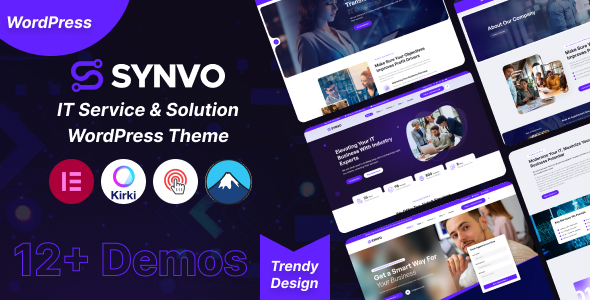
Synvo – IT Service & Solution WordPress Theme Synvo – IT Service & Solution WordPress Theme is a modern, professional, and technology-focused...
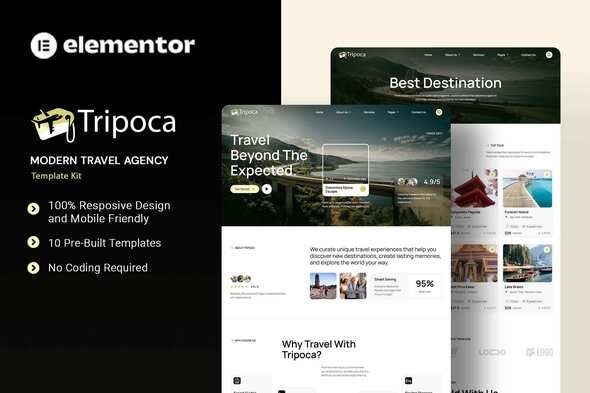
Tripoca - Modern Travel Agency Elementor Template Kit Tripoca is a modern and professionally designed Travel Agency Elementor Template Kit created for...
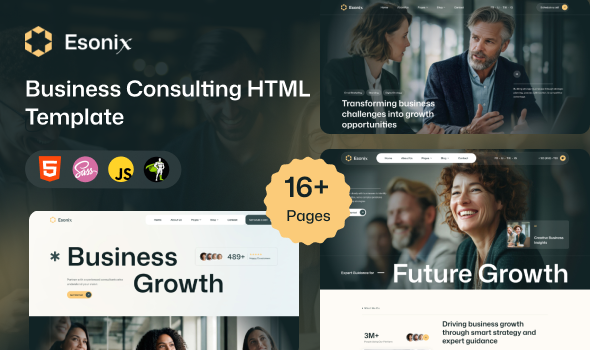
Esonix - Business Consulting HTML Template Esonix - Business Consulting HTML Template is a professional website template designed for business consultants, corporate...
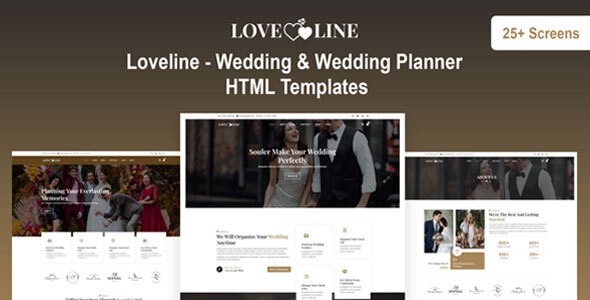
Loveline - Wedding & Wedding Planner HTML Templates Loveline is a beautifully designed and elegant HTML template created specifically for wedding planners,...
