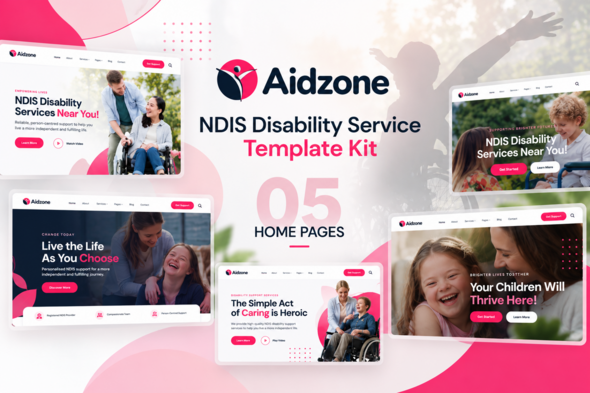
Aidzone – NDIS Disability Elementor Template Kit is a professional, accessible, and service-focused website design solution created for disability support providers, NDIS service businesses, disability care organizations, community support agencies, and allied health service providers. Designed for use with Elementor in a compatible WordPress environment, Aidzone provides a flexible foundation for building an informative website that explains support services, introduces care professionals, shares participant resources, and helps individuals and families connect with appropriate providers. Whether you operate an NDIS registered provider organization, a disability support agency, a community care service, or a business offering assistance for people with disabilities, this template kit can help establish a welcoming online presence and communicate your services clearly.
A disability support website should make information easy to understand and help visitors identify the services relevant to their needs. Participants, families, carers, support coordinators, and guardians may visit a provider’s website to learn about available assistance, understand how the organization operates, and find out how to make an inquiry.
Aidzone is designed to provide a foundation for presenting disability support services in a professional and approachable format. Its layouts can be customized to reflect the organization’s identity, communication style, service offerings, and community focus.
Providers can personalize the website with their logo, brand colors, typography, service descriptions, photographs, and contact details. A clear content structure can help visitors understand what the organization offers and locate the information they need without unnecessary complexity.
Disability support providers offer a range of services depending on their expertise, resources, registration status, and participant requirements. Aidzone can be adapted to present these services in an organized and accessible format.
Potential service categories include:
Providers should customize these categories to reflect the services they actually deliver and the relevant NDIS funding and eligibility arrangements. Each service section can explain the support available, the intended audience, and the process for making an inquiry.
Clear service descriptions help participants and families understand their options while avoiding misleading claims about funding, eligibility, or guaranteed outcomes.
The homepage is often the first interaction a participant or family member has with a disability support organization. Aidzone can serve as the foundation for a homepage that introduces the organization, highlights its services, and guides visitors toward useful information.
A customized homepage may include an introductory message, a summary of support services, information about the organization, staff profiles, participant resources, and prominent contact options.
Providers can use this section to explain their approach to support, describe the communities they serve, and communicate their commitment to dignity, inclusion, and individual choice.
Clear headings, readable text, and an uncluttered layout can help visitors navigate the website more easily. Important information, such as service areas, contact details, and inquiry procedures, should be easy to locate.
People accessing disability support services may have different goals, preferences, and support requirements. Aidzone can be customized to explain how an organization delivers its services and helps participants explore suitable support options.
Dedicated service pages may describe assistance with everyday activities, community access, household tasks, life skills, or other relevant services.
Each page can explain what the service involves, who it is intended for, how the organization approaches support planning, and how interested individuals can request further information.
Providers can also describe their service delivery process, communication practices, and approach to respecting participant preferences.
Information should accurately reflect the organization’s capabilities and any applicable NDIS requirements. The website should not imply that a person automatically qualifies for a service or funding simply because the service is listed.
Participants and families often want to understand the organization behind the services. Aidzone can be adapted to present the provider’s background, values, mission, and approach to disability support.
An About Us section may introduce the organization’s history, explain its service philosophy, and describe how its team works with participants and families.
Providers can also communicate their commitment to person-centered support, respect, inclusion, privacy, and individual choice where these principles genuinely guide their operations.
Relevant information about service locations, operating hours, team structure, and communication procedures can help visitors understand how the organization operates.
Any statements about NDIS registration, professional qualifications, accreditation, or regulatory compliance should be accurate and current.
Introducing the people behind a disability support organization can help visitors understand who provides the services and what experience the team brings.
Aidzone can be customized to present staff profiles, support worker introductions, management information, and relevant professional qualifications.
A profile may include the staff member’s name, role, verified credentials, relevant experience, and areas of responsibility. For allied health or specialist services, profiles can describe the qualifications and professional scope of the practitioners involved.
Organizations should publish staff information only with appropriate permission and ensure that all professional claims are accurate.
A clear team section can help families and prospective participants learn more about the people responsible for delivering support.
A straightforward contact process is important for disability support websites. Aidzone can be customized to guide visitors toward requesting service information, discussing support requirements, or arranging an initial conversation.
Useful contact elements may include telephone numbers, email addresses, office locations, operating hours, contact forms, and inquiry calls to action.
An inquiry form may collect basic information such as the preferred contact method, general service interest, and location. Providers should avoid requesting unnecessary sensitive personal information through ordinary website forms.
If the organization needs participant intake forms, referral workflows, case management, secure document uploads, or detailed support records, these capabilities generally require additional software and appropriate security controls.
The template kit itself should not be assumed to include a complete participant management system or a secure NDIS case management platform.
Accessibility is especially important for disability support organizations because visitors may have different visual, auditory, cognitive, and motor requirements.
Aidzone can be customized with usability and accessibility considerations in mind. These may include readable typography, descriptive headings, clear navigation, meaningful link text, sufficient color contrast, and alternative text for informative images.
Developers should also review keyboard navigation, form labels, focus indicators, page structure, and the usability of interactive elements.
Where appropriate, providers may offer information in accessible formats or explain how visitors can request communication support.
A template kit does not automatically guarantee compliance with accessibility standards. The finished website should be reviewed and tested against relevant accessibility guidelines, with adjustments made according to the needs of its intended audience.
Participants, carers, and family members may access support information through smartphones, tablets, or desktop computers. A responsive layout helps keep essential information accessible across different devices.
Aidzone can be customized and tested to provide a consistent browsing experience on common screen sizes. Developers should verify navigation menus, service descriptions, staff profiles, contact details, and inquiry forms after importing and adjusting the templates.
Clear mobile navigation can make it easier for visitors to find service information or contact the organization without having to navigate complicated page structures.
Readable text, appropriately sized controls, and concise content contribute to a more convenient browsing experience.
The final responsive behavior depends on the template configuration and any customizations made during implementation.
A disability support website can provide useful information beyond a list of services. Aidzone can be adapted to include frequently asked questions, resource pages, news updates, and general information for participants and families.
Potential topics include how to contact the provider, what to expect during an initial conversation, the organization’s service areas, referral procedures, and general information about its support offerings.
Where appropriate, providers may explain the distinction between their services and other support available through the NDIS. Information about eligibility, funding, plan management, and service agreements should be accurate and refer visitors to authoritative sources when necessary.
An organized resource section can help visitors find answers to common questions and understand the next steps in contacting the organization.
Aidzone is an Elementor Template Kit intended to provide reusable website layouts for use within a compatible WordPress installation.
Elementor offers a visual editing workflow that allows users to customize supported page designs through a graphical interface. Depending on the templates included in the kit and the installed plugins, users may be able to adjust headings, text, images, buttons, colors, spacing, and other design elements.
This approach can help disability support organizations and website developers build a consistent online presence without manually coding every page from scratch.
A template kit is not necessarily a complete standalone WordPress theme. It may require an existing compatible theme, Elementor, or additional plugins. Review the official product documentation for installation instructions, supported versions, included layouts, and any Elementor Pro dependencies.
Search engine optimization can help participants, families, and support coordinators discover disability support services relevant to their location and requirements.
Aidzone can be customized with a clear content structure that supports informative, search-focused pages.
Providers can create dedicated pages for individual services, service areas, and the communities they support. Descriptive page titles, meaningful headings, original content, and relevant internal links can help visitors navigate the website.
For example, an organization may create separate pages for community participation, daily living assistance, and supported accommodation services where these offerings are available.
Local business information should accurately identify the areas served and the contact details for the organization.
Additional SEO practices may include optimizing images, writing descriptive alternative text, configuring metadata, improving loading performance, and implementing appropriate structured data. Search rankings depend on content quality, competition, technical implementation, and website authority. A template kit alone does not guarantee higher rankings.
Disability support organizations may work with sensitive personal information. Their websites should communicate clearly about how inquiries are handled and ensure that information is collected and stored appropriately.
Aidzone can be customized to include privacy policy links, contact information, service procedures, and other relevant organizational details.
Ordinary contact forms should collect only the information necessary for an initial inquiry. Detailed health information, disability-related records, NDIS plans, or other sensitive documents should not be requested through a standard website form unless appropriate privacy and security safeguards are in place.
Organizations should also consider staff access controls, secure storage, data retention, consent procedures, and applicable privacy obligations when integrating additional systems.
A standard Elementor Template Kit does not automatically provide a secure participant records platform or guarantee regulatory compliance.
A professional disability support website should remain accessible, reliable, and easy to maintain.
When implementing Aidzone, developers should optimize images, use suitable hosting, and review unnecessary scripts or plugins that could affect performance.
Because the kit is intended for WordPress and Elementor, ongoing maintenance may include updating WordPress, Elementor, and other required components to compatible versions. Regular backups, secure administrator accounts, appropriate user permissions, and routine contact-form testing are also important.
Organizations should periodically review their service information, staff profiles, contact details, and policy pages to ensure that the information remains accurate.
Actual website performance and security depend on the hosting environment, configuration, installed plugins, and maintenance practices.
NDIS Service Providers: Present disability support services, organizational information, and participant inquiry options.
Disability Care Agencies: Explain available assistance and introduce the professionals involved in delivering support.
Community Support Organizations: Highlight community participation programs and relevant support services.
Supported Accommodation Providers: Present accommodation-related information and explain how interested individuals can make inquiries.
Support Coordination Businesses: Describe support coordination services where appropriately offered.
Allied Health Providers: Introduce qualified practitioners and relevant therapeutic services.
Disability Advocacy Organizations: Share organizational information, resources, and appropriate contact options.
Family and Carer Support Services: Provide information for families and carers seeking guidance or relevant services.
Independent Support Businesses: Establish a professional online presence for a smaller disability support operation.
Web Design Agencies: Use the kit as a starting point for suitable disability service website projects.
The exact templates, page layouts, required plugins, Elementor Pro dependencies, and included functionality depend on the official Aidzone product package.
Aidzone is suitable for disability support providers, NDIS-related businesses, community care organizations, allied health practices, support coordination providers, disability service entrepreneurs, freelance developers, and digital agencies.
Organizations can use the kit as a starting point for presenting their services, explaining their approach, and helping participants and families make contact. Developers can customize the available layouts to reflect each provider’s branding, service structure, and accessibility requirements.
Before installation, review the official product documentation for WordPress requirements, Elementor compatibility, required plugins, and the recommended setup process.
Aidzone – NDIS Disability Elementor Template Kit provides a flexible foundation for creating a professional website for disability support providers, NDIS service businesses, community care organizations, and related support services. Its service-focused design and Elementor-based customization workflow can help organizations present their offerings, introduce their team, share useful information, and guide participants and families toward appropriate contact options.
With suitable branding, accurate service descriptions, accessible design choices, and a properly configured WordPress environment, Aidzone can be adapted to support a wide range of disability support website projects. Whether you are establishing a new disability support business or updating an existing provider’s online presence, this template kit offers a starting point for creating a welcoming, informative, and professional website.
1. All digital products are the most recent version, with no possibility of free updates. After payment, you can request an update to the most recent version for 5 days if a new version is released. We free support within 5 days.
2. If a license is required (Excludes WHMCS license , we provide only method not license), please contact us via email or ticket for assistance with activation. Our license is only valid for activation and does not include support.
3. We provide Mobile, PHP script installation services for $19.90 / ₹1700. Please create a backup after installation as we do not support re-installation. For mobile app source code, we do not offer installation services.
4. If you have any questions, please contact us by email [email protected] or create a ticket on this page
5. Please note that any digital products presented on the website do not contain malicious code, viruses or advertising. You will receive the original files from the developers. We do not sell any products that have been downloaded from other websites.
6. The response time can last up to 6 hours.
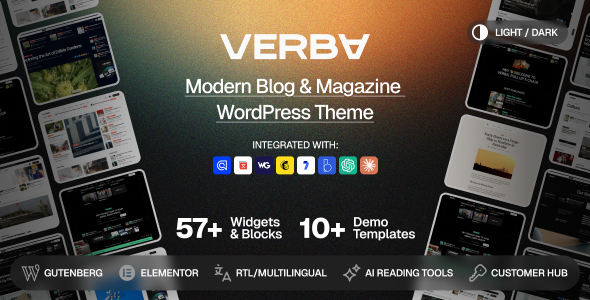
Verba – Modern Blog & Magazine WordPress Theme Verba – Modern Blog & Magazine WordPress Theme is a modern, elegant, and versatile...
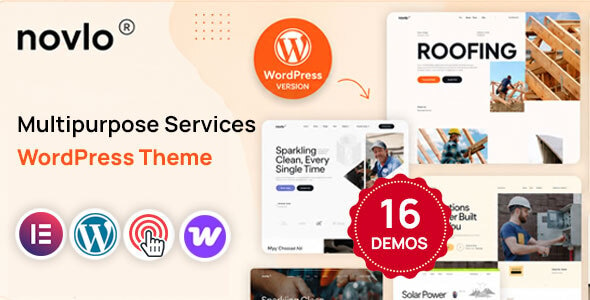
Novlo – Multipurpose Services WordPress Theme Novlo is a modern, flexible, and professionally designed Multipurpose Services WordPress Theme created for service-based businesses,...
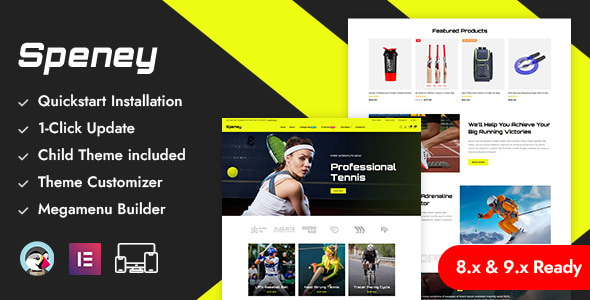
Speney - Sports Store Prestashop Responsive Theme Speney - Sports Store Prestashop Responsive Theme is a dynamic and professionally designed PrestaShop Responsive...
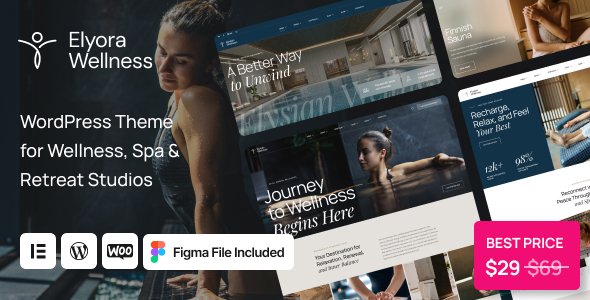
Elyora - Spa & Wellness Centers WordPress Theme Elyora is a luxurious and professionally designed Spa & Wellness Centers WordPress Theme created...
